


I promise it’s not my intention to bring you downbeat dispatches, but the cosmic energy has sent us in this direction. Three days in a row, we learned of a trio of adored artists passing away: Dolly Parton, Tim Curry, and Yayoi Kusama (who actually died on August 14). They were three people who transformed the delectable nature of niche interests into full blown pop culture iconography.

Parton, a woman whose big-everything aesthetic feels like a chicken and egg situation for drag artists everywhere, was also the most important country artist of her time, and a real philanthropist. Curry, famously coy about his own personal life but spiritually bisexual, rode the wave of his campy early turn as Dr Frank-n-Furter in The Rocky Horror Picture Show into a decades-long career, inspiring Halloween costumes and sing-a-long screenings for the masses. And even if the art layman couldn’t mention Kusama by name, they recognized her polkadots, pumpkins, and endlessly inspiring infinity mirror rooms. She spoke an artistic language everyone felt fluent in.
To traverse those worlds is a skill few are capable of: most ‘mainstream’ culture is shackled to its normie sensibility, and the freaks never quite break through. But Parton, Curry, and Kusama all managed to maintain a rare equilibrium, appeasing a mass audience while also understanding the bedrock of a left-field fanbase.
Parton, the godmother of country music, perhaps summed this dichotomy up the best. She was all over the radio of red state America for most of her life, as beloved by bigots as she was by the benevolent—recent studies discovered that 75% of Democrats and Republicans appreciated her work—all because what she sang about was so piercingly universal. She was, in that sense, almost a religious entity, a scribe of hymns. Her original version of “I Will Always Love You,” to me, remains the best. I get chills hearing Ryan Beatty sing “Do I Ever Cross Your Mind?” her bittersweet twang embraced and reformed by someone five decades younger than her.
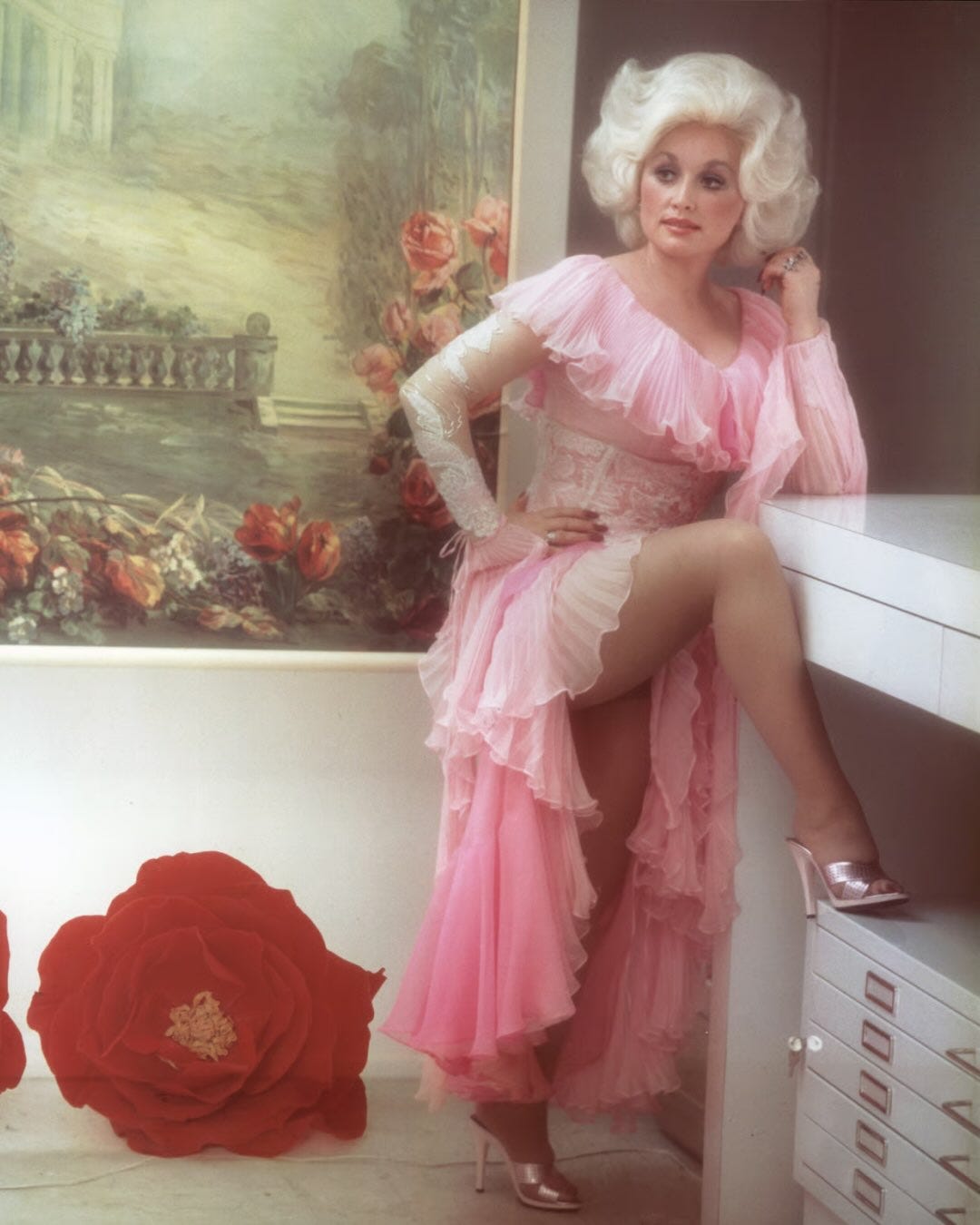
Her most heard songs, the “9 to 5”s and the “Jolene”s, felt so strikingly specific in their storytelling—and yet, that specificity managed to riff on the human condition. She gave us this gospel-like delivery, all while managing to wrap a metaphorical, and often physical, arm around society’s most marginalized too, disagreeing with the anti-trans bathroom bills in her home state of Tennessee in 2023, and supporting gay marriage.
In country music, they are largely niche subjects to give a shit about, but Dolly managed to forge a career that wasn’t impeded by what she believed in. Her appearance, proudly artificial, became a moodboard staple for drag artists; she even nodded to that similarity herself (a story has recently recircled about how she lost a lookalike contest to a drag queen once). She wasn’t wholly traditional, or conventional, but died an icon. You know you’re moving crazy when you’re being mourned by someone like Donald Trump—even though he’s a key architect of the policies being weaponized against the people you stand with. She pissed off nobody.
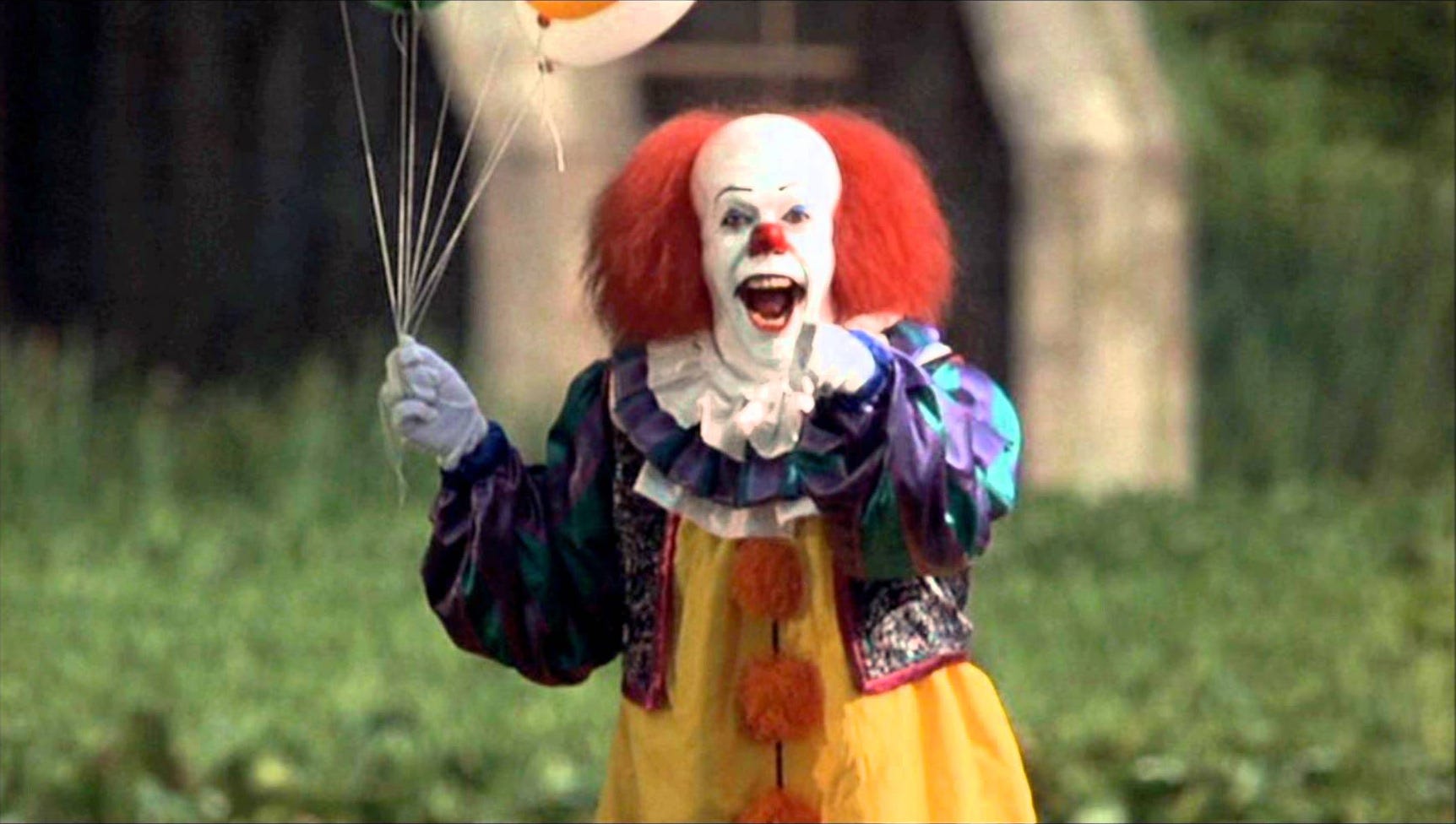
Curry was lured towards weird stuff: Rocky Horror, but also his turn as Pennywise in the miniseries It, and his appearance in Muppet Treasure Island. For many he was a face from their childhood, a star of Home Alone 2 and the movie version of Annie. He moved like a freak sometimes, but still managed to make those off-kilter projects feel mainstream. His CV ran the gamut of palatability, beloved as much by those die hard Rocky Horror fans, wearing suspenders and make-up, as he was for his more staid material. To receive the respect of the bisexual community is a rare, valuable feat. Curry was the girl who could do both.
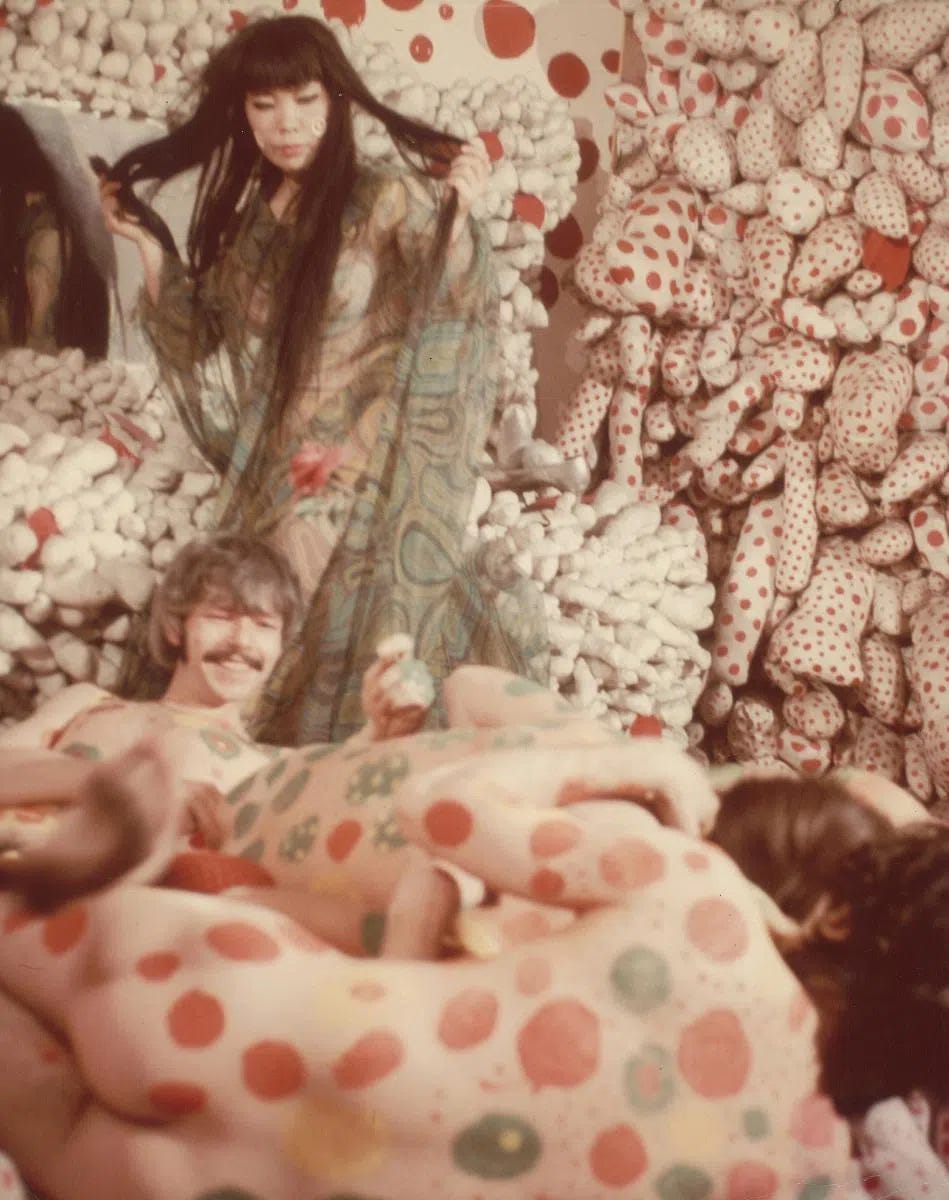
Then there’s Yayoi Kusama. Later in her career she’d earn an almost pop art level of notoriety, called upon by luxury brands to design handbags, her work transformed into IG-friendly fare. There was something sort of innocent about its sensory straightforwardness, much in the same way people talk about the unambiguous, IV-precise feeling of hearing a 2010s Katy Perry pop song. Is that crass to say? Maybe. But Kusama had the credentials too: she spent her early years as a provocative performance artist, staging “Homosexual Wedding” (1968), in which she “married” two men decades before such things were legal. They wore one wedding dress and Kusama, officiating, made them swear on a phone book rather than a bible. Her dresses were made from spray painted macaroni and bulbous potato-like balls of fabric. She’s lived in a psychiatric hospital for the past 50 years. That she found a style that inspired the Reels generation is miraculous—but again, proof you can be rebellious, brilliant, troubled, and adored by millions.
It makes you think who’s doing that today. The pop world has Gaga and Chappell—uncompromising, political artists with large audiences. The art world’s living geniuses also feel sort of greedy, accepting crasser versions of Kusama’s LV link-up. But they’re a rarity. It’s a tricky, almost impossible balance to pull off. The passing of this trio of artists felt so successively sore because they were some of the few who managed to make interesting work, as interesting people, but with a uniquely gigantic blast radius. Even days later, with the dust settling, the loss of these rockstars still feels like a loss of something larger, more undefinable too.

I feel like I say “Oscar season starts here!” about four times a year but this time I mean it. We’re in the “-er” months, which means the triple threat of Venice, Telluride, and Toronto Film Festivals will kick off next week. Expect dispatches from me on your IG and in your inbox too.
The new issue looks soooooo good btw 😈
If you’re in London, you have one Saturday left to go to Charms, the inspired gelato pop up brainchild of i-D visuals director Alice Lees and her boyfriend Calvin. <3

Are we gonna glaze over kusamas insane racist lore
You neglect to acknowledge Kusama's problematic legacy (her history of anti-black comments) though she apologized for it.