Whoever I bump into, slightly hungover trying to find my third-row seat at a 10 a.m. fashion show, the question “What are you most excited to see this season?” is the only thing I can think to say. “[INSERT INDEPENDENT DESIGNER WITH A NICHE FOLLOWING OF TASTEFUL FASHION PEOPLE],” everyone answers. Every 4 to 6 months we jump on the Eurostar, arriving in a Parisian fashion scene inundated with indie designers, all of them competing for attention within the same tiny slot on the fashion calendar.
It’s no wonder they come here. Paris holds the promise of success and relevance, that you’re either talented enough to be there or clever enough to understand that youth is the currency you spend on a 7-day Airbnb share in hopes that someone important will remember your Instagram handle. But making it in Paris as an indie designer takes, quite literally, everything.
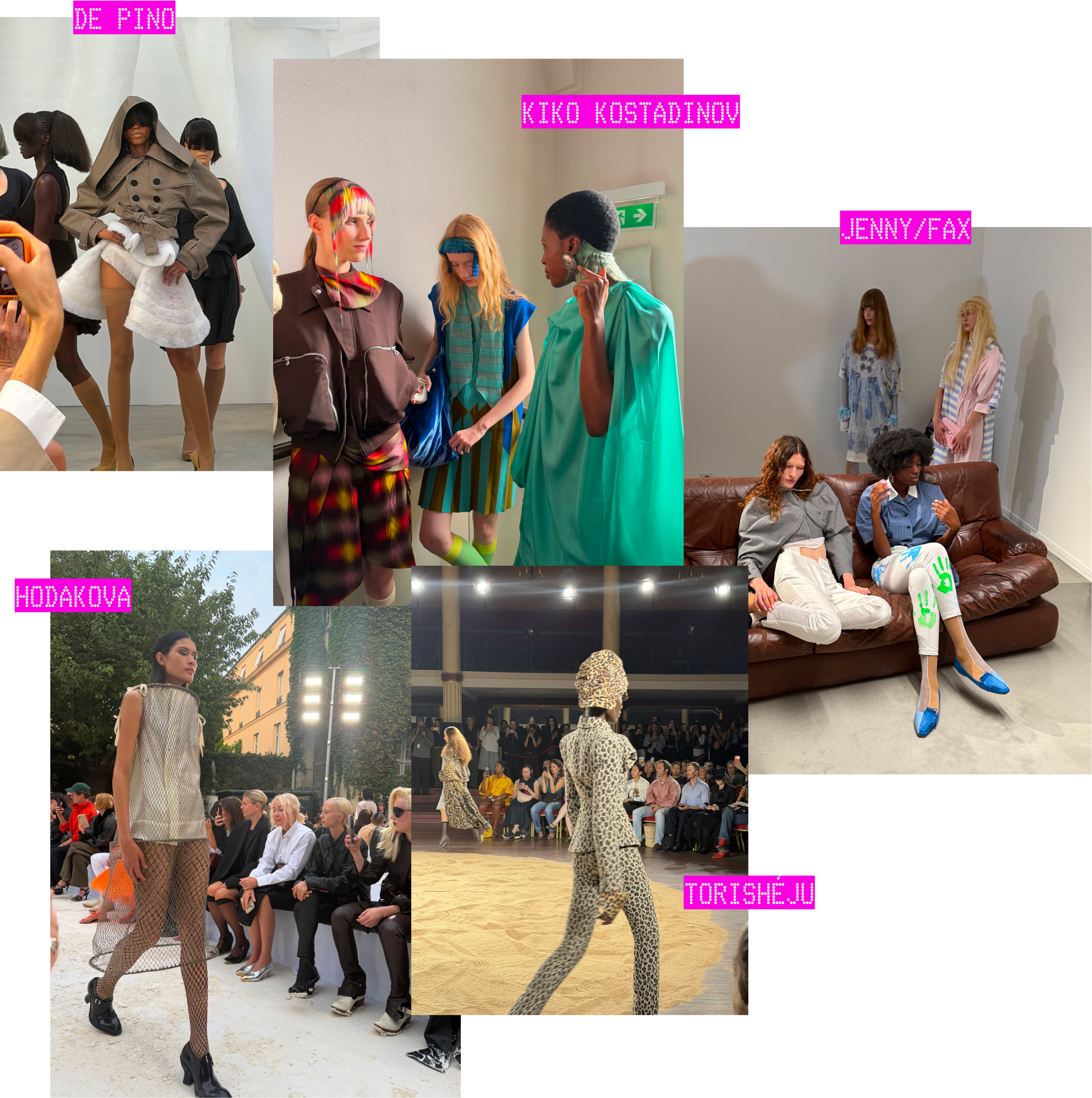
“At times, getting noticed feels as though you have to do something outrageous or something that can go viral,” says designer Meruert Tolegen who frequently has to remind herself that her work is about the craft and process instead. In a city where everyone is fighting to be seen, making great clothes obviously isn’t enough. While the big houses are stripping back—pressured by the constraints of a recession—the indie designers appear to actually be doing the opposite. Their shows are increasingly theatrical, attesting to the fact that their biggest asset is the spectacle. Hodakova’s models wore the dress equivalent of cage traps; Torishéju turned the runway into something closer to a circus; De Pino presented a dress that looks like a riff on the Guggenheim museum structure; and both Kiko Kostadinov and Jenny/Fax leaned into bright color-palettes offset by neutrals.
Put on a show!
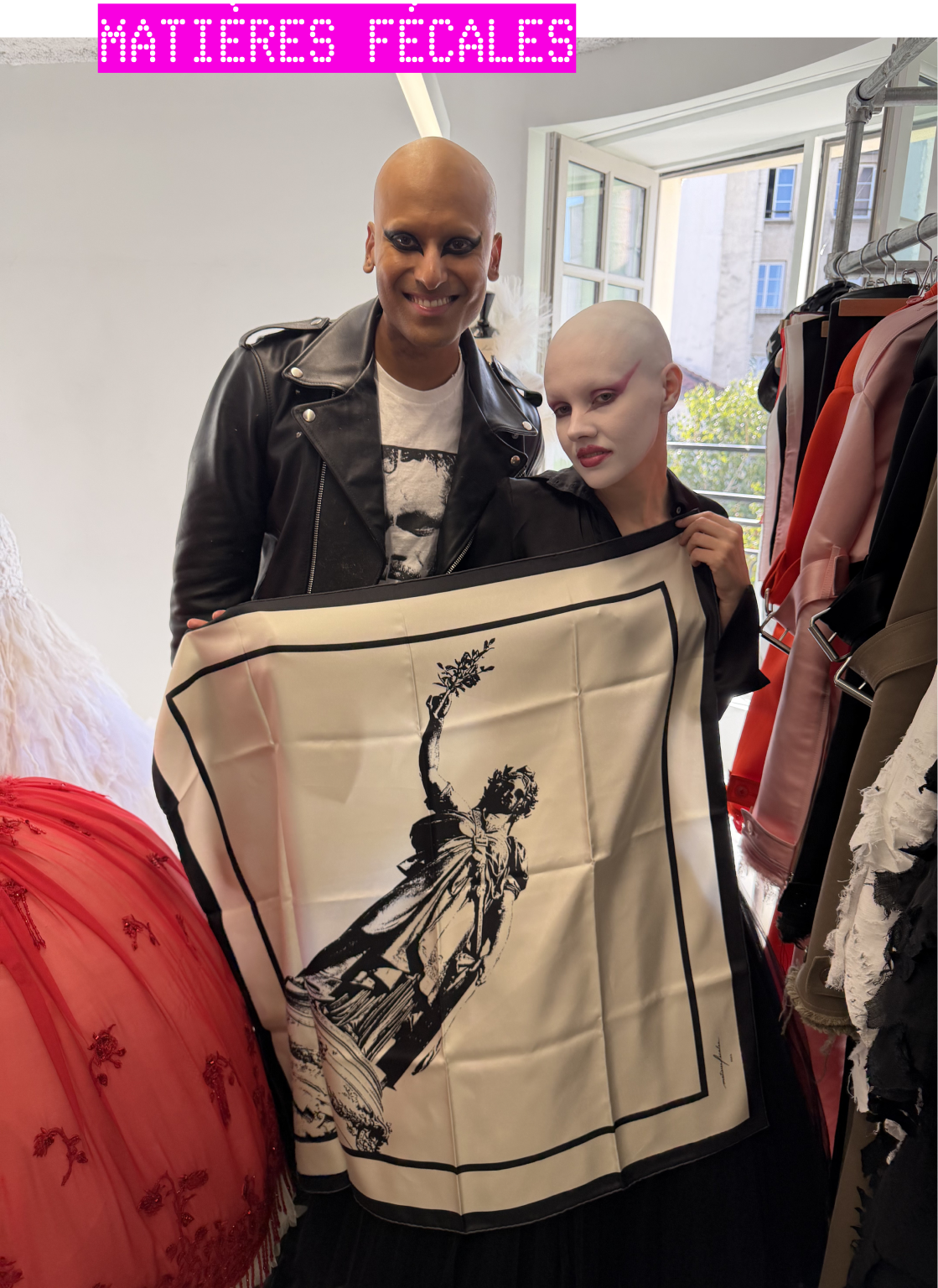
“The biggest double-edged sword is that the landscape is really polluted by the powerful houses,” designer Steven Raj Bhaskaran from Matières Fécales tells me. “But at the same time, those houses are kind of trapped where they can’t really say much.” Bhaskaran explains that for independent designers, the lack of resources can be a constraint, but it also creates freedom. With its recent show at Place de la République, together with co-designer Hannah Rose Dalton, they chose a location outside the traditionally bourgeois fashion circuit and used French codes of luxury only to subvert them. It was a way of taking what Paris has historically represented and making it belong to someone else, asking who gets to dress up in the fantasy of French luxury.
That instinct of questioning roles ran through Vaquera’s collection too. Their collection played with archetypes—the chef, the French maid, the debutante—while also pushing against the expected role of a fashion designer. “There’s so much pressure in this industry to become the idea of what a fashion designer should be,” designer Patric DiCaprio says. “At a certain point you stop thinking about what you want.” The answer for them was to break the role entirely, breaking into a Sonny & Cher musical number at the end of the show.
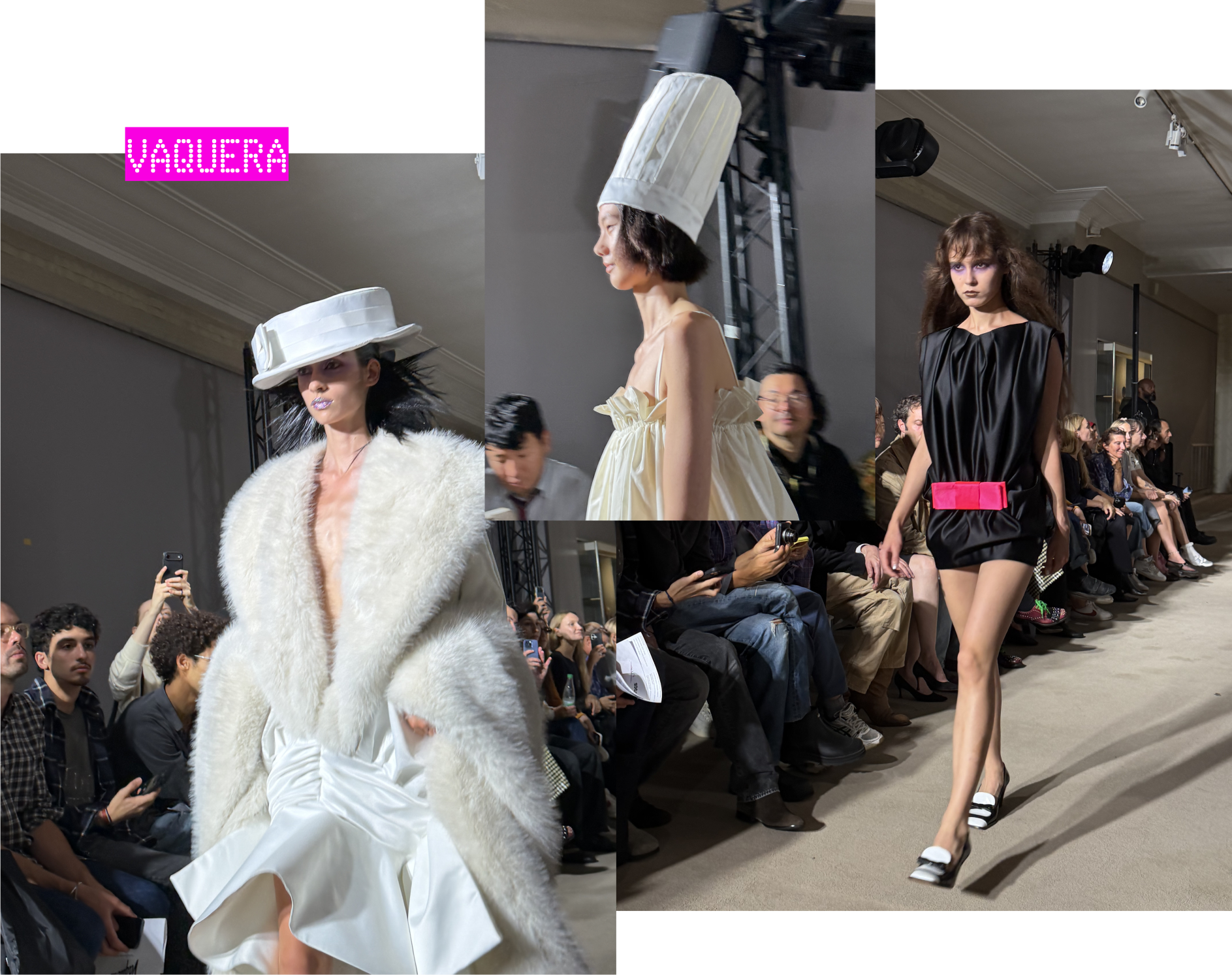
Vaquera moved from New York after reaching a point where the city no longer felt possible, financially or creatively. In Paris, DiCaprio and fellow designer Bryn Taubensee say they have been reinvented. They can live better, work better and, crucially, be surrounded by other people doing the same thing. “There’s so much history of artistic fashion,” DiCaprio says. “It allows us to really do what we want to do.”
For Taubensee, that means leaning into the romance. They explain that “living life as if it’s a movie” has always been part of the brand, and Paris gives them permission to do exactly that. DiCaprio was even listening to the Marie Antoinette soundtrack on his Lime bike ride over to our showroom appointment, which, in a way, explains it all. Their Spring 2027 show notes read, “I’m a put-on-a-show kind of girl.” In Paris, that might be half the job of succeeding.
The question “What does it take to make it?” is, in itself, a little sad. It exposes the dissatisfaction underneath the fantasy of PFW: the pressure to succeed, to be seen, to somehow prove that all of this—making the collection, getting to Paris, putting on the show—is worth it. But on the runway, that desire gets transformed into something much more fun.
Fake it till you make it.
On the runway, indie designers are presenting extraordinary characters who seem to have already arrived. They are desirable, excessive, glamorous, a little ridiculous—the kind of people who appear to have everything we came to Paris wanting. At Marie Adam-Leenaerdt, the show took place inside a set that was conceptualized as an Erewhon-esque grocery store, with models in gowns wandering between vegetables. For Paloma Wool’s show, the clothes seemed to have absorbed the fantasy of the room itself: skirts recalled ballroom curtains, the fabrics looking like they might smell faintly of champagne. Both were tongue-in-cheek interpretations of the people fashion tells us to want to be: rich and overdressed. And in Paris, where everyone is ostensibly trying to “make it,” their clothes offer the brief alternative of having already made it.
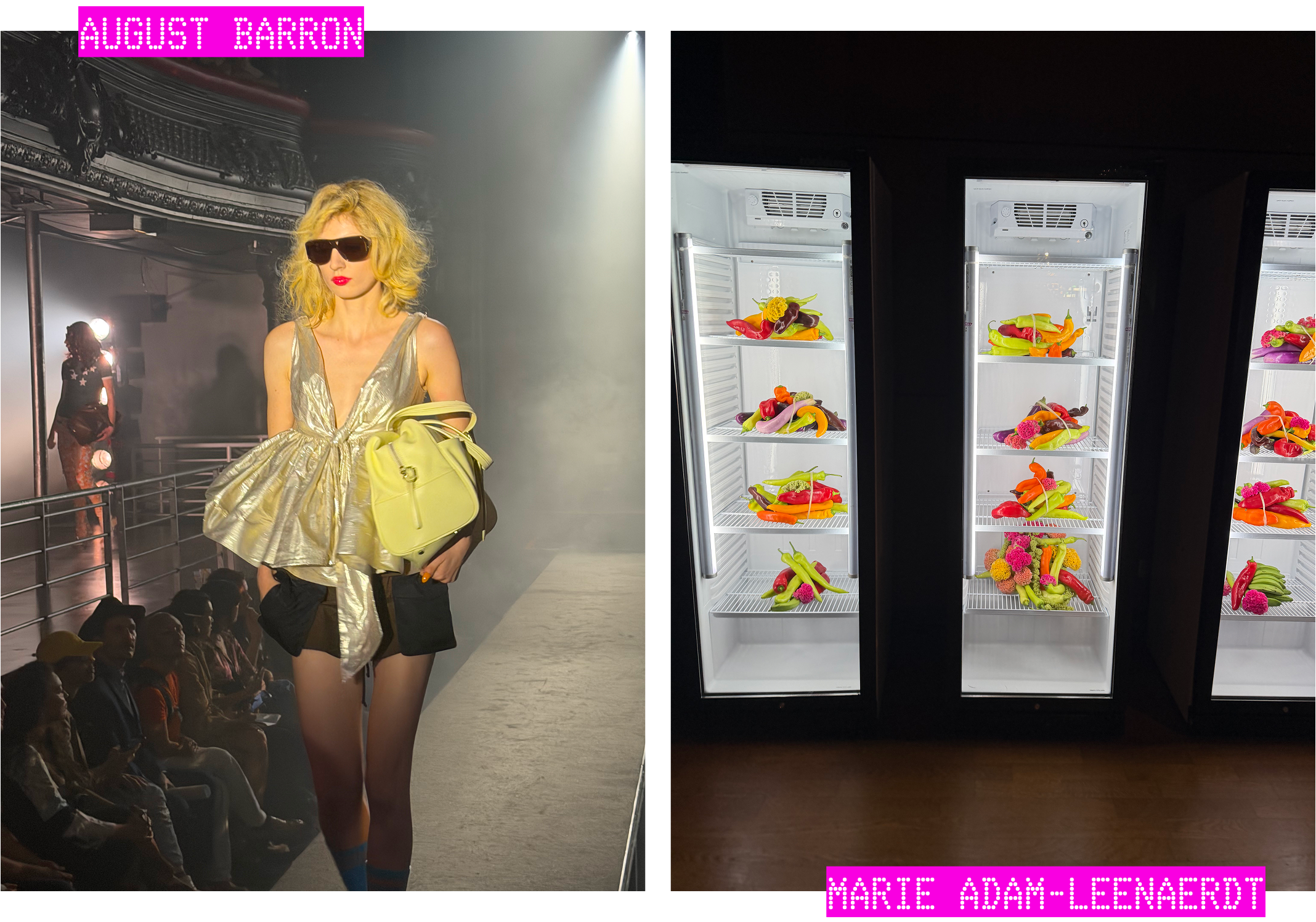
August Barron’s collection was similarly populated by a desirable cast of characters. In the midst of Paris aspiration, the clothes played with the idea of Hollywood aspiration. Titled “Walk of Fame,” the collection was explicitly about the desire for recognition. Held at La Cigale, the show had the audience screaming at the top of their lungs for each look. August Barron has already been talked about for seasons, but there was something about this collection’s success that felt on-the-nose: “It’s kind of ironic, especially for this collection, ‘Walk of Fame,’ that we feel like we kind of made it for ourselves,” co-designer Benjamin Barron tells me. What’s clear is that making it in as an indie designer in Paris really is about having fun.
Let’s start a business.
Of course, the less glamorous reality of independent fashion is hiding in plain sight inside 6-flight apartment buildings all over Paris, namely the “showrooms.” For Shushu/Tong, the Paris showroom is fundamental to the business. Although they’ve never held a presentation in Paris—they do blockbuster shows awash with East Asian A-listers on the Shanghai Fashion Week schedule—the brand has built its international network here, connecting with dozens of stockists that would otherwise be impossible to reach from China. For them, “making it” in Paris, also means making it possible to be a designer in Shanghai.
Julie Kegels, who won the LVMH Prize just a week before her show, similarly talks about showing in Paris as a logistical decision. “As a young brand, you can choose your own route, but if you’re doing your showroom in Antwerp, for example, people would not be coming there because it’s not easy. You have to follow these rules of being here, but that’s not something negative.”
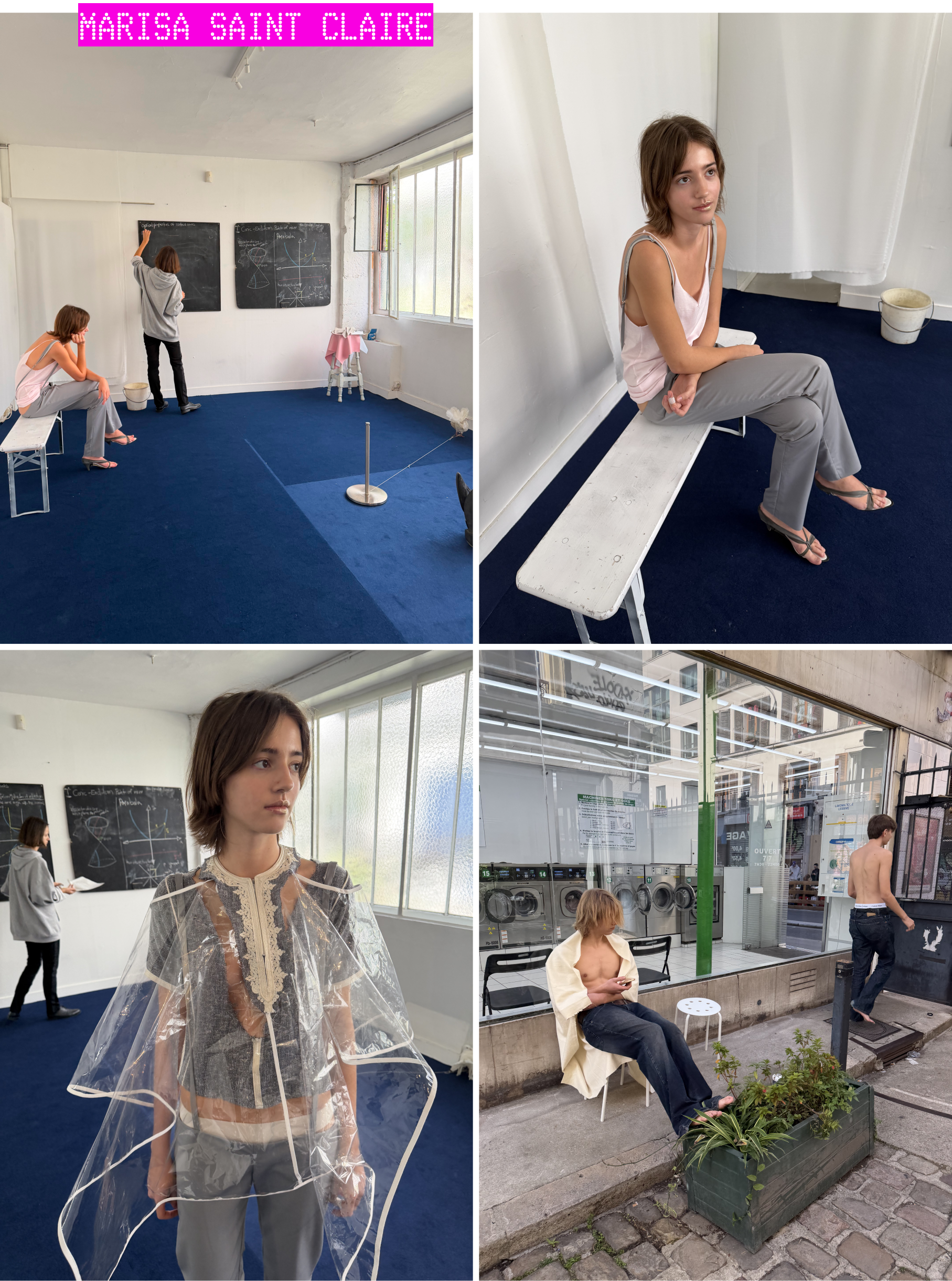
One of the newer brands this season, Marisa Saint Claire, created a showroom that was all word of mouth. Upon arrival, two shirtless male models escorted me into the space, as if I was part of a conceptual Abercrombie & Fitch performance piece. As a new brand with no Instagram presence, the showroom had a constant flux of people coming in and out of the space, proving there is more than one way to make it in this town.
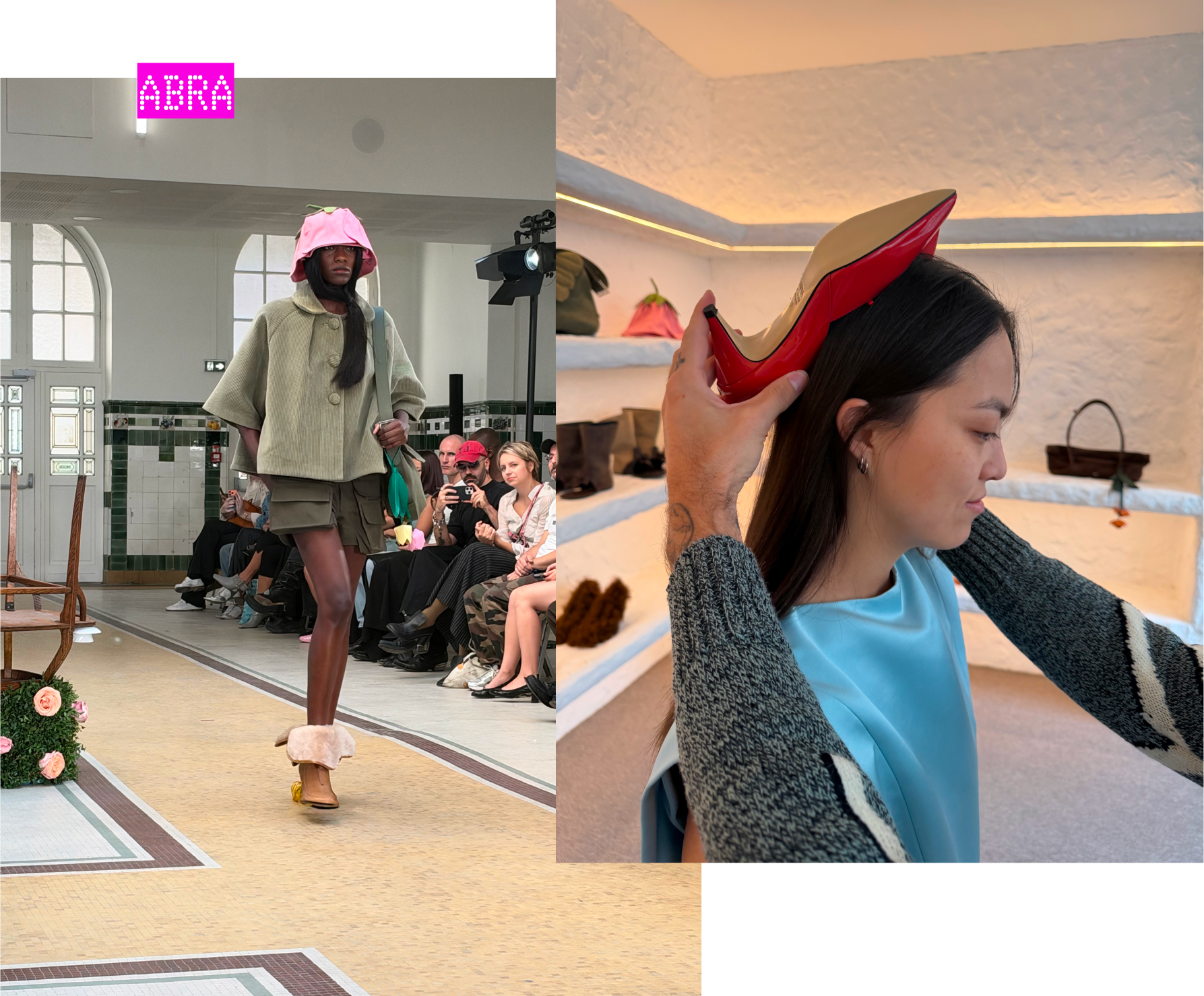
Obviously there’s the money too, although few people like talking about where it comes from (no, we’re not naming names :). Indie designers are expected to produce collections at an extraordinary pace, often while operating with a fraction of the resources of the houses surrounding them. Abra designer Abraham Ortuño Perez’s advice is almost comically practical: “Start a business plan.” And that’s probably the most honest advice you’ll hear about what it takes to make it in Paris.
It’s ironic because, as an independent designer, you’re actually completely dependent on the system you’re trying to stand out from. A lot of young designers are aware of how strange that is. Because, honestly, it’s a strange time to be making fashion. The world feels quite bleak. The industry is struggling. And somehow we’re still expected to produce more clothes and convince everyone that this is all incredibly important. Maybe what it takes now to succeed as an independent designer is understanding exactly what you’re part of and then outdoing the game by actually having fun!