With its army of independent designers, London is infamously known as the “cool” fashion city. True to its reputation, London Fashion Week is obsessed with coolness. Since last season, the city had been warming up. Coolness was already everywhere: from the now shut-down venue Lost to “Singing With My Friends” karaoke parties at Moyagi. This fashion week arrived almost as the culmination of it all, its starting gun fired, almost symbolically, by Guess’s new campaign, which put local club kids and The Femcels atop double-decker buses. Suddenly, the city’s various scenes and subcultures found themselves in the same place: fashion week! In a Mercedes-Benz G-Wagon, shuttling us from show to show with David—probably the coolest driver in the UK—at the wheel, it became almost impossible not to feel the part.

LFW is the place you’re likely to find something unexpected, where the designers are young and the clothes are often trying to make a point. The appeal of LFW is partly that its coolness belongs to its residents. It’s a fashion week built around experimentation and the idea that the next big thing can happen practically anywhere. But when an entire fashion week has a reputation for being cool, you start to wonder what everyone is doing to maintain it. And whether being “cool” is even still cool when it’s the expectation.
The last time I was somewhere this obsessed with being cool was in high school. You’d think that, by adulthood, we might have moved on from the grand illusion of coolness and popularity. But then you arrive at a fashion show, see someone you’ve met five times, and they ask you who you are. Suddenly, you’re back in the school cafeteria, trying to figure out which table you’re supposed to be sitting at.
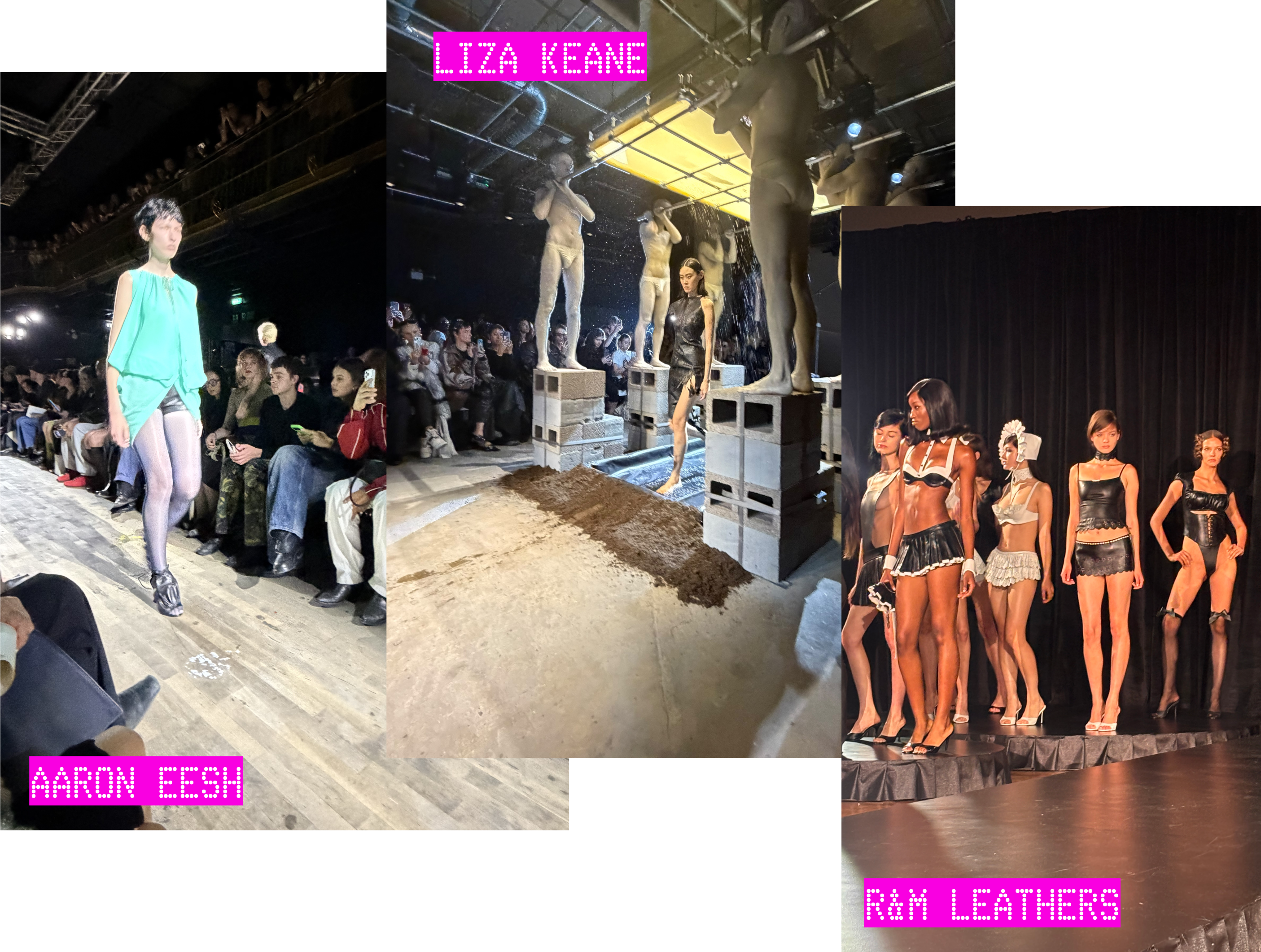
The coolness presented on the runway in London was very literal. There were cigarettes in hand—whether a recession indicator or simply proof that you were in London—and sunglasses worn indoors. London, known for its repertoire of all-nighters, offered a very “Cool 101” approach to the idea: at Aaron Eesh, models walked through a grimy Camden venue in nylon tights and leather hot pants, looking as though they had somewhere better to be. R&M Leathers was one of the brands that opened the season with an off-schedule show that was, shockingly, all leather, because sometimes the quickest way to look cool is to commit to one bit completely. At Mowalola and Liza Keane, leather took on a more sensual life, and both brands understood that the coolest girl in school knows exactly what she looks good in.
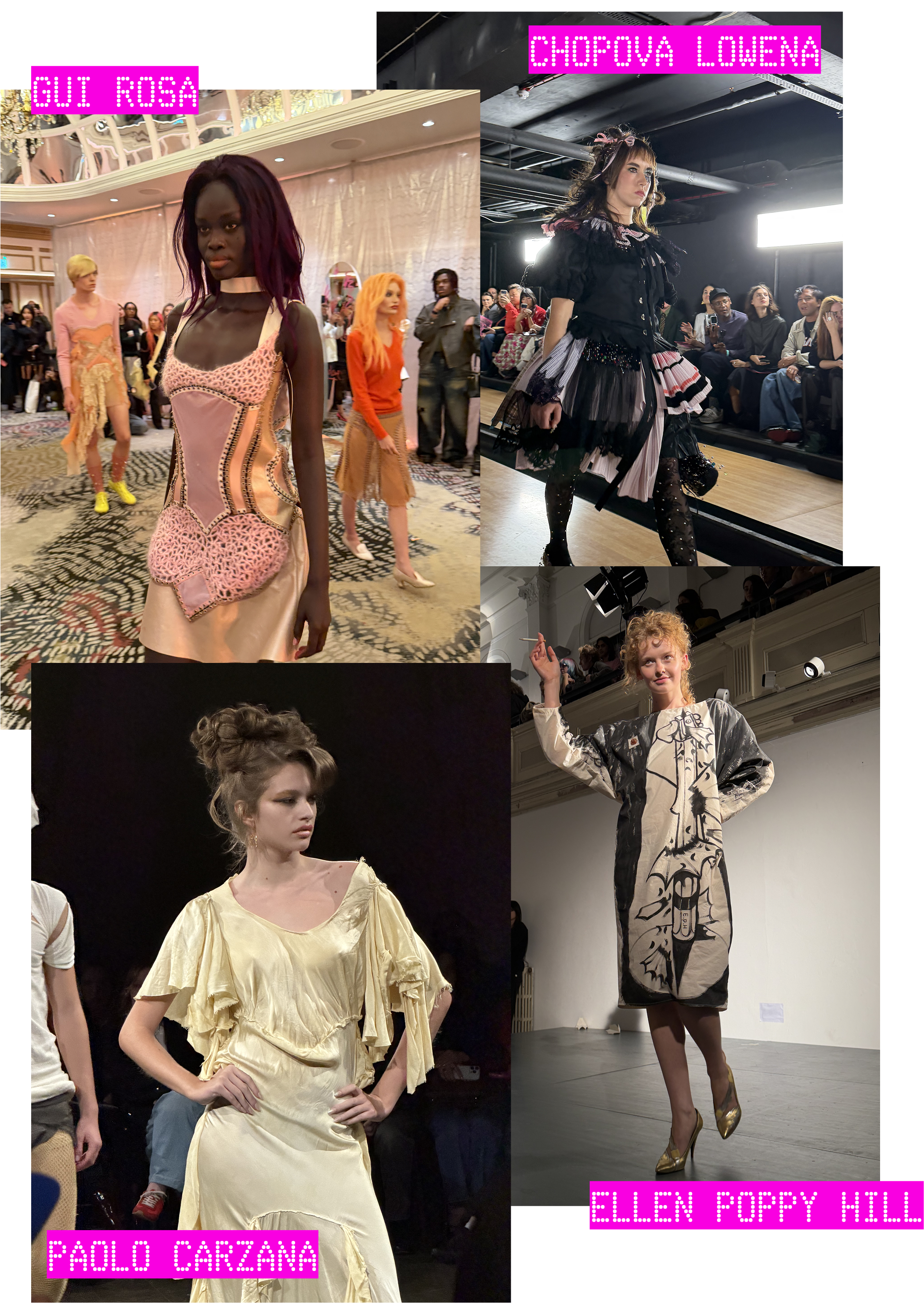
The funny thing about LFW is that it’s full of different cliques. The cool kids are not only the ones in leather coats, they are also the “weirdos,” which kind of feels like a sentiment about the city itself. When I arrived at newcomer Ellen Poppy Hills’ show, the walls were plastered with art school kids drinking Campari Beer cocktails from plastic cups. Down at the Bloomsbury Lanes bowling alley, Chopova Lowena’s star-studded cast of London creatives—from artist Athen Kardashian (who earlier served Campari’s at Hill’s) to tiara-wearing dogs—modeled a vampire-inspired collection accented by their signature tartan-carabiner-skirt madness. Experimental approaches thrived: Sól Hansdóttir’s debut included layers upon layers, while Paolo Carzana placed their disheveled draped pieces inside a spooky church. Even CSM-graduate Gui Rosa transformed her unconventional crocheted garments into a Gossip Girl fantasy straight from Constance and St. Jude’s.
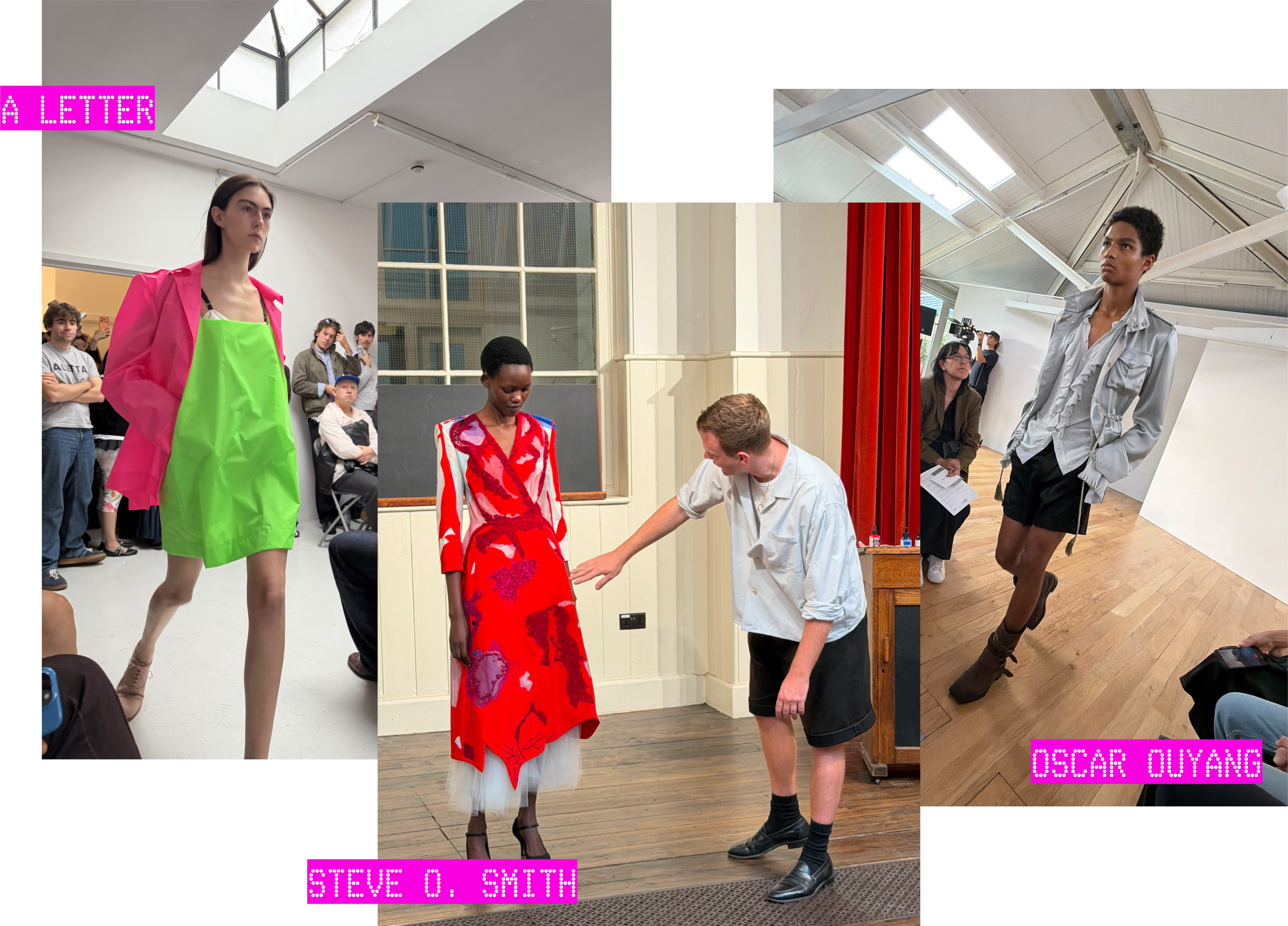
In true school spirit, fashion’s new vanguard dresses smart. Geordie Campbell presented ties under latex coats, taking a material more commonly associated with provocation and giving it a distinctly studied presence. A Letter twisted their paper dresses into cotton IRL, while Oscar Ouyang continued to show that dressing with edge can mean something proper, too. To top that off, Steve O. Smith held an old-fashioned couture presentation inside the drawing room at the Royal Academy of Arts, as if the editors in attendance were his professors—or perhaps his students.
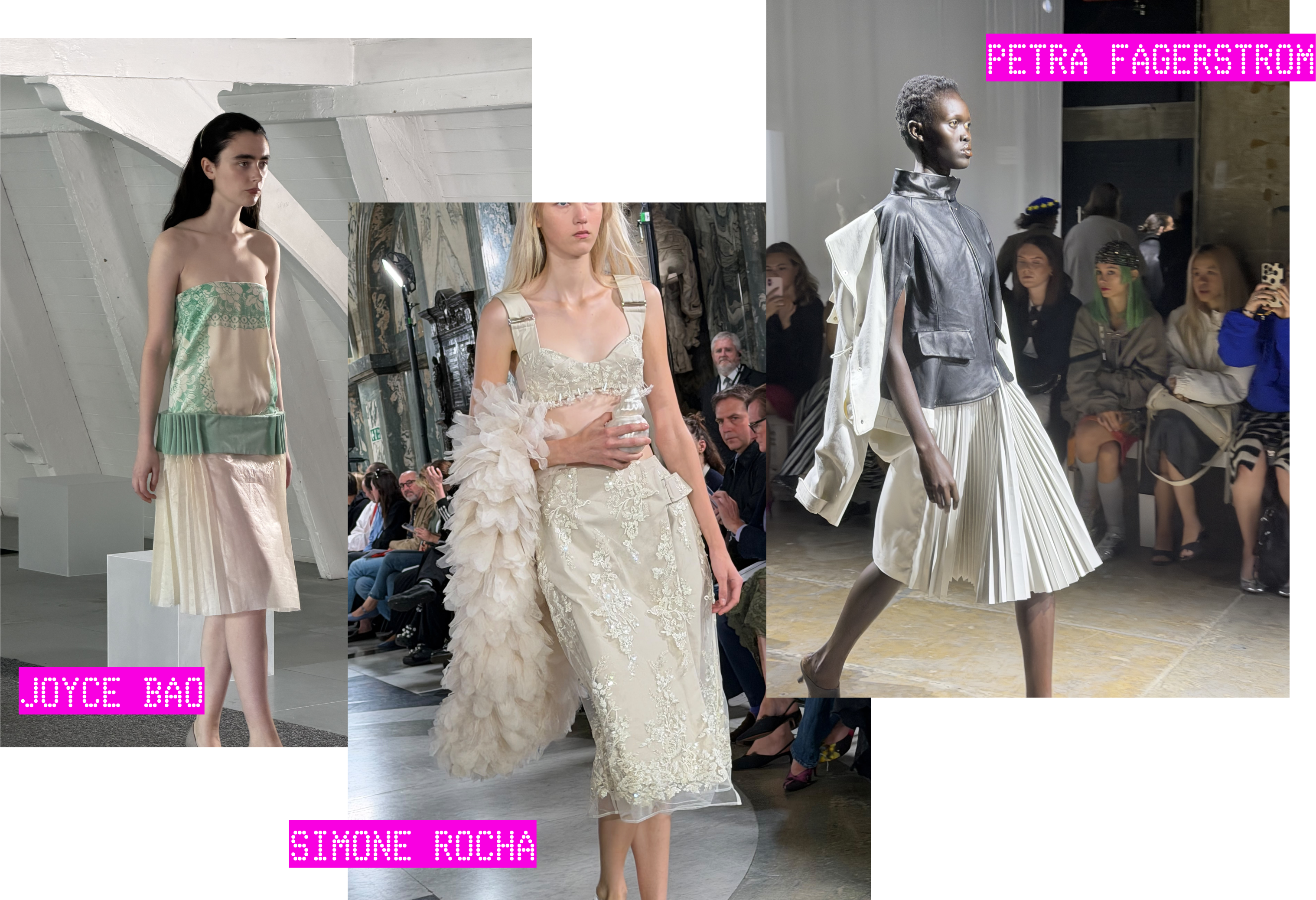
It’s also very hard to give London Fashion Week one energy—there’s a lot going on—which is exactly why a clique hierarchy functions well for it. Sometimes it feels like several fashion weeks are happening at once, all occupying the same city (and very often within the same walls at 180 The Strand). London is considered the “cool” fashion week because it has so many different definitions of coolness happening at once. Even the pretty girls are popular for a reason. Simone Rocha leaned into the romance that has become her trademark, with taffeta and silk that felt more assured than delicate. Joyce Bao and Ewusie offered their own interpretations of femininity, while LVMH Prize finalist Petra Fagerström showed up with the energy of someone who has not yet been at school long enough to become predictable. Her sophomore collection took a darker turn on beauty, with dark florals and a slightly gothic sensibility to pleats. She may be the new kid, but is hardly going unnoticed.
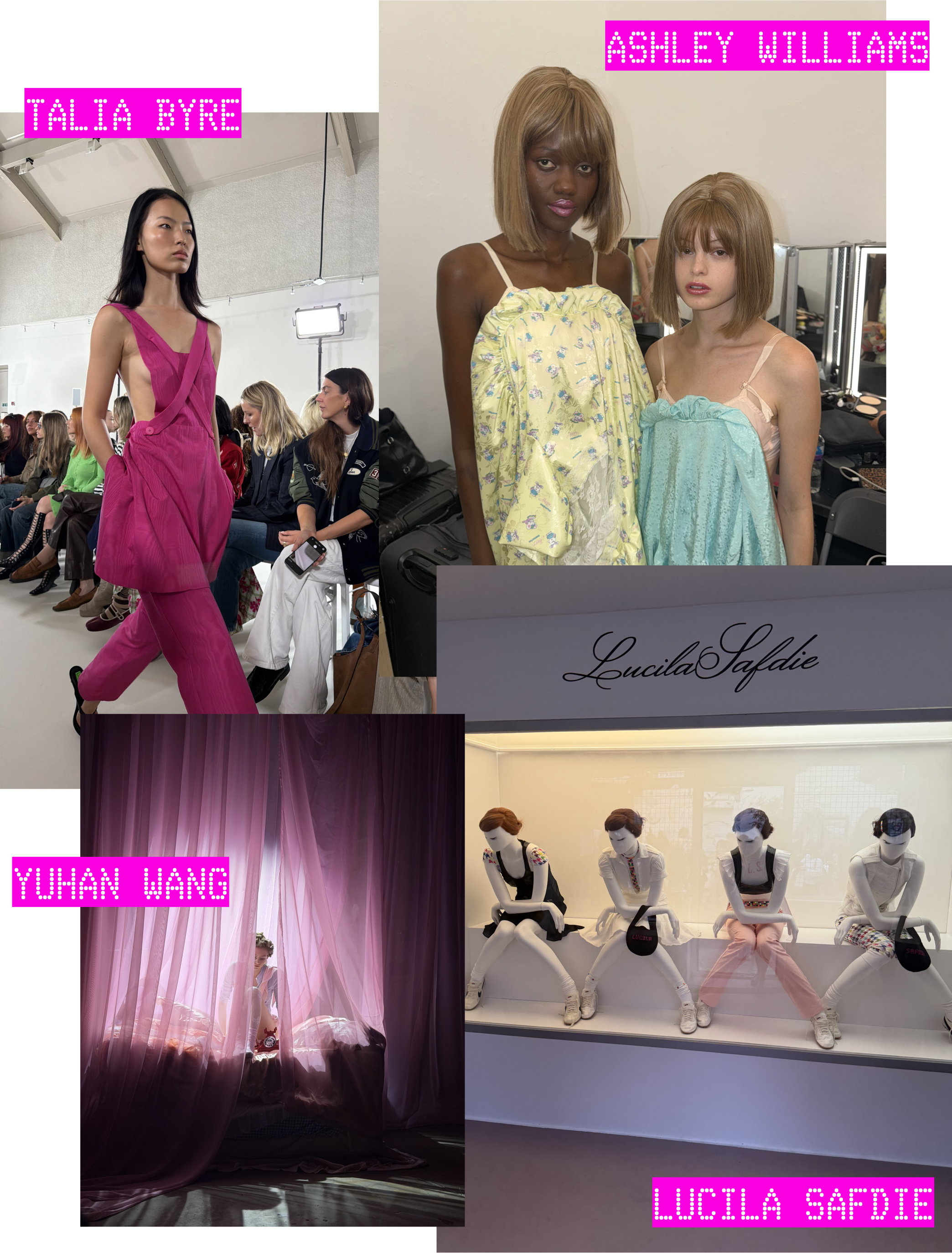
Between fashion editors skipping shows for a pint like it was maths class, it became clear that the Spring 2027 class had a distinctly 1980s streak. From Ashley Williams’ domestic take on ’80s silhouettes to Mé Mé’s geometrically structured shoulders at Fashion East, what once was is back again. Even Yuhan Wang opened with a model lying on the bed, twisting a phone cord around her finger, straight out of an old-school rom-com. And following in the ’80s spirit, bright colors were all over: Talia Byre swapped her classic stripes for hot pink in a way we haven’t seen since Stephen Sprouse’s heyday, while Lucila Safdie offered houndstooth and studs in every color of the rainbow.
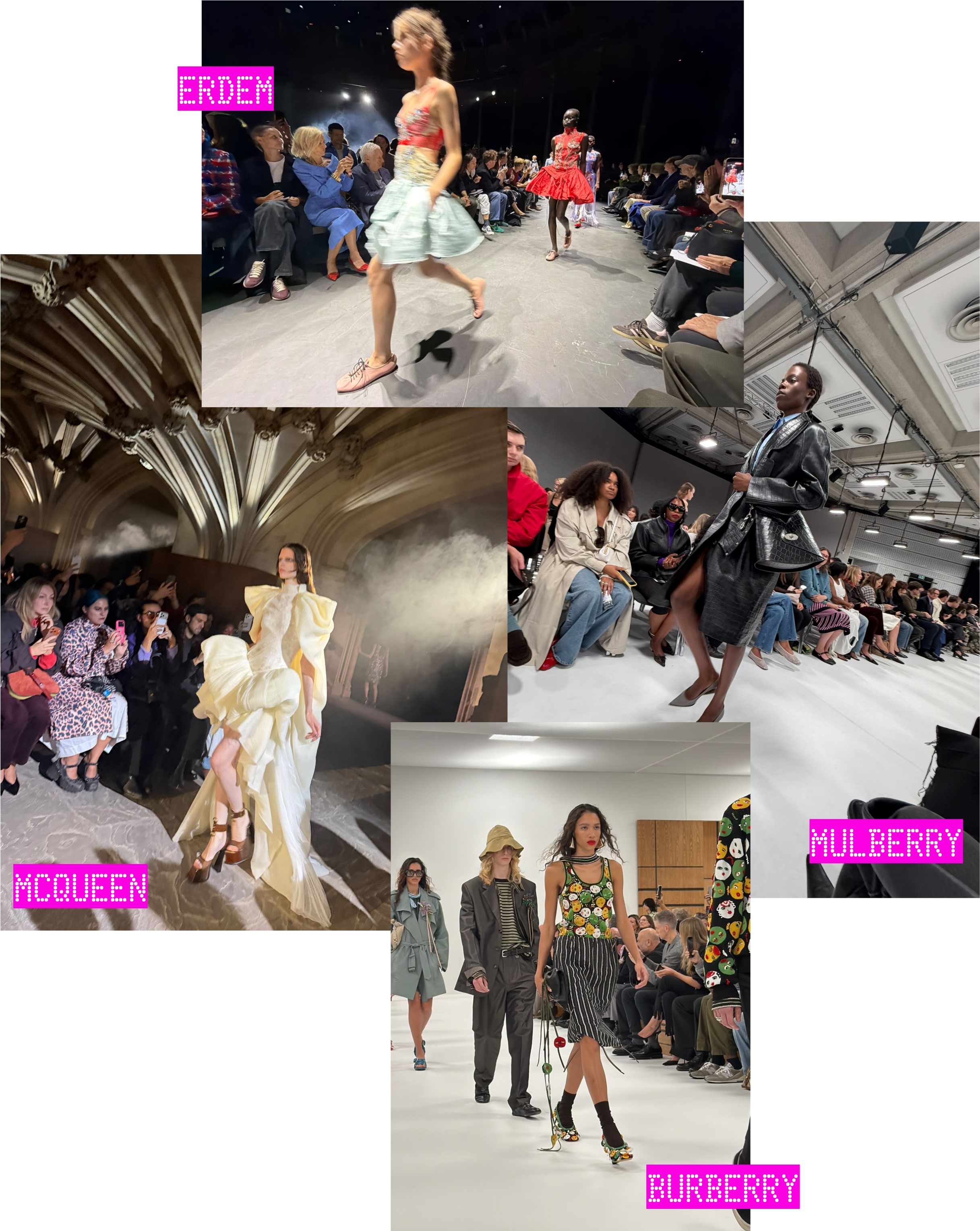
What’s so great about London is that, despite being commercially tied, even the big names are the coolest kids. Erdem blossomed in tuxedo jackets, bringing a sense of occasion to its romantic collection. Christopher Kane’s Mulberry debut reclaimed the It Bag, making a case for the accessory as the real social currency of the season. And at Burberry, the trench coat continues to allude to everything underneath it: a piece of outerwear that has always understood the power of suggestion (and London weather). And then came the event of the year: homecoming at McQueen. Seán McGirr didn’t put the girls in typical prom dresses, showcasing embellished frocks and sheer gowns instead. McGirr’s show carried all the anticipation of a school dance: the big name, the heightened expectations, and the question of what everyone would wear.
In a time when “iconic” and “groundbreaking” are used so frequently, the more humble word “cool” carries a particular weight. It suggests something more elusive: that a brand—or in this case a whole fashion week—has found its own rhythm without necessarily needing everyone else to agree. Perhaps being cool is more about finding a table where you actually want to stay. Not to quote Gwen Stefani, but being cool is also about being okay with where you ended up. There’s no single cool table at LFW, because here, everyone’s an outsider, and that’s what makes everyone fit in.
With the cliques taking shape, I asked a few designers: If LFW were a high school, which table would their brand be sitting at?
Lucila Safdie says… “They wouldn’t be at the table, they would be skipping class and hanging out at the mall.”
Gui Rosa says… “The froyo corner at Constance Billard and St Jude’s.”
Ashley Williams says… “They wouldn’t, they’re home-schooled.”
Sól Hansdóttir says… “I always wanted to be at the Mean Girls’ ‘Art Freaks’ table!”
Joshua Ewusie says… “We definitely give off that we gatekeep, but always happy to put you on.”
R&M Leathers says… “At detention!”