


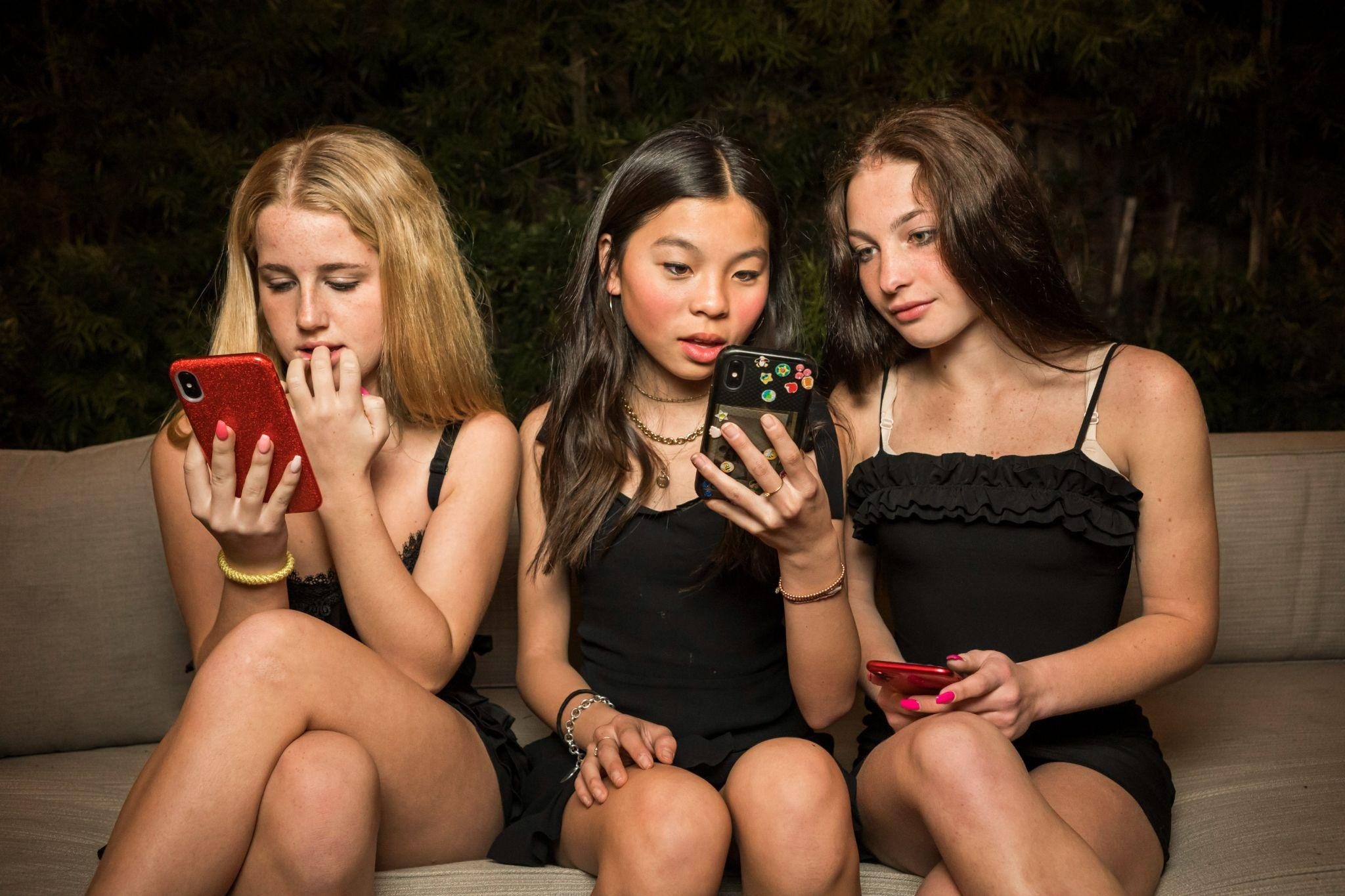
I grew up at a time when Lauren Greenfield was making work about the small-scale humiliations of youth culture, looking at the way we make ourselves miserable trying to be liked. She’s now gained legend-status by navigating the ups and downs of consumer consumption and social hierarchies, with notable monographs ranging from Fast Forward (1998) to Girl Culture (2002). The pages filled with girls getting ready together, going to parties, and being beautiful, I remember thinking that their world looked different from mine as I was mostly on my phone. I was getting ready with everyone too—just on YouTube.

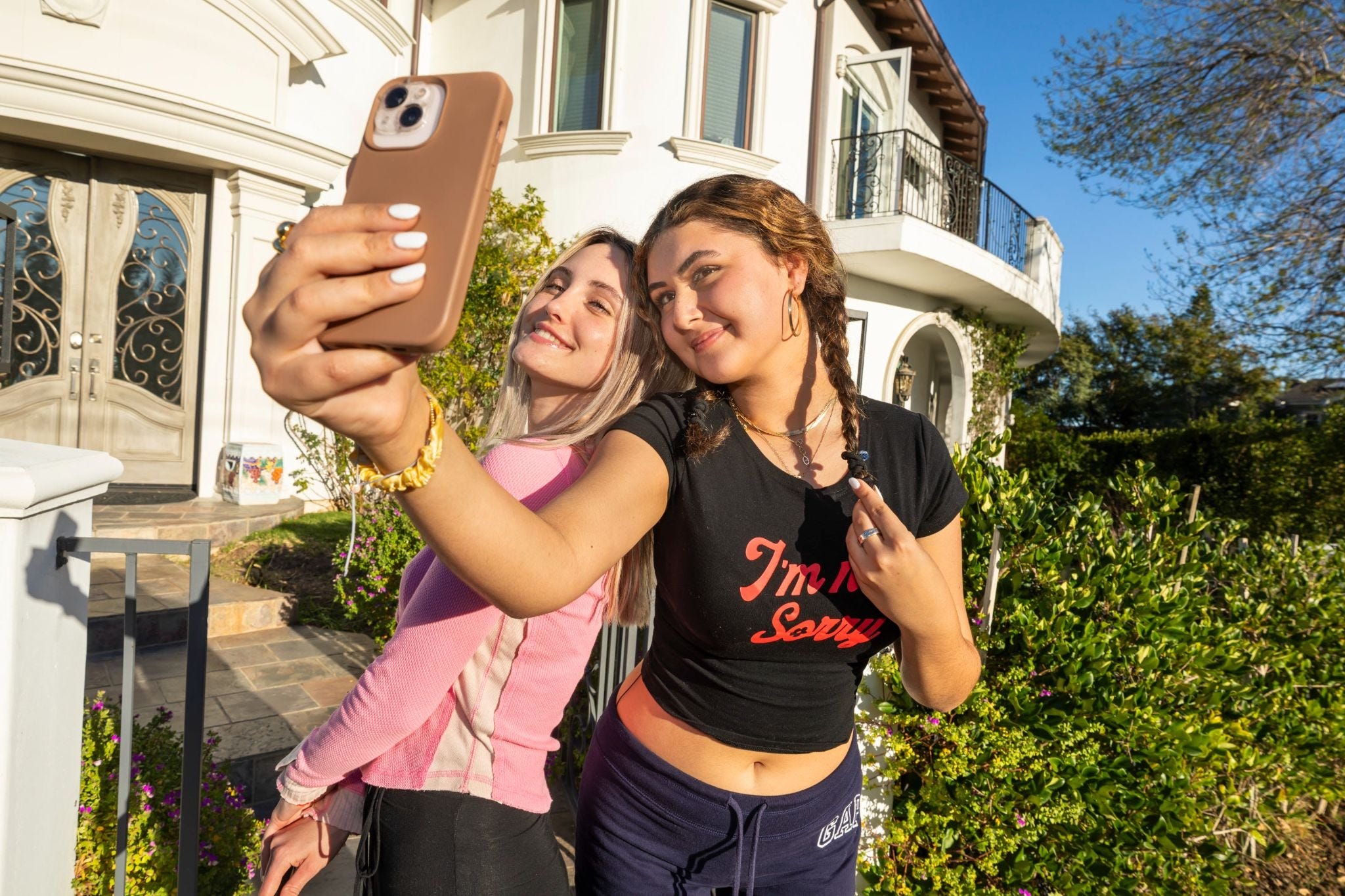
What I didn’t know at the time was that “bricking” would one day become a verb, and that I was living through something that Greenfield would eventually document. Greenfield’s Social Studies, which started as a five-part documentary series, examines the first generation (mine) that has grown up with social media all the way. It’s now an exhibition at Fotografiska Berlin and I’m old enough to interview Greenfield about why the problem is still these damn phones.
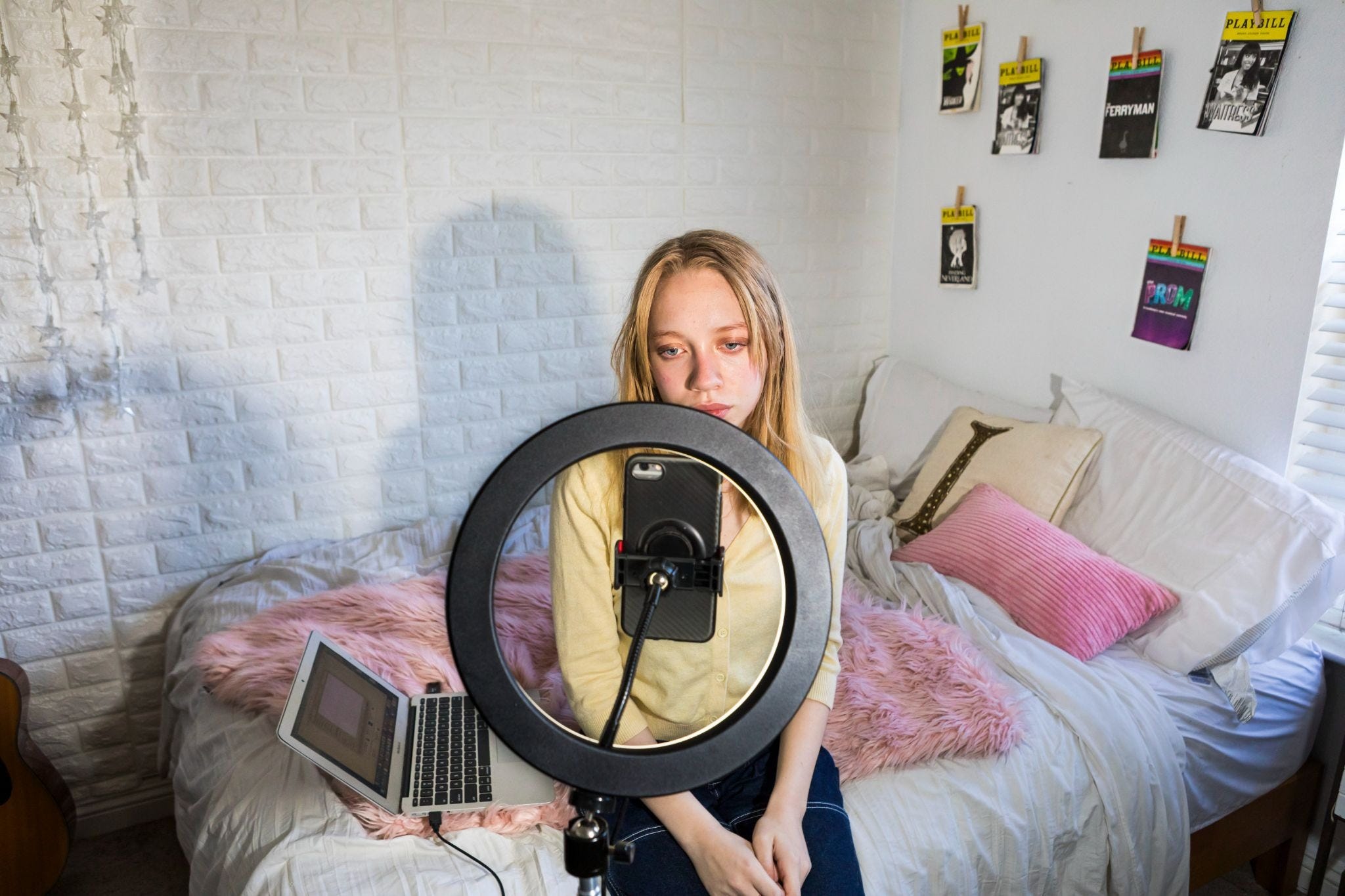
MARLEY WENDT: You were documenting the relationship between identity and consumer culture long before social media. What did you discover that led you to Social Studies?
LAUREN GREENFIELD: It was as if everything I had done to that point prepared me for Social Studies. Somebody once told me that “a picture is 40 years and 1/125th of a second.” You’re capturing lightning in a bottle, and that was kind of the magic of Social Studies. I had looked at all of the subjects before, from consumerism to the precocious sexualization of girls.
What felt new with Social Studies?
Teenagers have always had insecurities, but now there’s an algorithm that is actively seeking out those vulnerabilities and exploiting them. When I was a teenager, it was considered unethical for advertisers to use brain science to get to young people. Now it’s just a wild west.
A lot of the subject matter was new, and also my perspective. When I did Fast Forward, I was almost a teenager myself. When I did Social Studies, I was a mother.
And what about making the exhibition?
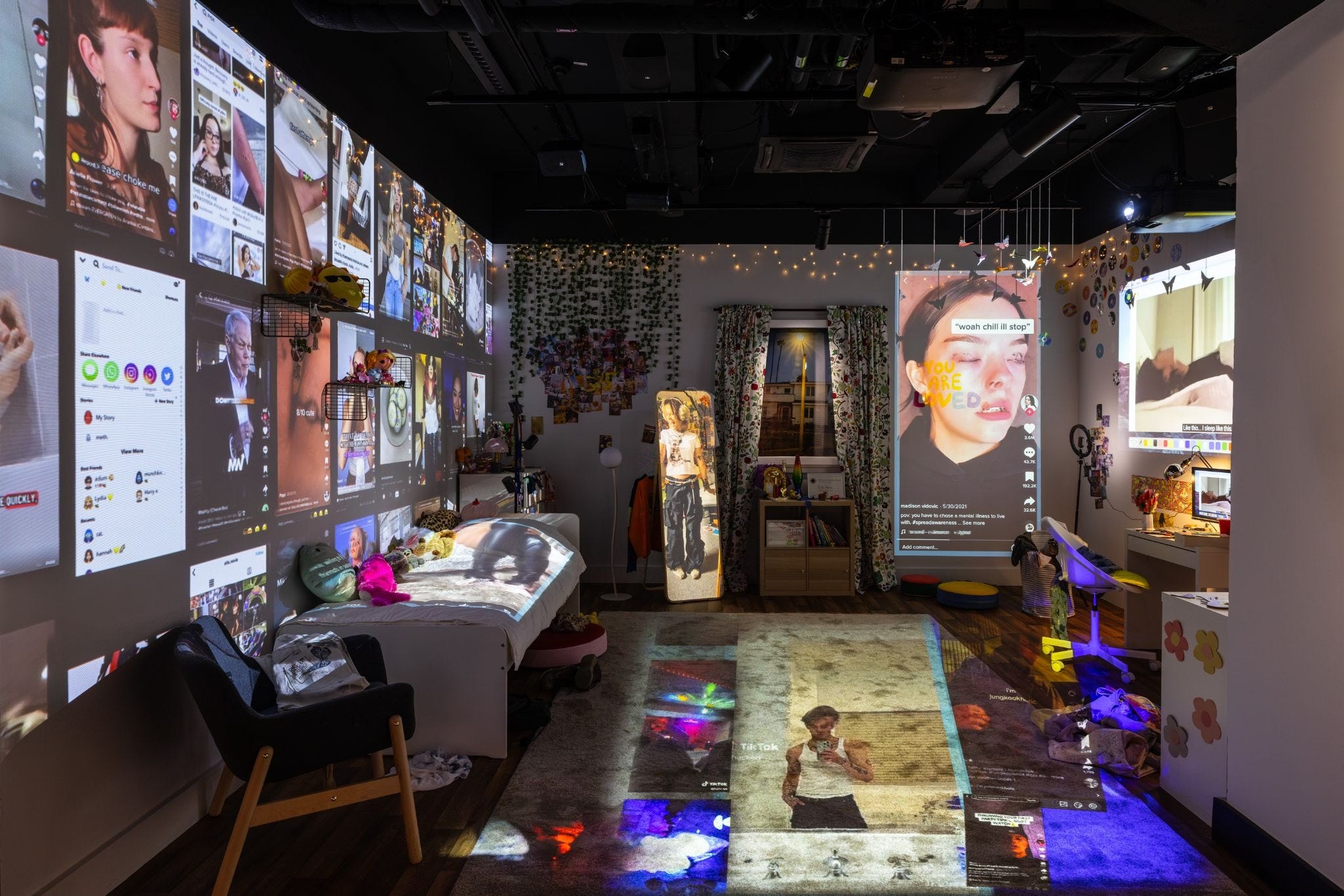
It’s the first time I’ve done installations, and it really allowed me to explore context in a more immersive and conceptual way. In addition to my photographs, I also mixed them with a social media archive consisting of 2000 hours of screen recordings. I could have just shown what the kids were seeing, but I wanted to really show how they were seeing it.
What became possible in the gallery that wasn’t possible on screen?
One example is that I recreated the bedroom of Ella, who is in the documentary. We filled it with all her stuff, nine projectors, and really overwhelming social media. So, you go into a “What I eat in a day,” and then suddenly you get interrupted by something else. I wanted to show how parents assume safety because it’s happening under their roof, and it became possible for me to play with that in a more conceptual way.
Is there anything that has happened culturally since you filmed the documentary that you added to the exhibition?
One thing that we added was the manosphere stuff, with the Misogyny Curtain. Everything from Andrew Tate to Charlie Kirk have suddenly become a huge thing. One of the characters in the documentary, Maren, became a viral sensation after the show. She debated Charlie Kirk in one of those college forums about abortion, and that became a viral sound that was just copied by millions of people all over the world, which again was part of that installation.
Even in the documentary, a lot of the teenagers express the harms of social media, but they still return to it.
That perspective has gone through my work since Fast Forward. I was blown away when I did the interviews for that in the ’90s. The kids who had like $50,000 bar mitzvahs were saying, “Money ruins kids, and money ruined me.” I was like, “Wait. How do you know that? And if you know that, why are you doing it? And isn’t it amazing if you can be the person to say that and not me?” It was really exciting that the kids were so insightful and articulate in Social Studies.
In your earlier work, you came in with a camera and entered these worlds as an observer, but in Social Studies, the teenagers are also producing images.
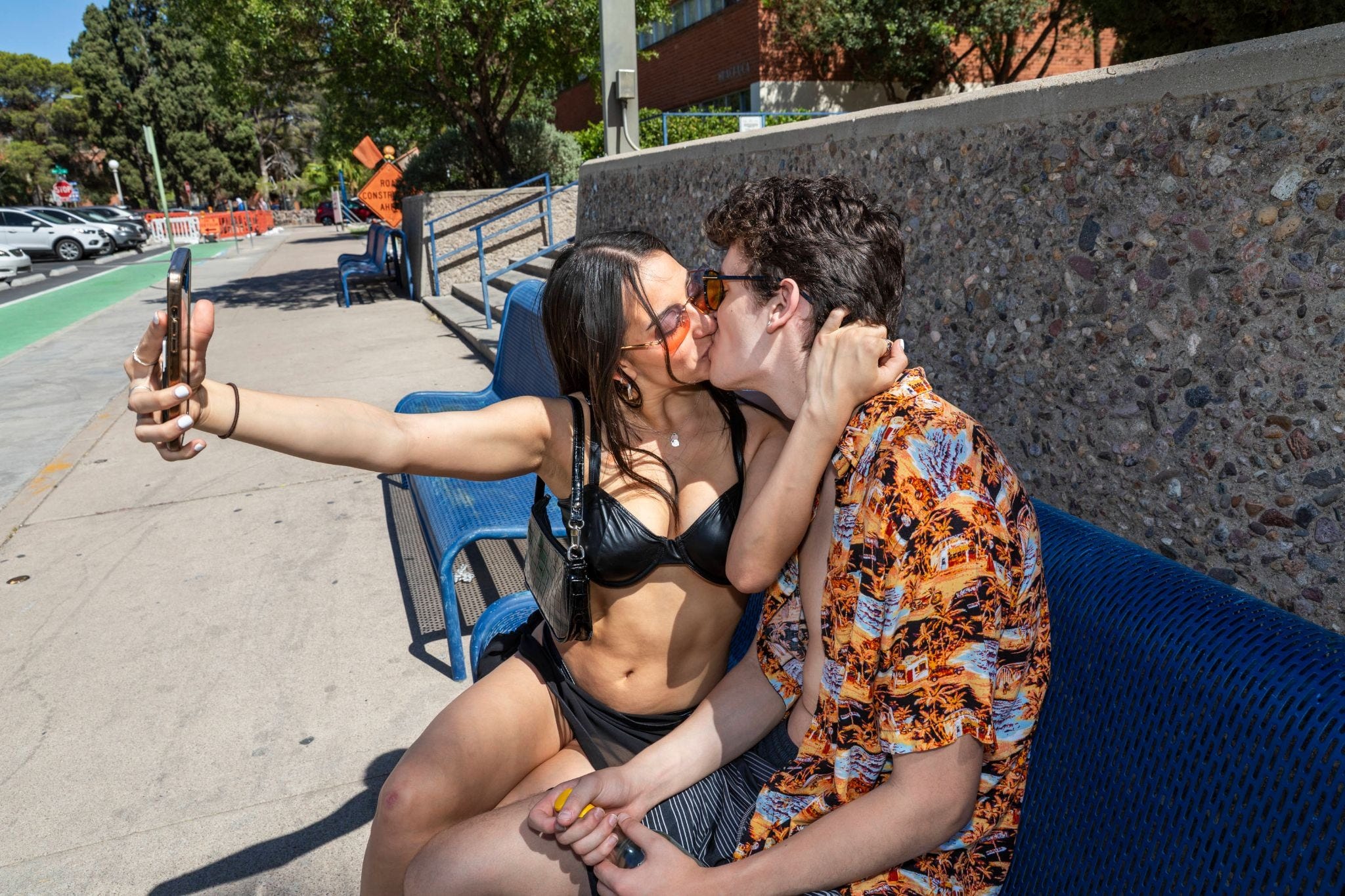
That’s really important because it reflects the world we live in. I decided I wanted to lean into the specificity and the aesthetic of the media itself. I made a bunch of new video pieces for the show, like this one called Prom Transition with kids all over the country doing prom transitions. It’s almost an art form: all these kids talking to each other in the same language.
In a gallery you can encounter all of these works together, which is very different from looking at your phone. Were you thinking about the social experience of it?
Exactly! I wanted to transform it. I didn’t want anything to feel the way it feels on your phone. One of the transformative qualities was scaling everything. Having things be legible so you could read the comments, what people are saying, and see the repetition, was really important.
Mass communication has always been part of my practice. I love the art world, but I’m not there for some kind of rarefied art experience that only a few people can understand. With this show, I was really happy about the most conceptual works, like Ella’s bedroom. People came in and just understood what I was saying intuitively.
In the documentary, one of the first lines is “documenting the first generation that is fully grown up with social media.” Do you think that it’ll be the last?
I guess we’ll see how AI affects social media. I don’t think it’s going to be the last digital generation though. Social media still has a hold on young people, but it all evolves really quickly. The more AI content I see, the less interested I am, but now that we’re connected that way, I don’t think it’s going to change.

The i-D Beyoncé Zine is out now!
Watch Dua Lipa’s Literary i-Cons video to find out which writer Dua Lipa would like to go for a drink with.
Magazine just launched their website. Read my interview with Coumba Samba and Sylvie Makower here.
Lucila Safdie is doing an IRL Halloween pop-up in London this weekend.
I want to eat a Chanel cake.
