


Last weekend, while everyone else in Edinburgh was watching shit comedy and clown shows at the Fringe, I sat through a weird American indie movie that felt like the perfect summation of Lana Del Rey’s influence on the culture. A fucked-up American dream. Teenage girls idolizing old Hollywood starlets. The scuzzy promise of classic road movies. An aversion towards contemporary technology and culture, despite the way both subsume us. A toxic relationship with men who seem to be good for us. A distinct sense of broken and complicated femininity that’s impossible to process on a surface level. It was good! It’s called Pretty Babies and is the debut feature of writer-director Tyler-Marie Evans.

Here is an abridged version of my review:
“Pretty Babies takes all of the mystique, anger, and fluttering eyelashes of Lana Del Rey’s songs, all the parts people find alluring and problematic, and manifests it with luster on screen. It’s a cautionary tale fueled by the fake promise of the American dream, about ambition and where it takes us.
Small-town America: teenage girl Marie (Emily Alyn Lind) is about to finish high school and plans to follow in the footsteps of her idols—the old Hollywood legends who star in the only movies her mother lets her watch. At school, few people understand her; her only real ally is her best friend, Luna (Sadie Stanley), a nickname she earned because, we’re told, she’s a “lunatic.” They’re both convinced they’ll be stars one day; Marie wants to go to college and train, but Luna knows she has the guts to make it happen without anybody’s permission. Largely detached from the love of their parents, a violent incident prompts them to go on the run together. They steal a car and head for Los Angeles, where dreams come true.
Of course, the film knows that the life they’re in pursuit of isn’t as glamorous or straightforward as they might have thought. Teeming with atmosphere, grit, and glitter, the film is a visual marvel; its frames bronzed by the sun of the States these girls are traveling through, crackling with grain and pops of color that feel like living in a Petra Collins picture. (Evans admits she only recently learned of Collins’ work.) At times it feels like we’re living in the dreamworld of its protagonists.
Evans has made characters that don’t rely on technology for anything, really. Movies set today tend to focus on contemporary forms of sex work, but the film leans into the kind that might seem easier to romanticize: real-life meets. That’s been the trope that’s plagued Del Rey’s reputation since her early albums: a glorification of gendered violence, or “daddy” culture. But Evans doesn’t ever treat sex work as edgy or as fodder for her interesting art. If anything, it subverts expectations (Marie’s first meeting with a client is an eye-opening experience), and manages to neither demonize sex work as a profession nor condone it entirely. Instead, it feels like a film about how men will always fail to be a woman’s savior. They fuel rifts between friends who, deep down, know they need each other more than they do a romantic partner.
It’s a tragic foreshadowing for the messiness of these girls’ journey that they idolize the “olden days” of Hollywood without considering the fact that the stars of that era were hooked on barbiturates and sadder than ever.”
You could argue that Del Rey has spent over a decade as America’s greatest cultural archaeologist, digging away at its dank and falsely unattractive past to make new, inquisitive work. Born to Die and its Paradise Edition addendum were so old- fashioned that they were considered pastiche and derivative, embraced at the time only by gay guys and girls on Tumblr who understood the vision. But soon that supposed shakiness firmed up: Ultraviolence caused chaos with its title track’s supposed glorification of domestic violence, but was more warmly received. Lust for Life felt like a poppier slant on the more grown-up world she’d built. Then Norman F*cking Rockwell came—her masterpiece. It paired this hazy Americana throwback sound with references to Kanye West and iPads.
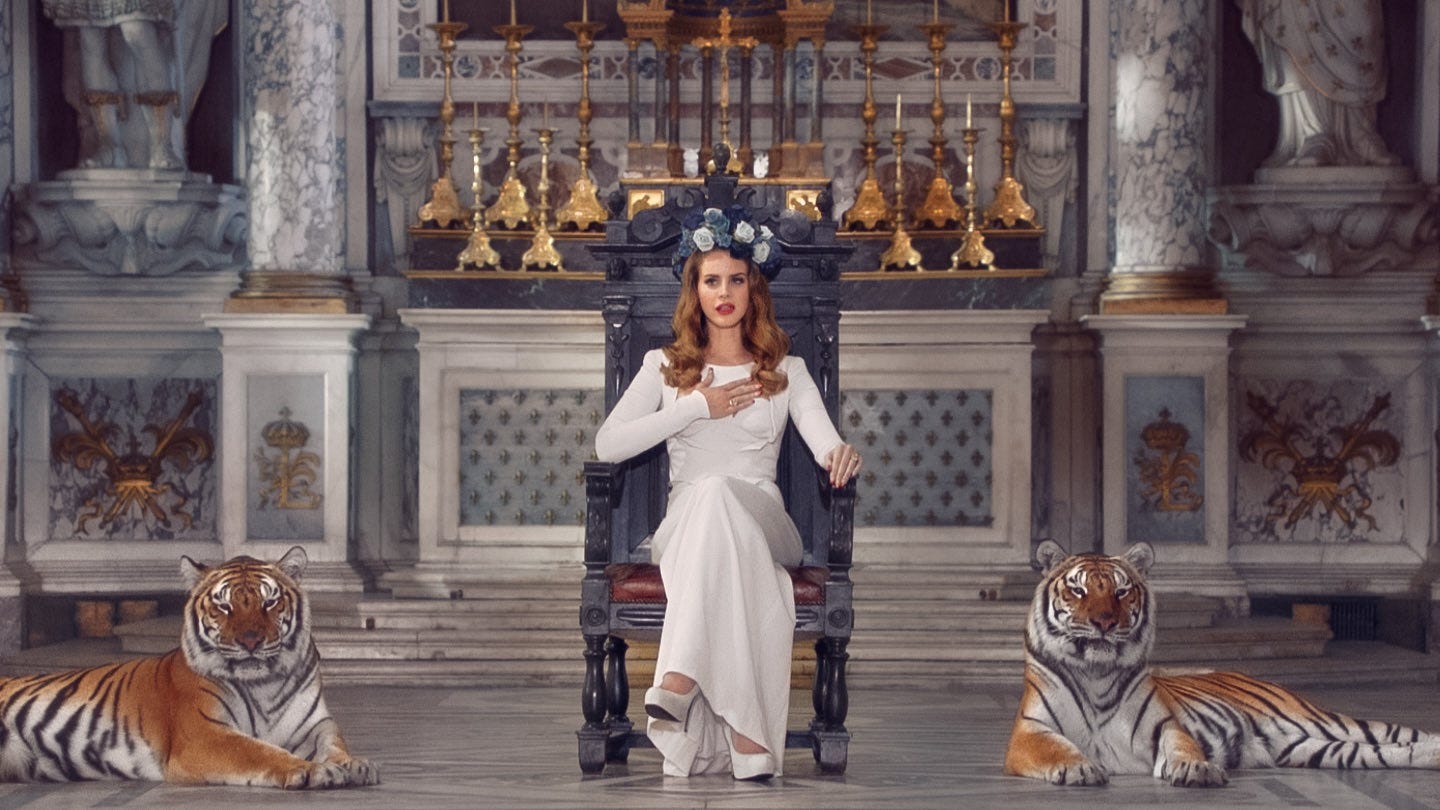
Nobody’s been successful in making music that sounds like Lana (not without trying) because her music presents itself as something inimitable. There’s as much Julee Cruise as there is Eminem in the fabric of it, twisted with influences from outside of the world of music, poets and authors who themselves made fascinating work about the American psyche. And yet, we can encounter a mood and feel like it’s something that would fit into her oeuvre.
Despite their beef, the shared image of a swampy American south feels like it connects Ethel Cain to Del Rey’s world. The visual presentation of British pop star Sienna Spiro hearkens back to the coiffed, bee-stung-lips image of Del Rey in the early 2010s. The literature of Ottessa Moshfegh, namely My Year of Rest and Relaxation, captures the kind of lackadaisical approach to a depressed existence that punctuated some of her early interviews. This lush Sylvia Plath archive/resell IG account that i-D icon Marley Wendt put me onto. It even fits retroactively! The Virgin Suicides? A Lana movie. Lolita, obv. Her influence is so all-consuming that she’s able to take credit for things that existed before she was even on this earth. In the mood for a movie with Lana Del Rey vibes? Someone’s cultivated a 1000-strong list of them on Letterboxd.
That’s an impressive influence, and I’m not sure how much Del Rey would take credit for this stuff. But in an age of flat pop apathy becoming the dominant power in music, it’s sort of wild to think that Del Rey, who’s never had a sniff of a number one single in the UK or the US, has managed to become the biggest “vibes” artist of her age.
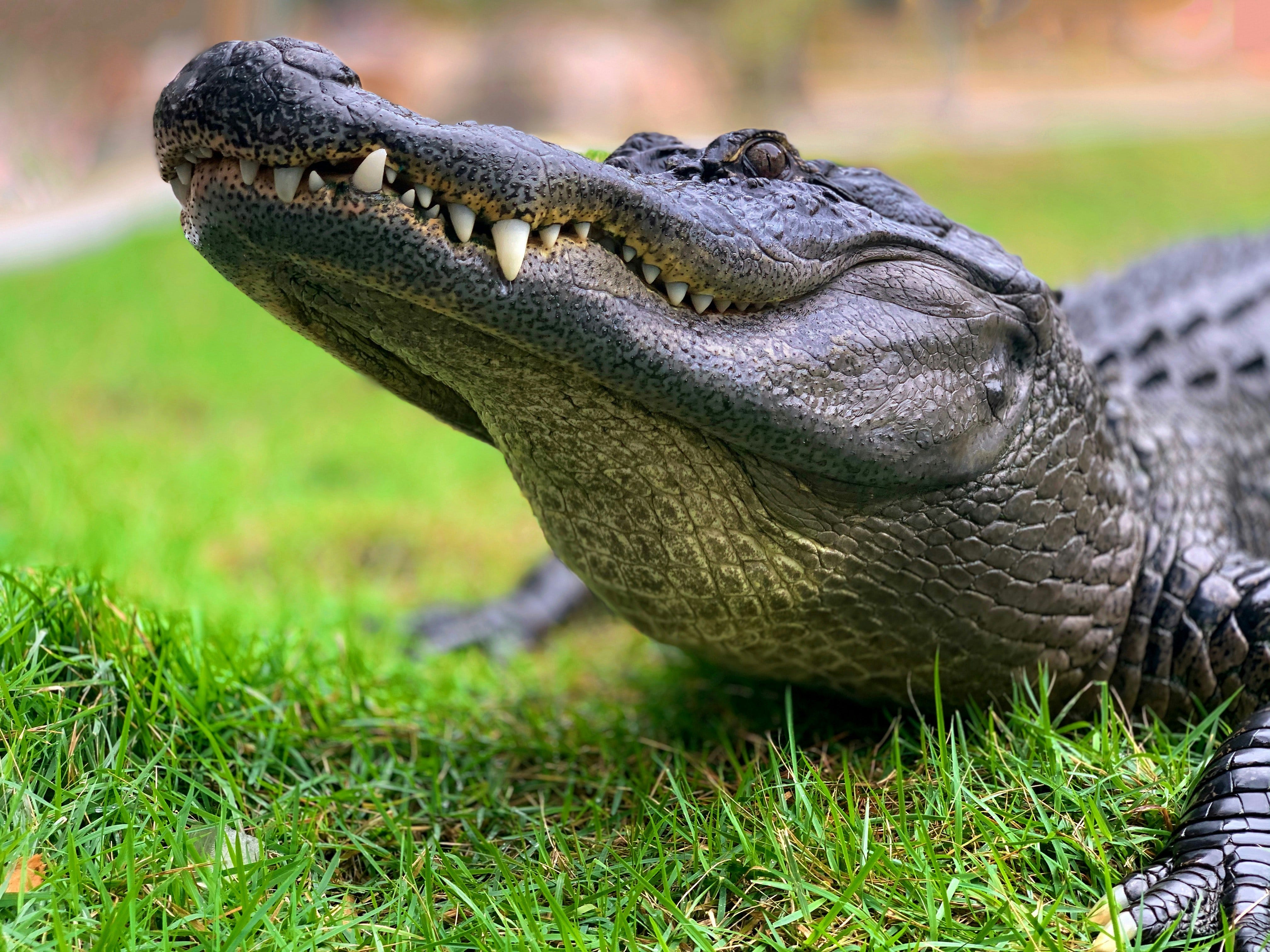

I spoke to an alligator from the Louisiana bayou who may or may not have met Del Rey’s husband, tour guide Jeremy Dufrene.
I asked: What do you think of Lana Del Rey’s music?
The alligator said: “I think it’s great.”

I only saw one thing at the Edinburgh Fringe this year, and that was Buggers—a piercing portrayal of the relationship between the artist Francis Bacon and George Dyer. Most theater at the Fringe, despite its lauded reputation, is violently mid. But I found Alastair Hall’s succinct (50 minutes!) and creatively staged play to be really affecting, with some of the most real writing I’ve heard spoken out loud on stage in ages. Pretty much every important newspaper has given it a 5-star review. It’s very good!
Not to be a bitch, but the Chanty Beluga thing grew garish and annoying sooo quickly. Not Ms. Beluga’s doing, just an evidence of how quickly the culture can make something a “thing” and just as swiftly make it feel like your grandparents find it funny. And by that point, it’s just not that funny any more.

Love this!!! When the bts photos of Pretty Babies started surfacing online, I was kinda resistant to it... I don’t know why. Maybe because I got those Euphoria vibes from it and I hate the show. But now, with its release coming up and more people talking about it, I’m starting to see it differently. Can’t wait to watch it <3
I am going to preface everything I say now with "not to be a bitch." Great piece!