


At the top of the Google Doc I write in, there is a small magic pencil that offers me AI assistance:
For just a moment, let’s try to divorce AI from its circumstances. Forget about the environmental impact. Forget about the money the Sam Altmans of the world are making. Forget about the threat to your personal privacy, the evil eye of capitalism seeing your most embarrassing moments, the plagiarism and idea theft from vulnerable artists. Forget it all. What you are left with is a genie that offers limitless answers for every question. Isn’t that nice? The human condition is that we all want answers, but nobody wants to think.

This past week the New York Times cut ties with a freelance journalist over undisclosed AI usage. My take on AI usage amongst journalists, even the barest amount, is best summed by The New Yorker’s Becca Rothfeld, “Fact-checking, generating ideas, and shaping questions for interviewees are not ‘grunt work.’ They are at the heart of the journalistic process, and if you cannot do them yourself, you should leave your coveted full-time writing position to someone who can.”
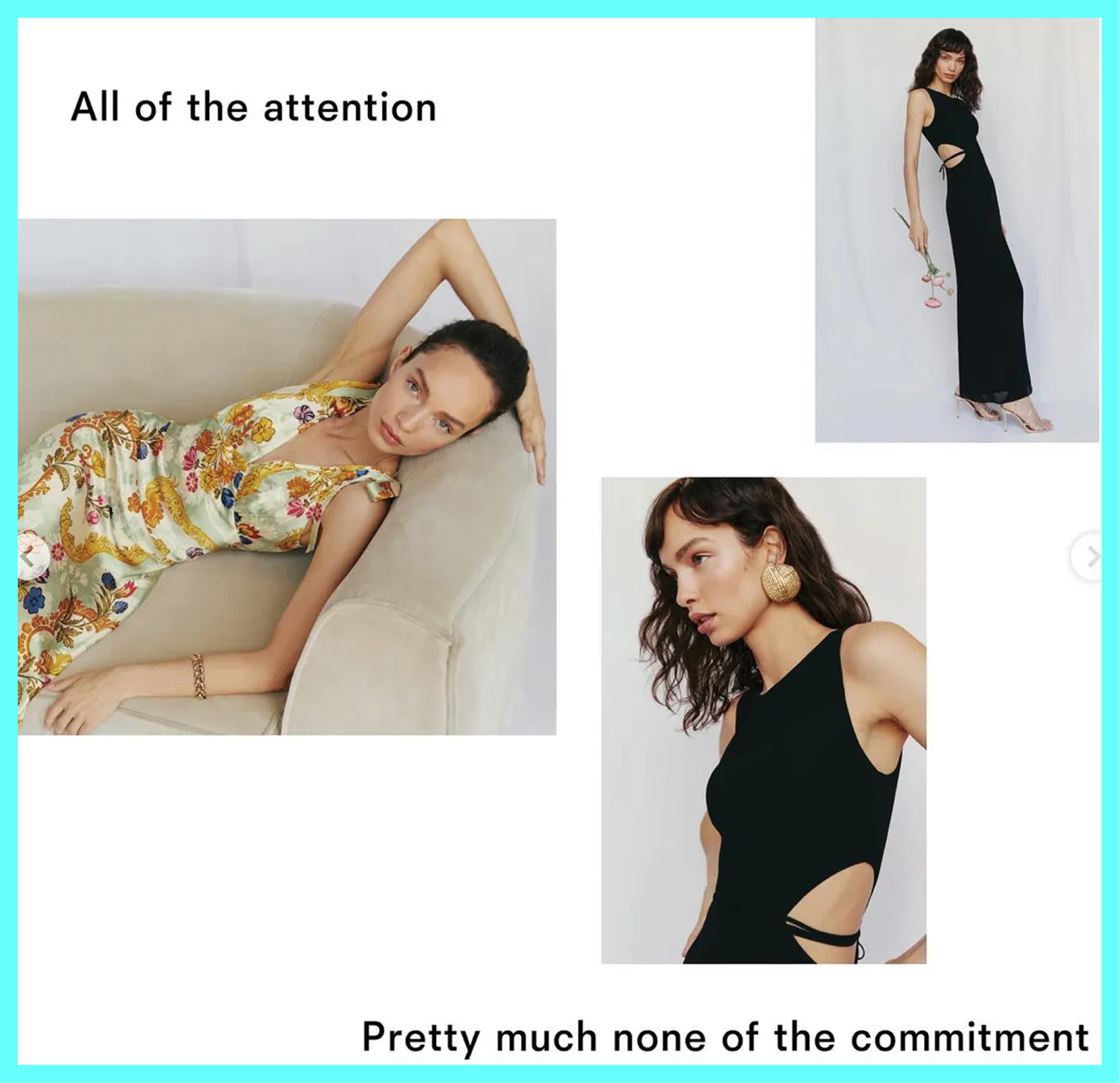
I’ve always been interested in the brand Reformation. Founded in 2009 by Yael Aflalo, the initially mission-driven brand (deadstock fabrics only!) has become a one-stop shop for wedding guest dresses, office appropriate slacks, and “this is technically a dress” summer frocks. Despite past allegations of both racism and greenwashing, Reformation pulled in around $315 billion dollars in revenue in 2025. More revealing than its revenue is how they’re making it: Through the use of clever, simple, clickbaity copy. The brand’s name, a general nod to institutional reform, also references one of the most significant theological movements in Western history. Its newsletter and commercial content features sleepy photos of faux-Jane Birkins with text that feels ripped from Fleabag. The day-one tagline: “Being naked is the #1 most sustainable option. We’re #2.” What’s most perplexing about such provocative language is how nothingburger the clothes are.
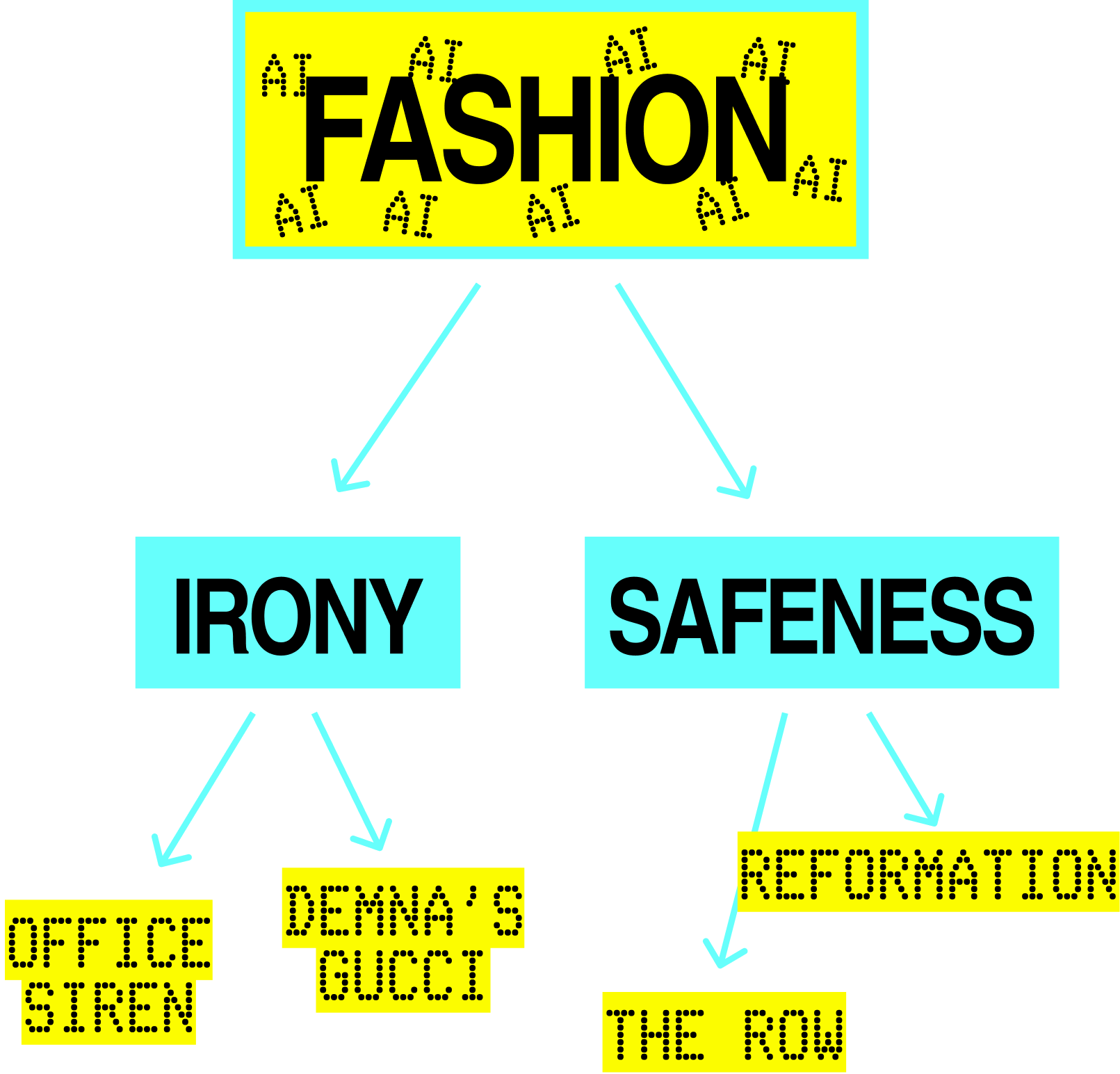
Fashion has always been an easy way to signal what you stand for. Miucca Prada called it an instant language. As we move culturally away from thinking for ourselves and replace thoughtfulness with AI and quick answers, fashion will splinter into one of two categories: Succumb to irony (the Office Siren aesthetic or Demna’s Gucci) or embrace a sort of safeness through clothing that maintains the illusion of thought (from Reformation to The Row) without substance. It’s dressing like Jane Birkin without any of Jane Birkin’s politics, wearing bland clothing because it was sold with provocation and the promise of individuality. Remember, a global brand that makes billions every year cannot afford to be truly provocative. (The eventual outcome of the Protestant Reformation was the creation of the Protestant Church, a branch of Christianity that nearly half of the U.S. population belongs to—the message: even revolutionary movements can become the status quo.)
To be truly stylish is to be intentional, meaningful. Personal style says something about the person wearing the clothing, not about the manufacturer. The current over-reliance on technology (from AI to the Tiktok algorithm) has created mental laziness. People are ignoring what their aesthetic choices mean, in fact, refusing to make meaningful aesthetic choices entirely. This hands power to the brands and designers, who, in turn, look to the consumer for what to do. We are stuck in an aesthetic groundhogs day of intellectual virtue signalling. Rothfeld’s AI analysis applies to fashion too. The journey to the answers, through research, thought, and trial and error, is what makes style.

Last night I watched Louis Theroux’s Inside The Manosphere. My main takeaway: These men want to be women. This is obviously reductive, but there’s an eye-opening moment in the doc where one of the influencers is explaining that women are born with value (being beautiful, desirable, having the ability to create new life) while men are born without value and have to create it and prove their value to other men. One, it’s beyond tragic that these men have convinced themselves that they’re worthless. Two, the “attention economy” has made men bitter that women can so easily make money off of their looks, and the influencers of the manosphere have emerged as a reaction that—men are capitalizing off of a fundamentally feminine profession. The bottom line is these men are just evil lifestyle influencers depressed that they weren’t born beautiful enough for a billionaire to fly them out on a jet. Sad! (And don’t get me started on the Manosphere’s adopting The Matrix red pill paradigm, a movie famously created by two genius transwomen.)
Love Grace Byron, love this Grace x Maya Kotomori big brain link up.
Justice for Elaine May’s Ishtar in Lena Dunham’s recent New Yorker piece (I could drink her prose through a straw; it’s so smooth).

One of the best yet!
I think this is such an interesting topic. I did a fashion forecasting project called "digital intimacy" basically about how we going to start using AI to dress themselves and have more of a plain look rather than personalized outfits. And its true not many outfits are original or they come from inspo found online.