


Only a few of these opinions have ever been made public, which is probably a few more than anyone’s ever asked for. As I’m sure you could’ve guessed, this unsolicited publishing of my opinions can largely be blamed on the internet. “Blogging culture” on the internet began around 24 to 25 years ago so that, like me, is also kind of when the internet itself started having opinions. Therefore the convergence of “the internet” and “opinions” runs deep in the genesis of my being, which might be why Steff asked me to write a newsletter for our substack titled “One Man’s Opinions,” a fitting title for one person—a man—with opinions.
These opinions will be relatively non-credible, but I hope they will be somewhat true, and, at the very least, entertaining. Steff wanted me to mention in this beginning paragraph that I am i-D’s graphic designer, which may or may not impact the perceived journalistic integrity of this newsletter, though I do believe even graphic designers have the inalienable right to voice their opinion in the form of writing. Anyways, this following opinion is in regards to the state of streetwear-adjacent, sub-luxury menswear, which I often think about.

The i-D NYC office is quietly nestled on Grand Street, on the precipice of Chinatown, overlooking Sara D Roosevelt park from the sixth floor of a rather unassuming building. Everyday, on the route to my train back home, I pass, on the corner of Broome and Orchard, a yellow-hued menswear store called Le Pere. During fashion week in September, I noticed that every day for a week this particular corner would experience a kind of extraterrestrial phenomenon. It appeared that, maybe due to an excretion of some sort of hypebeast pheromone omitting from the storefront, swaths of dyed-haired, baggy-panted, Rick Owens-wearing, Balenciaga sneaker enjoyers would somehow gather in large groups to post up and vibe, sufficiently equipped with tripods and digital Sony cameras from the early 2000s. I found it not too dissimilar to a Fortnite lobby.
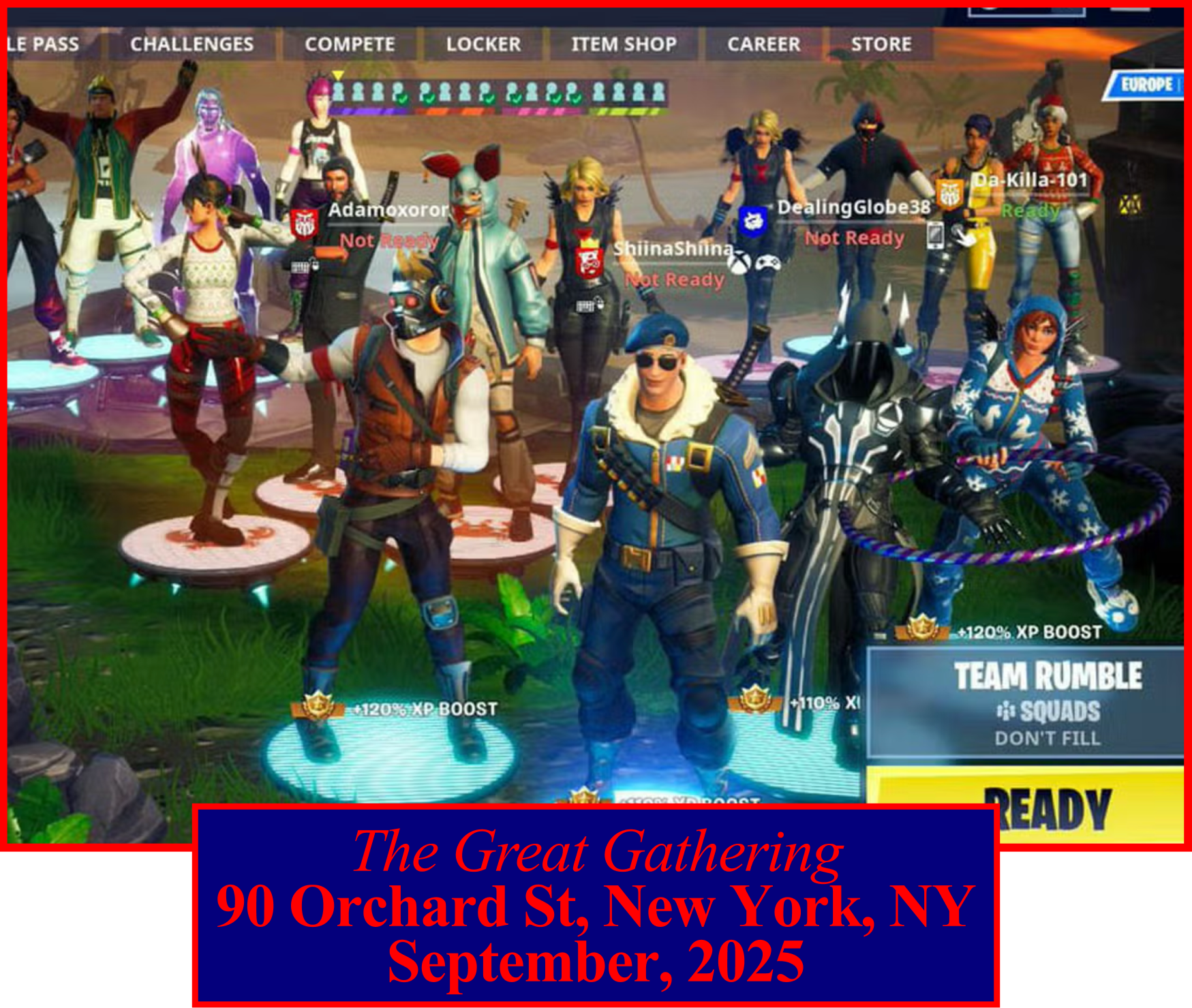
This great meeting of the minds seemed to center around Le Pere. A seductive chemical seemed to be seeping out from the store’s floor boards, onto the pavement, into the street. Curious about what could possibly summon such a horde, I peered through one of the five to ten massive windows. Inside: racks of watered-down, “elevated” streetwear, faux-jerseys in a boxy fit sublimated with their logo, those big-leaf, little-stem plants in terracotta pots. Ultimately, it seemed to be a wolf in sheep’s clothing, an Urban outfitters disguised as a semi-underground up-and-coming clothing brand.
On my route to get lunch just a few blocks down on Canal Street is another menswear shop. This one is called Fugazi and has a connected coffee shop called Le Gaz. Outside it hosts plenty of small, red, plastic stools and some equally small French-style tables which often seat 10 to 15 20-something-year-olds in selvedge denim and cropped tees enjoying a hot cup of joe. Inside, much of the same as the last store: “refined,” streetwear-looking apparel, lots of hardwood, faux-paintings depicting famous artworks by Ed Ruscha and Andy Warhol remixed with the brands logos. Interestingly, this store, like Le Pere, also has a name with ‘Le’ in it.
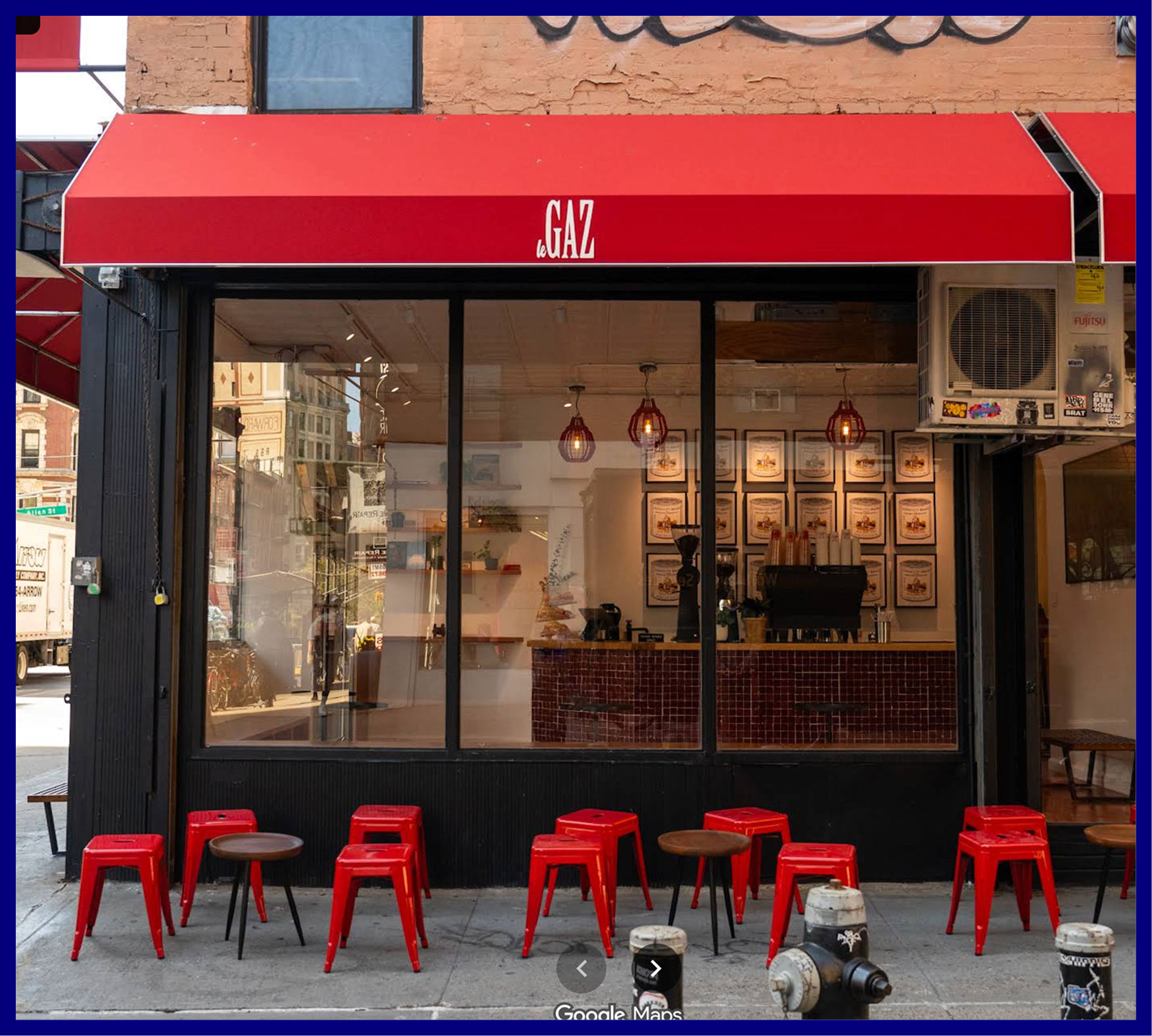
Somewhat unsurprisingly, these clothing stores strive not to be clothing stores, but cultural hubs. No, this isn’t from the horse’s mouth, but I’ve done my research (research being going onto Instagram pages and assessing vibes from there, which, by today’s standards, is kind of from the horse’s mouth). They throw concerts and other functions, with the events often spilling out into the streets in an instagrammable fashion. These types of stores pride themselves in hosting shows/performances or just generally fostering an atmosphere of being able to chill and hangout. Based on photos, it seems men between the ages of 20 and 35 seem to enjoy doing that, predictably. And so, the stores do well for themselves.
But to say that hosting events or providing a space of activity is inherently a worthwhile contribution would be an oversight, especially when it’s overwriting an era so filled with energy, in an industry and location so based in grittiness. It’s often easy to spot when a brand has no stakes in its own traditions because the complacency of the brand will be glaring. This complacency will often manifest as leisure and the ‘lifestyle’ aesthetics will follow, with Le Pere or Fugazi some of these stores being prime examples.
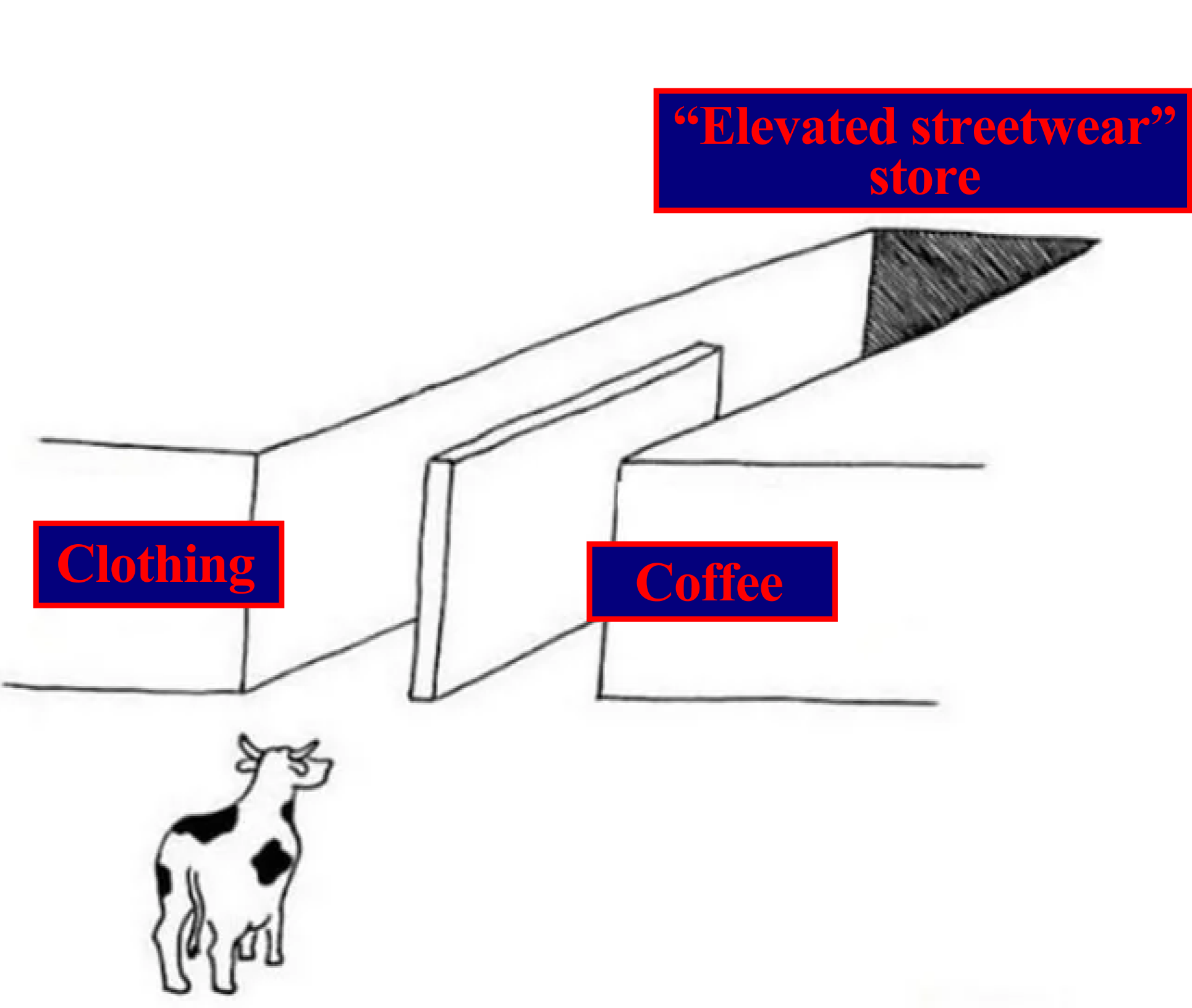
I still consider Chinatown and its adjacent areas one of the great epicenters of cultural growth in NYC, which is one of the great epicenters of cultural growth in the world. I do believe that this claim is not unfounded, considering it has a history of housing some respectably influential scenes, which typically did have some sort of physical homestead. Recently, too. Even streetwear, with all of its pitfalls, had some genuine moments of clarity post-aughts by way of brick & mortar—Supreme in the 2010s still had a gravitational pull like no other store on the planet, convening a crowd that would largely change how clothing was sold forever. Vfiles was doing its thing, too.
For quite a number of years I designed basketball related T-shirt graphics for Kumasi Sadiki, the owner of The Good Company, a streetwear brand and storefront that was located only a block away from Le Pere. For nearly a decade—prior to shutting its doors sometime shortly after Covid—it operated as an actual, grassroots hub of culture, legitimized by its burgeoning participants, artists and musicians alike, some of whom are now being paid, transactionally, to perform at shops like Le Pere. The shirts we would design were typically single color screenprints on blank, Alstyle t-shirts that were either white or black. There was no oversized or cropped. There was no single stitch or boxy. Instead, it seemed to be a pure display of content with an earnest disregard for form. Not in a naive way, but in an urgently scrappy kind of way, which is sort of what streetwear was known for.
In the case of clothing + culture, streetwear is an especially interesting and frankly overlooked case-study to examine because it removes the artistry variable from the equation. Meaning, because there is little to examine in terms of actual design, there’s room to clarify the essentials. You can see, with a uniquely untainted POV, the importance of having a merchandise object represent a totally spontaneous, wholly contemporary scene in order for any merit to be attributed to said object. The problem with the slews of brands occupying this terminally-gray zone between high-end and low-end menswear is that they are conflating the cultural phenomenon that was/is streetwear with the aesthetics of luxury all the while trying to cash in on both. This basically means that particularly uninteresting clothes will be made to merchandise particularly uninteresting cultures which will make for particularly uninteresting scenes. And, in an attempt to make sense of this muddiness, these brands will sign a lease on a ground level space downtown almost in hopes that their own customers might come in and tell them what the hell their brand represents. Which is probably why the menswear landscape of downtown is particularly uninteresting now.
So, although it might be easy to shrug and say who cares, I do think there is a problem with having the streetwear industry conquered by business-first owners who want to open a coffee shop just as badly as they want to open a clothing store. And, as much as we can look back at the ghosts of streetwears past and cringe, I think it’s important to recognize that it may have been the one of the most spirited youth-run movements of this generation and just might be worth saving. With that being said, I propose that, instead, we need to revive the two main archetypes of the streetwear renaissance past: design-forward brands that make avant-garde, transgressive apparel and culture-forward brands that have strong roots in an authentic, nonmonetizable underground. Ideally both.
But I guess if you’re really interested in wearing merchandise that represents nothing, there’s a bunch of stores below Houston that are calling your name.

Since my day job is doing graphic design at i-D (blogging is just my passion), I’ve also been asked to address some design-related comments made on the i-D instagram, like these:
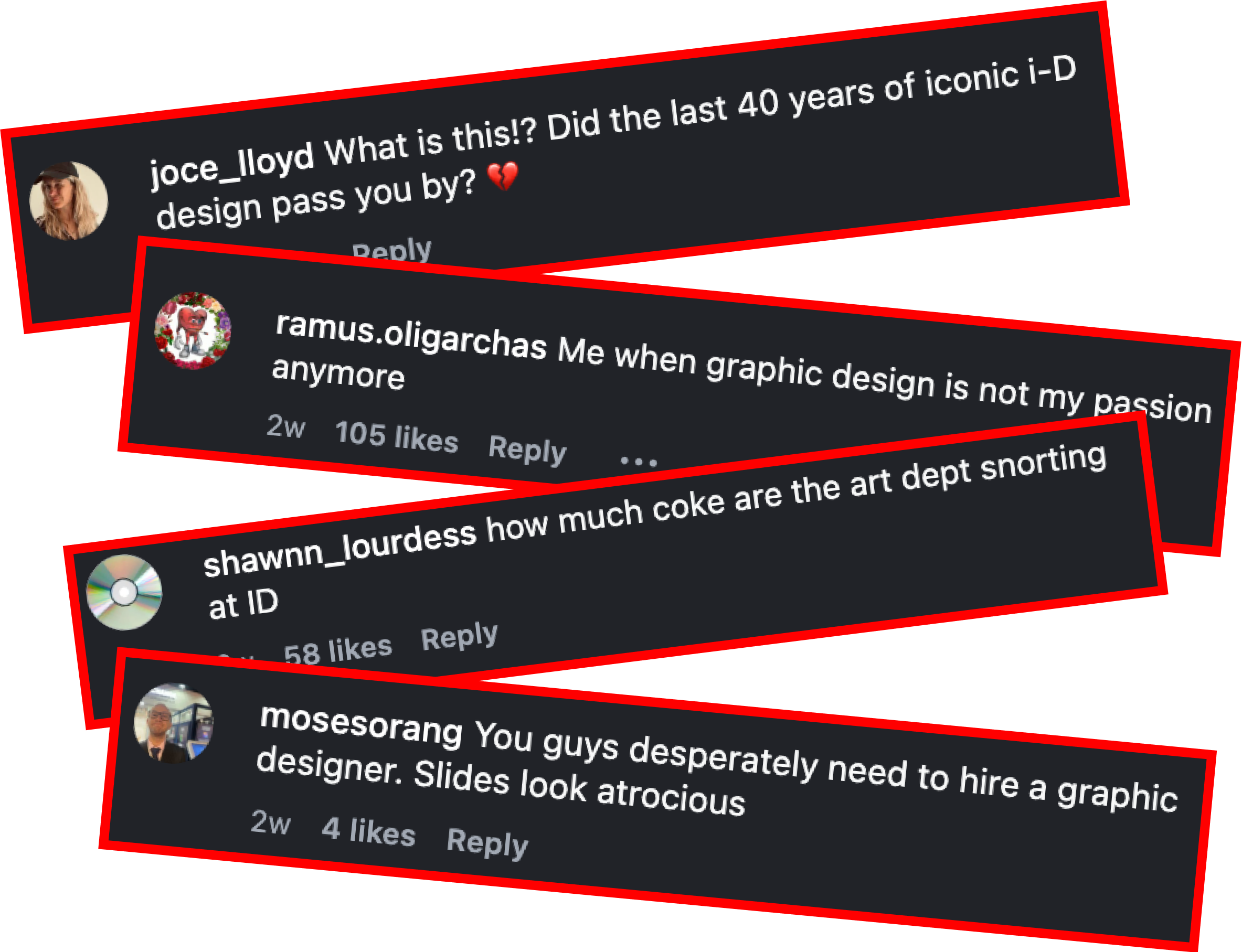
I just want to say: You are heard. We are feeding some of this input into our design-bot to improve performance. Yes, we have a design-bot. Yes, i-D is the first culture news outlet to (semi) successfully automate the creation of design assets for all social media platforms. This highly experimental technology is obviously a work in progress, so this feedback will only make us stronger and help mitigate color and legibility malfunctions across the board. Soon, with enough comments like the above, we will have an engagement optimized feed just like your favorite magazine and you’ll have completely forgotten that design-bot is behind the scenes making it all happen. So, just remember that the next time you comment any sort of design criticism you’re not actually hurting any specific person’s feelings, you’re just helping evolve design-bot.

TLDR
Congrats on the pub, Adrian!