


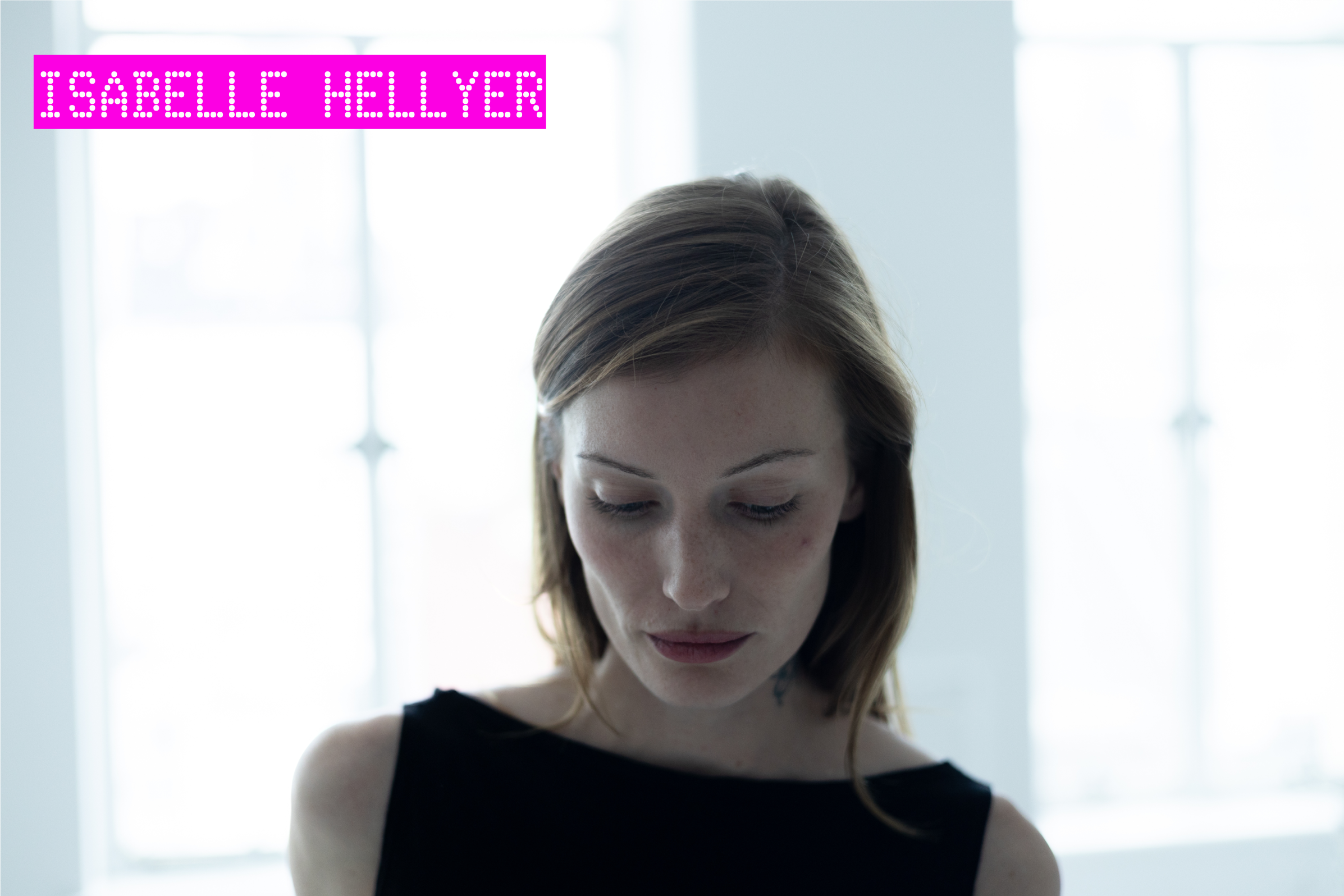
Isabelle Hellyer (@allisagentlespring) is the designer behind cult favorite Australian womenswear brand all is a gentle spring.

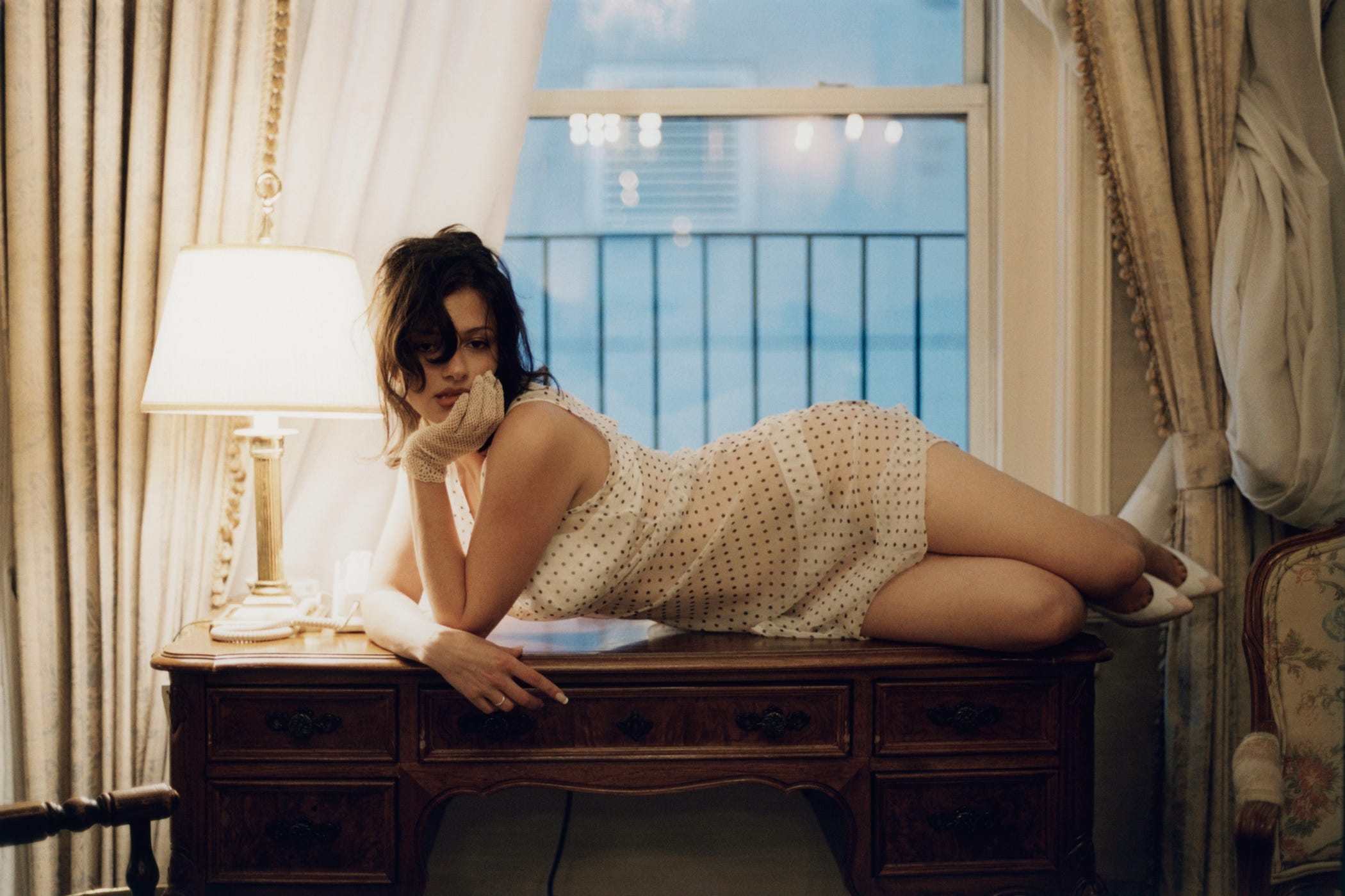
This past summer Nancy Kote (Clairo’s stylist, silhouette savant, and my personal It Girl) starred in a campaign for Hellyer’s new collection. Appropriately titled Turbulence, Hollywood, Eternity, the whole thing had me staring agape at my phone, rapt by the gorgeous world. This week Hellyer stops by to chat about collective femininity, sustainability within the fashion industry, and her recent decision to only use natural materials.
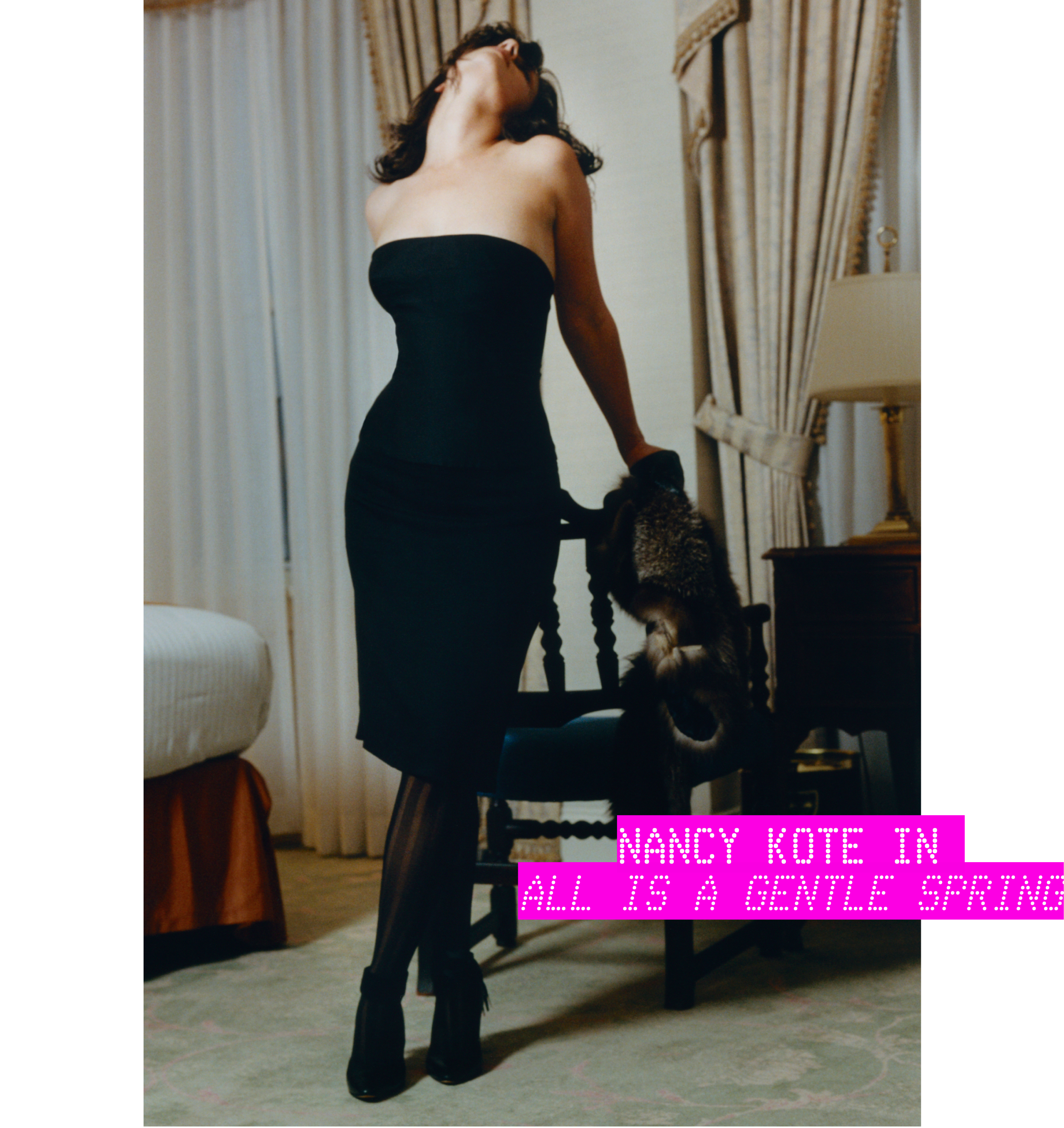
Nicolaia Rips: Something I’ve always loved about all is a gentle spring is that it has this really mature idea of what a woman wants to wear. I think set against the current culture of being a “girl” well into your twenties, even thirties, your clothes have always felt really sexy and refreshing. Can you talk a little about your design ethos?
Isabelle Hellyer: I don’t imagine myself an auteur imposing a personal vision-for-the-season onto the women of the world. First, I am a woman of the world. These are my clothes too. Not only mine in the sense that I designed them—they’re mine in that I wear them, almost every day. They’re a part of my life. So I’m not dealing in fantasies; these are clothes for real, beautiful life.
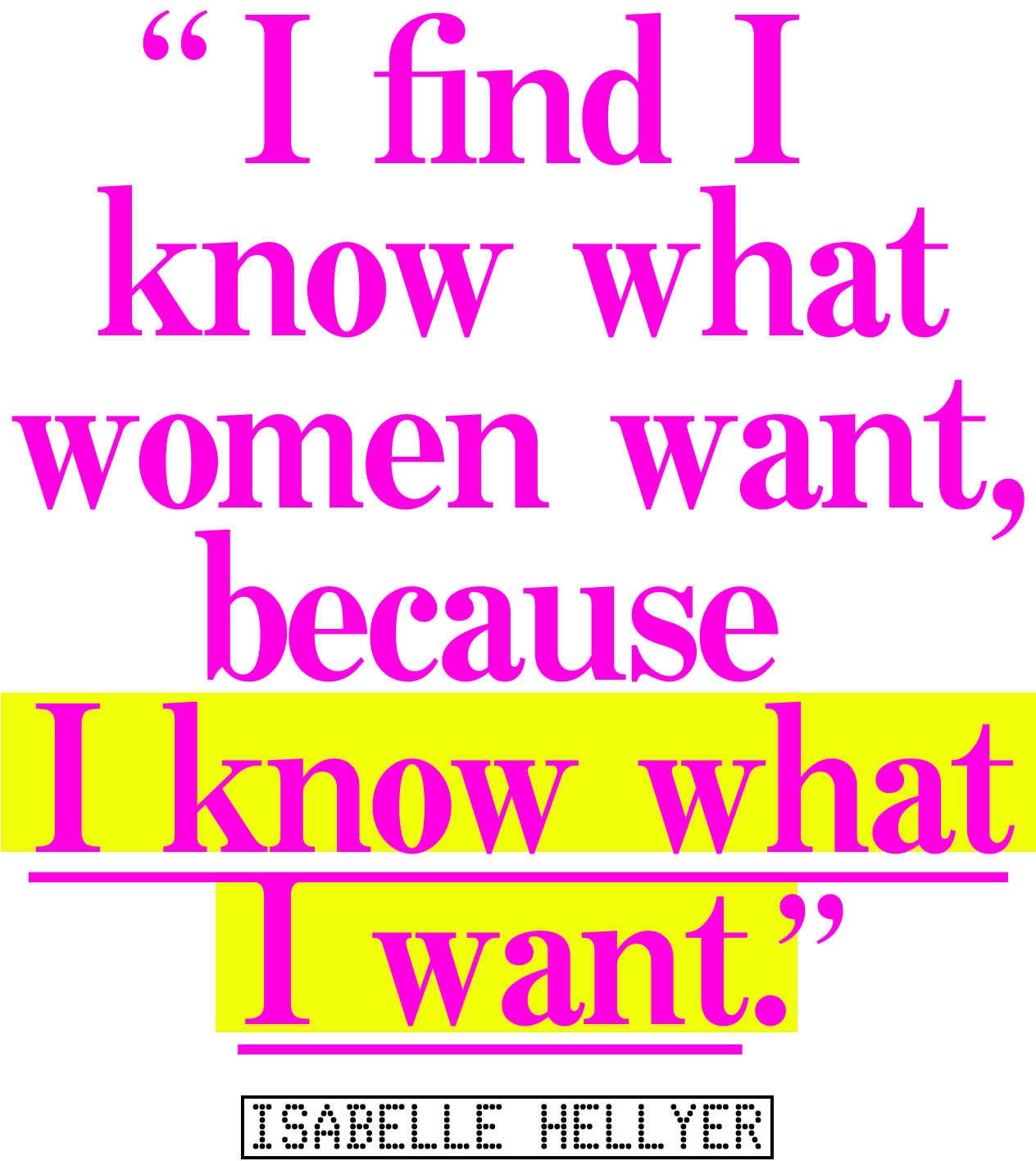
The core ideas for any gentle spring collection are already standing by in the waiting room of the collective feminine unconscious, and I’m only here to open the door. My task is to remain in touch with myself, my own desires, with the understanding that they’re really our shared desires. I find I know what women want, because I know what I want.
How the clothes feel is as important as how they look. I want women to feel present, sensual, and embodied; and usually, I encourage this in two ways. First, by making clothes that have some muscle, some internal power to reshape the body—steel bones, the waist stays, interlinings, these kinds of techniques. I like making clothes that hold you firmly, in such a way that you feel you can depend on them, relax into them. You feel aware of all the places your body is in contact with the garment. Secondly, by making clothes out of fabrics that respect the body and deserve to be close to it: breathable, natural, pleasant. I understand sexiness as an embodied experience, not a matter of appearances; so the real, tactile sensation of the garments is so important. Some of these fabrics today have no business being dishcloths, let alone being against a woman’s bare skin.
I’m also very conscious of a seismic but little-discussed shift in women’s fashion: the disappearance of the foundation garment. For the majority of fashion history in the West, women would wear foundation garments to create the fashionable silhouette of the day—the most obvious example being the corset—and their shape changed, depending on what was in vogue. This made it possible for women to transition between shifting trends with relative ease, without changing her body. At a certain point in the 20th century these garments were done away with, for the most part, and the expectation reversed: women began changing the body itself to fit inside the clothes, internalising the fashionable silhouette with diet, exercise, surgery, and so on (the fat transfer is our century’s bustle). Suddenly, the clothing could be so much more flimsy, because women were remaking themselves. I’m aware of the earlier way of things and I work in the same lineage, though the technique is modernised. I’m comfortable demanding our clothing have some power to reshape the body, temporarily. To me, this is far less perverse. I have high expectations of the clothes. I expect them to do something!
How did you decide to start designing clothes?
There was never a decision, I’m going to start a label. At the very beginning, it was I’m going to make something for myself, and then it became, I’ll make a few more to sell. It was a corset. It’s difficult to imagine now, but this was a moment when corsets—and all those stretchy little tops cut to approximate them—weren’t easy to find. This was before the Westwood corset resurgence. From then, it was really just one foot in front of the other; one thing at a time. But I’ve always kept trying to be better, and so it’s kept growing. I’ve always tried very hard. At the beginning, I was a girl. Now, I feel like a woman.
With hindsight, I can say I feel like this found me, not the other way around. This project has provided the most natural medium—the clothes, the photographs, the shows—for me to communicate what I’d like to say. That feeling of connection and purpose has brought a peace to my heart that goes beyond what I suspect I could’ve ever knowingly chosen for myself.
Tell me about what’s influenced your conversion to all-natural fibers.
We’re being swallowed up by our own garbage and excess! The only way I could face myself, the only way I could live with integrity, is if I was going to make more new clothes, they had to be the sort of thing that could last decades. We’re only just beginning to understand the damage that PFAS, xenohormones, and other endocrine disruptors are doing to us, and all other living things in our web. With that in mind, knowing I’m perfectly capable of developing a collection entirely without synthetic fibres; why would I? Because it’s cheaper? I mean, really. That’s not right. It’s very important for me to resist the great magnetic force dragging the industry down, that pull towards the single most efficient and profitable approach. So much is sacrificed in working that way. There are plenty of things that are worth doing that aren’t profitable.
What’s inspiring you currently?
This Tori Amos song “The Waitress.” On the live version of To Venus and Back, she sings this hissing ‘s’ on the tail of the word waitress, at 1:40. I feel that’s the craft moving through her. That’s the best thing about an artist like Tori Amos; she really becomes possessed by her instrument. I’m inspired by all those keeping a clear and open channel, and heeding the call.
I’ve also encountered enough people in my life who seem to be doing exactly what they’re supposed to be doing, enough that I can say I believe in having a purpose. I think of Nancy Koté and Bec Martin, the photographer I work with all the time. I feel that, for them, the urge to do what they’re doing is so strong they just have to obey it, they can’t resist. I’m so energized by seeing things begin, with whatever resources are at hand, and grow. I loathe to see an idea, a dream, a vision, smothered by doubt, fear, or perfectionism, before it’s even realized, and given the chance to work itself out.
Lately I’m inspired by Ellen Covey; she’s a neuroscientist at the University of Washington, and one of the best noses in perfume. Her perfume label Olympic Orchids—just the most beautiful fragrances! She also grows and sells orchids. The perfume came out of orchid growing, because she started trying to recreate the scent of the plants. Now, both the orchids and the perfumes are quite successful. One of her special interests at the university is echolocation in bats; Night Flyer, one of my favourite of her scents, is also inspired by bats. How fabulous, having such different instruments to express an interest in something! I love what her story encourages: pick up something new if it calls to you, absorb yourself in it, and most importantly, let one thing lead to another.
There’s a lot here in Melbourne that I’m excited by too; a perfume label (a water for the fainting of the heart), a magazine called Cupboard, and a shop with the most fabulous name, Smoking Plum and the Writing Desk of Glamour.
What does wellness mean to you? Do you have any daily rituals?
Alive and vital, above all else. I’m about to turn thirty, and for so much of my twenties, I felt so untethered. I’m keenly aware of the moments that brought me towards wellness, because I’m so grateful for them. My friend Agi Kowalewski, maybe seven or eight years ago, took me into the gym for the first time, without any judgement, and that really changed my life. My mind and my body used to feel very separate, not one integrated thing, as they are now. Grounding into your body is a wonderful thing. Since then, I’ve always had some physical practice, though it changes. Lately I’ve been practising Ashtanga yoga, which has given me a strong, heavy anchor in more turbulent times. I’ve learned the habits that keep my life force bountiful.
My friend Tim carried a set of values cards around a while back, and I always really enjoyed the practice. I find using a technique like this really helpful: compiling a bundle of words to define the way I’d like to feel, to guide me towards my goals. I do it for the body—as in the little list above—and the mind. I set a word of the year too. Last year’s was freedom.
You’ve also recently opened a showroom. Tell me about transitioning to brick and mortar.
I never wanted to be an e-commerce business, but that’s just how it goes when you start from zero: A website is cheaper than a commercial lease, so I used the tools available. Now I can afford this space; but it’s taken seven years to get here. I’ve always wanted to meet people face to face, and we’ve been able to do that through the popups, but it’s sort of overwhelming, everybody at once. Sometimes you don’t really have time to go as deeply as you’d like with someone, now there’s a chance to do that.
What does the future hold?
Last week I had a clear moment where I realized the next collection is finished—as finished as it can be, for now. The research is done, the message has been received. The rest will come through play and the happy accidents as we sample and refine.More broadly, the way I now make decisions about the project is very different to the early years. I have enough deep confidence in what I’m doing, that I’m unconcerned with external endorsements. Whenever I’ve tried integrating the label with industry systems, traditional things like trade shows, showrooms, certain wholesale accounts, it’s never quite worked. The choices I’ve made intuitively have yielded the ripest fruit, and every time I’ve tried to follow an established process, it’s wasted time, money, or both. Which is not to say I know better, only that the industry is in a state of flux, and steering the project only by my own compass has left me better off than working from the old playbook.
Nancy recently reminded me to look out to the future more, the distant horizon; because when you’re doing a small label like this, it can feel so moment-to-moment, month-to-month. It’s difficult. I have to fight for it. But I want to keep on walking this path.

Reallyyyy good! I recently read a Claire McCardell biography that focused a lot on how perverse designers in mid-century Europe in America were for creating structured garments, reminiscent of Edwardian and Victorian fashions (Dior) because they “forced” the female body into a new shape… and I always have felt like… is that not better than forcing women to alter their body with diet/exercise/cosmetic surgery? I love the focus on expecting a garment to create new shapes and imagine new possibilities for human forms (much less harmful than the alternative)
I have been obsessed with All Is A Gentle Spring for YEARS and I'm so beyond happy to see the brand grow. Brands like these deserve to shine. And I just LOVE the way Isabelle talks about the body and confidence. I feel so seen and understood. Thank you.