


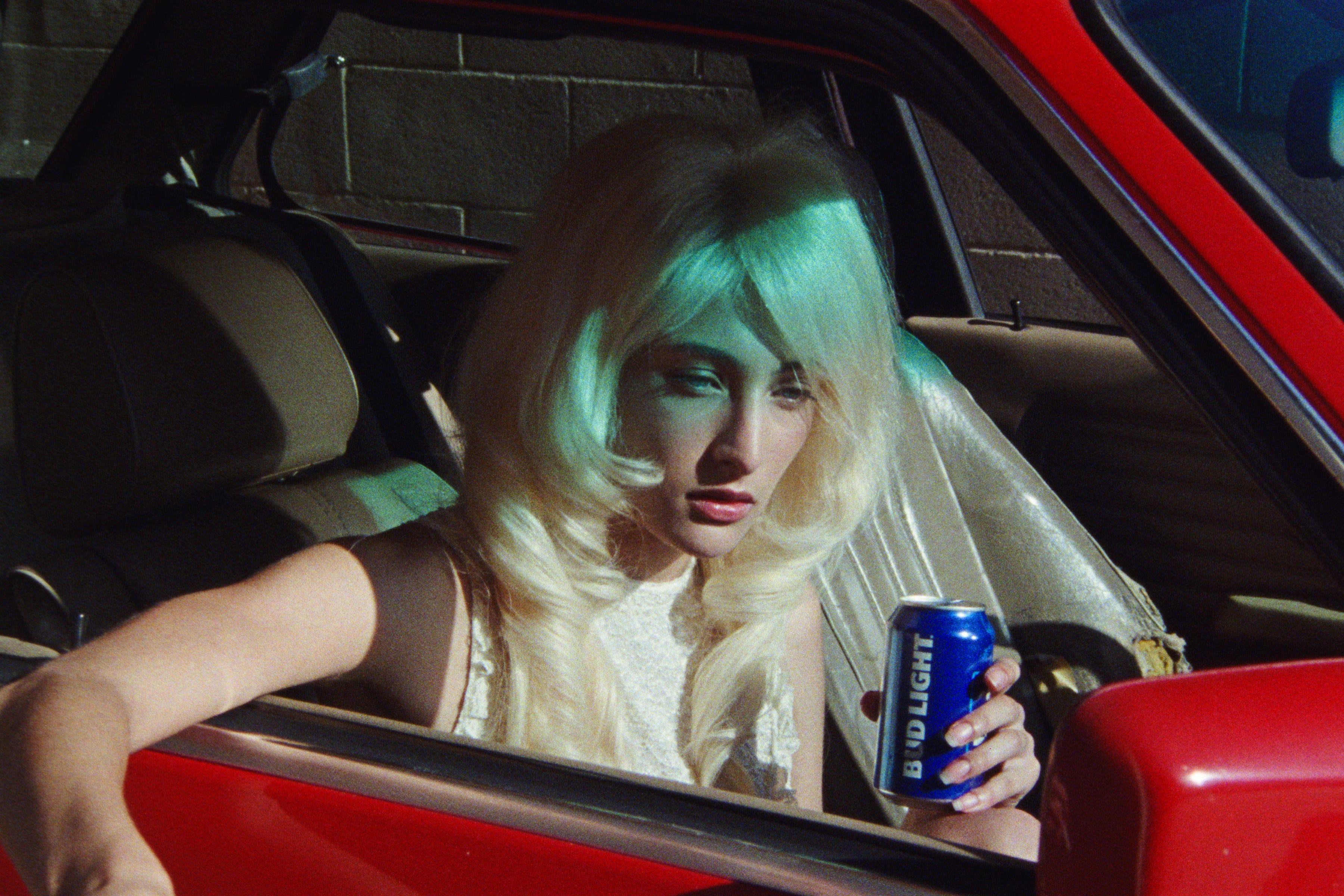
Tucked in the window table of Dimes, Morgan Mahers wears a pink checkered Miu Miu coat she found on Japanese eBay and a pair of sunglasses so large they threaten the boundaries of her face. She looks like a movie star, which is fitting because we’re here to chat about her forthcoming photo book, Everybody Loves Her, Everybody Wants Her, an ode to Hollywood and all things stardom.

I first met Maher in 2023, when she was still living in New York, right before her first photo book with Friend Editions came out. Girls in Bed takes the trite and often yucky dynamic between photographer and her centerfold subject and flips it: Maher is as much of a girl as those she trains her lens on, and they’re all her friends. What emerges is a tenderness and camaraderie. Now, three years later, Maher is at the top of the game, with a signature style as cemented as a star on the Hollywood Walk of Fame. Emrata. Rachel Sennott. Clairo. Sky Ferreira. Ever Anderson. Sarlette White. JT. Lexee Smith. Bb Trickz. If she’s gorgeous, talented, and famous, chances are Maher has photographed her.
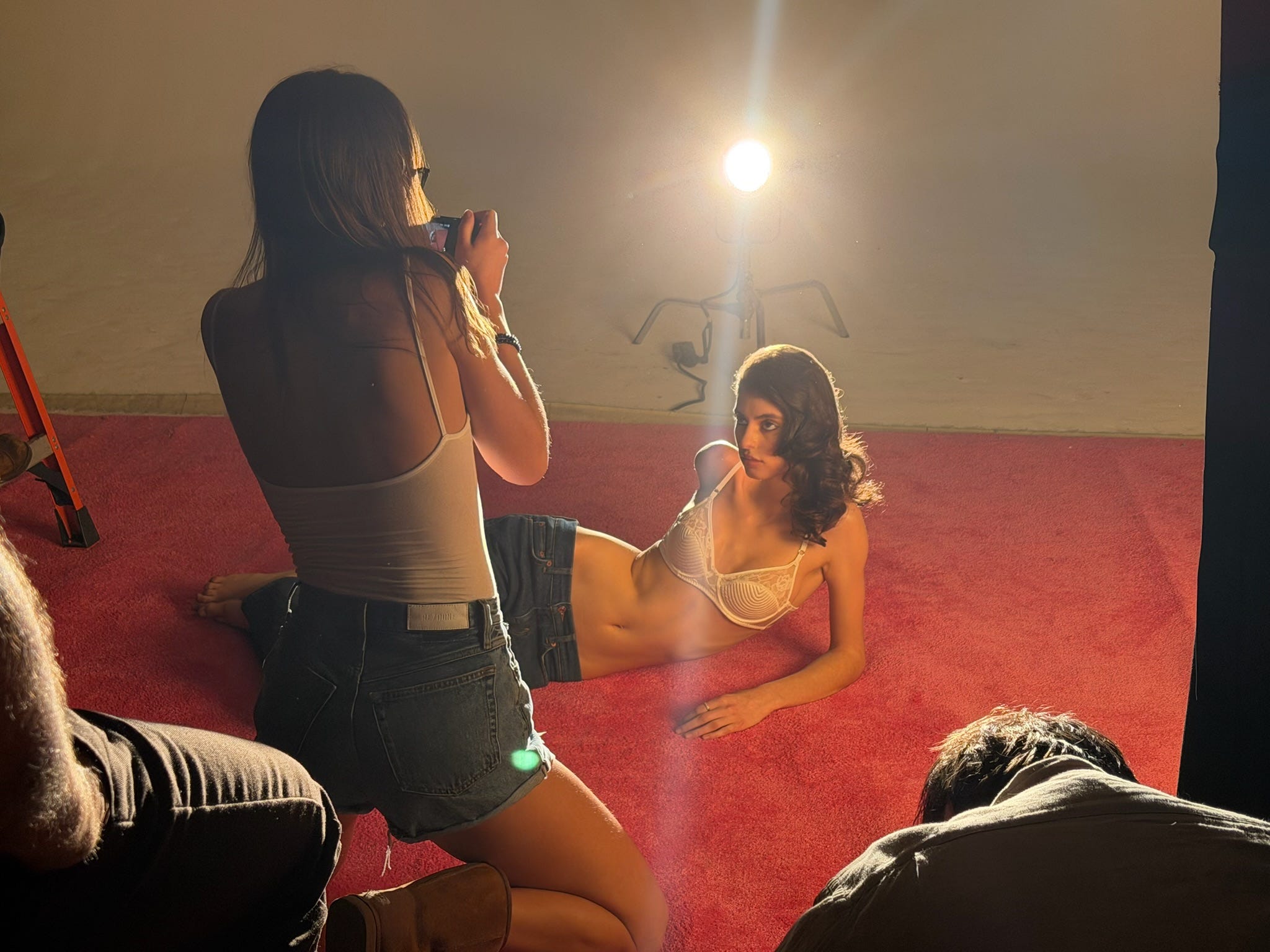
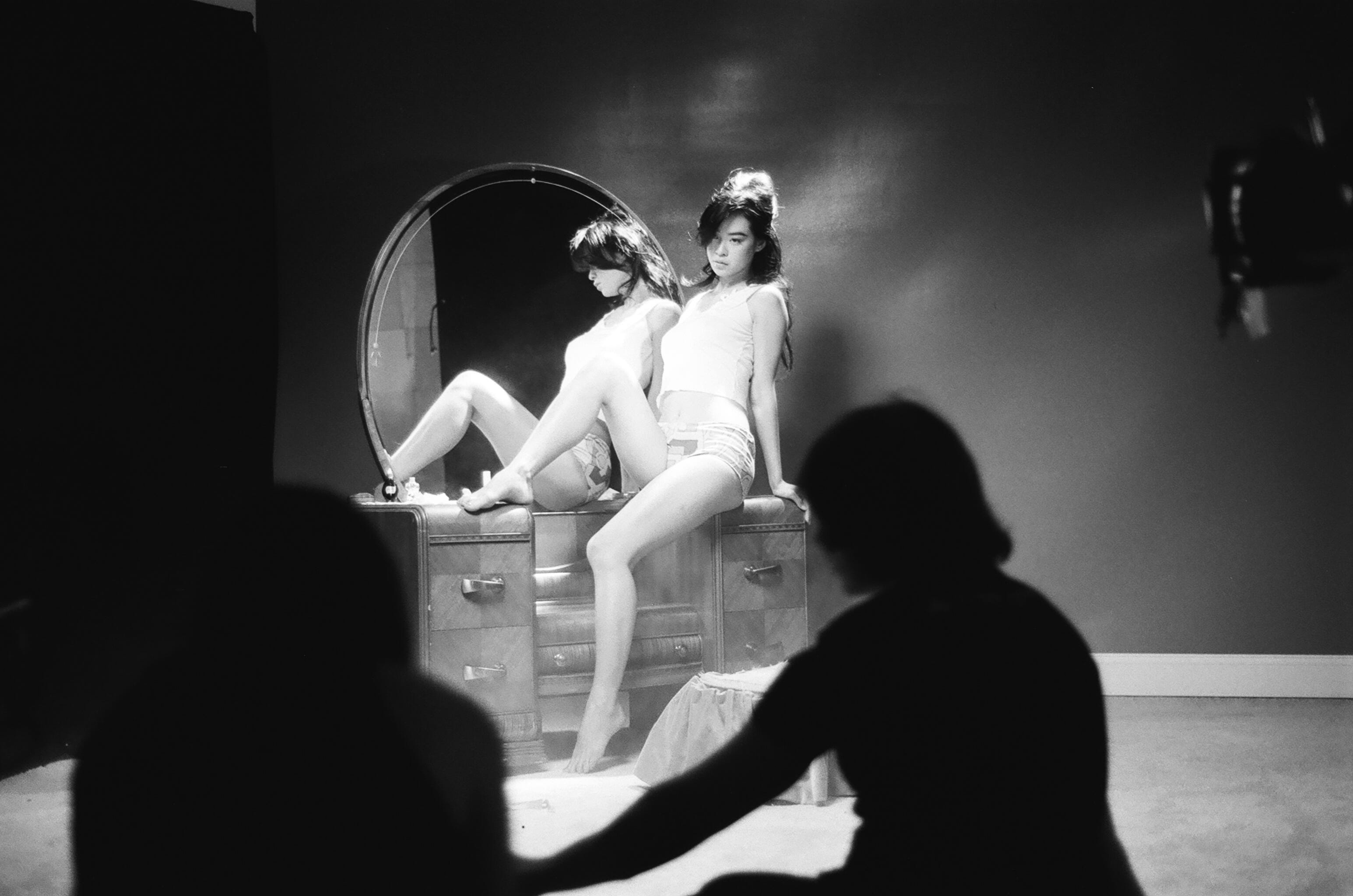
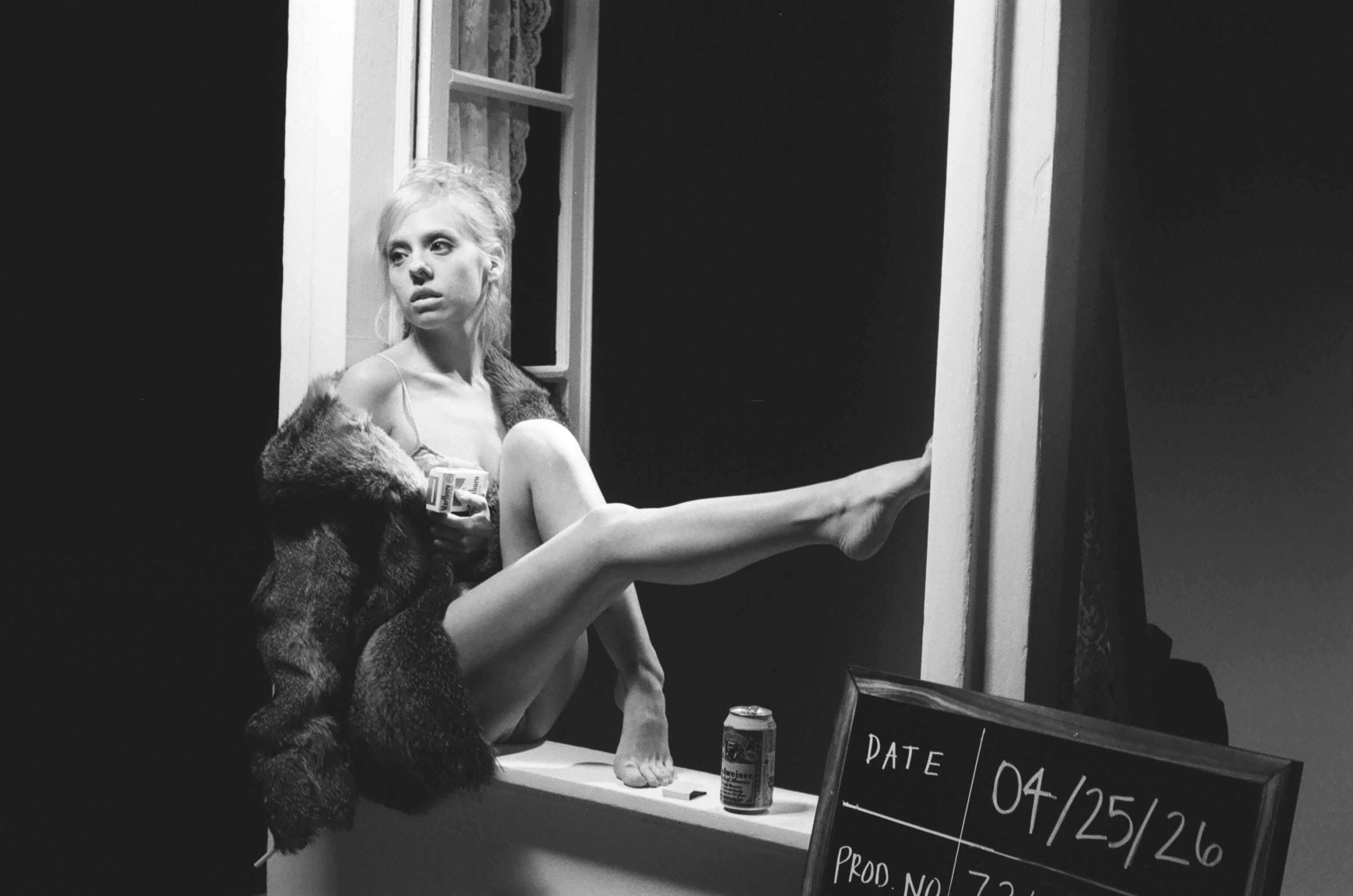
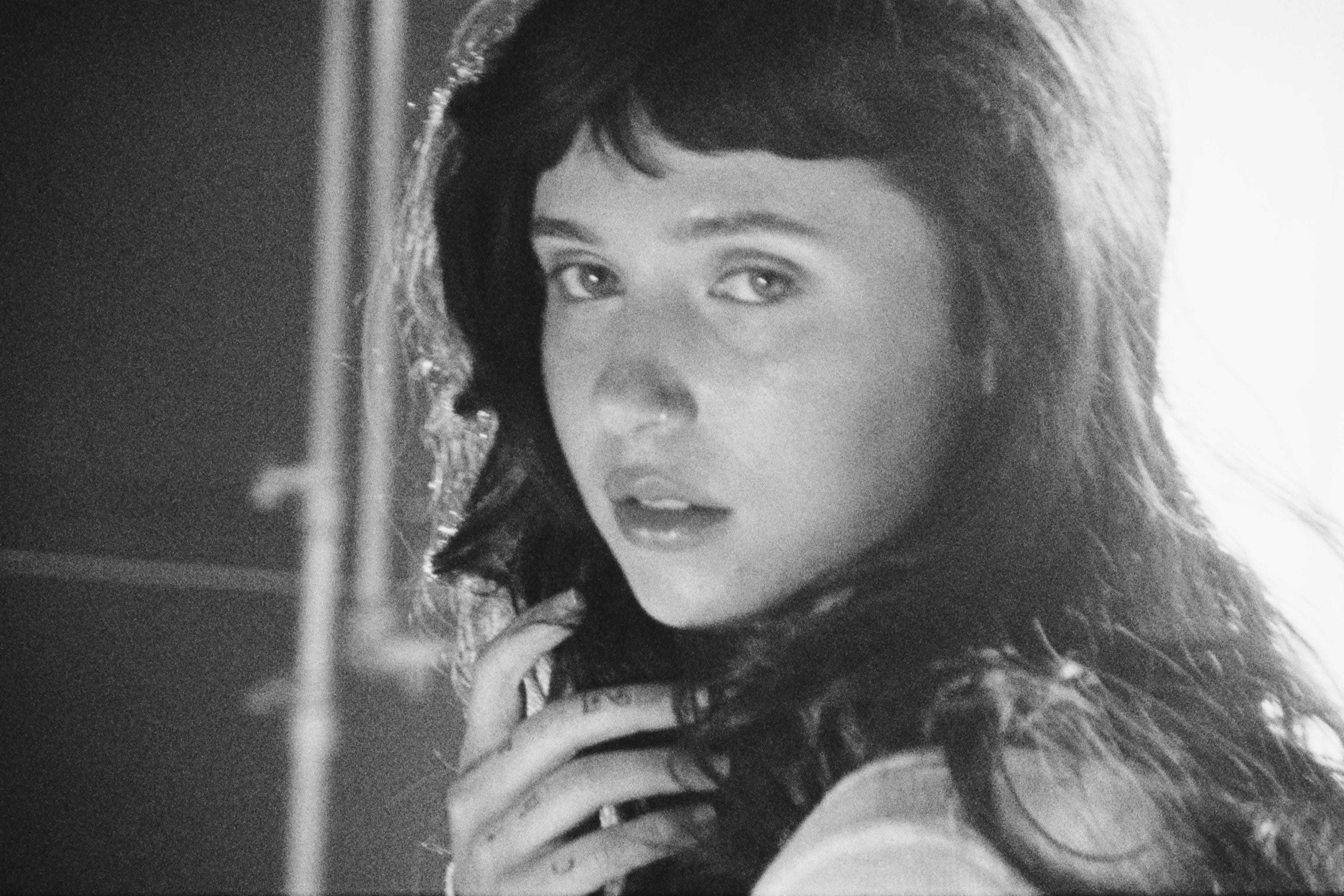
In her new book, Everybody Loves Her, Everybody Wants Her, that spirit is fully realized. The book brings Hollywood’s ingénues and starlets into Maher’s world, with photographs that feel intimate despite the full crew and set. There’s a sense that these women are in dress rehearsal, aware of the performance but utterly committed to the glamour. Inspired by screen tests, the project marks a new chapter in Maher’s evolution: 38 women shot on 16mm film, with the book composed of film stills. On the eve of Maher’s return to New York, we chatted about the transition from girlhood to womanhood, New York versus LA, and all things glitz and glam.
NICOLAIA RIPS: How did moving to LA shape the project?
MORGAN MAHER: LA definitely informed the project. I fell in love with Los Angeles. I met so many exciting people, and I started paying much more attention to film. Then I met my collaborators on the project, like my DP and editor, and they started showing me all these movies that I’d never heard of before. I was just really falling in love with bona fide actresses like Barbra Streisand and Nastassja Kinski. That type of woman who’s so beautiful and obviously a superstar, but there’s still a level of humanity to her.
This book was really a reaction to growing up. I was like, okay, I’m growing up. My girl is growing up. What does it mean when you are between a girl and a woman? How can you stay rooted in reality while having this fantasy of a character you’re working out in your mind? Even in the title of the book—it’s past tense. Everybody loved her, everybody wanted her. It’s actually quite dark, I feel like it questions ”Okay, what is it like when you’re loved as a girl versus loved as a human? How can you keep that preciousness of being a girl in your heart, too?”
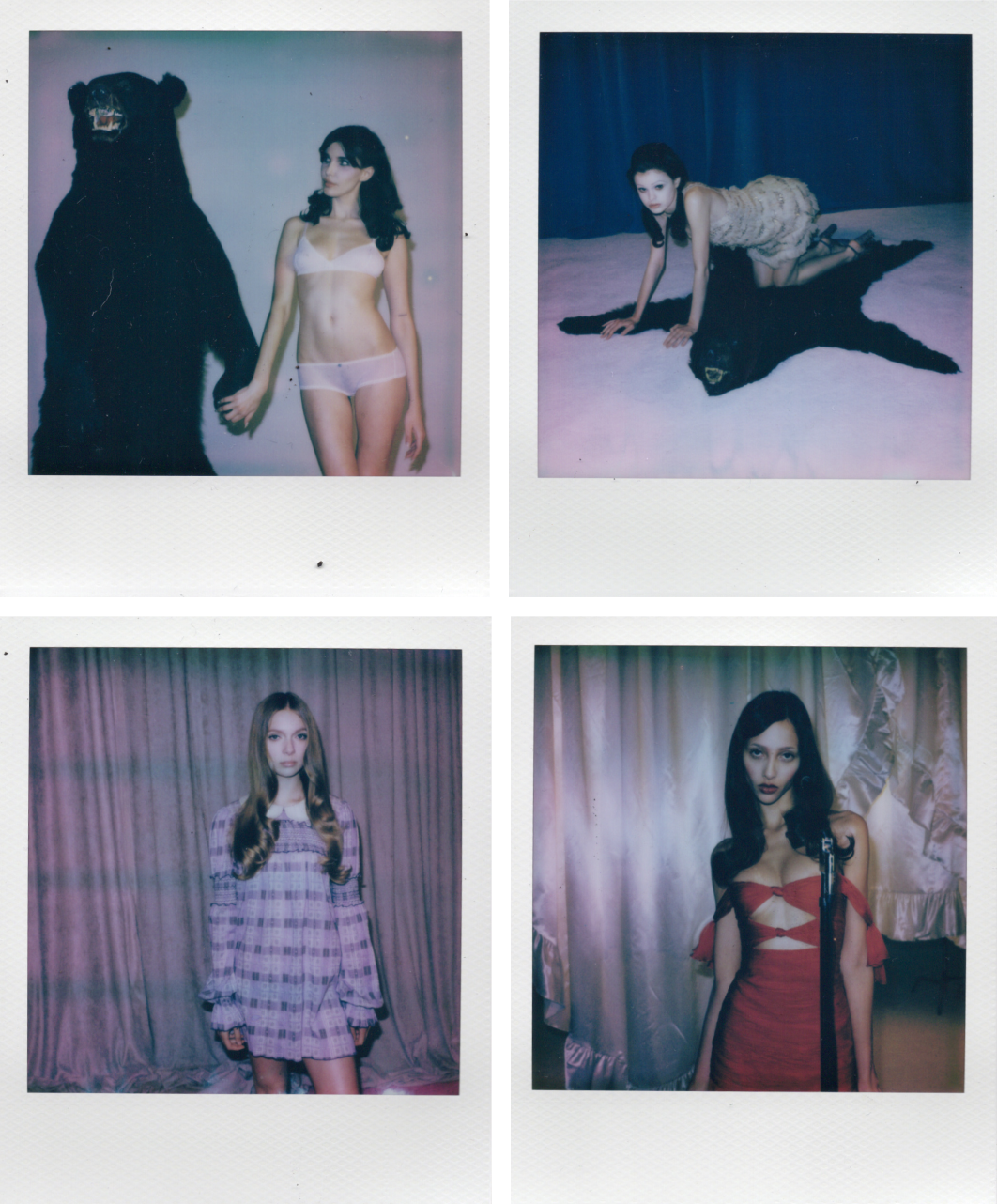
Looking at some of the photos, it feels almost like you’re peeking into a rehearsal space, or that you’re allowed behind the scenes during this practice of womanhood.
I was really so in love with looking at camera tests, like a Marilyn Monroe makeup test or the Phantom Threads camera test, where they’re testing different film stocks and lenses. There’s something so beautiful about them. It really speaks to that transitory space between girl and woman, where you feel like you’re this finished product. But, at least for me, it’s so important to make space to accept the unfinished qualities of yourself. With the set, I didn’t want it to be perfectly final because I love the in-between moments. That’s also why I wanted to work in video.
A couple years ago, everything was girl, girl, girl, girl, girl. And now it’s like, well, actually, maybe it is kind of great to be a woman. It’s fine to grow up.
It’s amazing to grow up, and it’s amazing to still have that level of playfulness in your heart, too. I mean, you’ve seen me on set. I’m screaming, I’m so excited the whole time I’m doing it. And it was so fun to be able to do that and not have to actually hold a camera. First of all, addicted to not having to actually hold this thing and just play Young Thug.
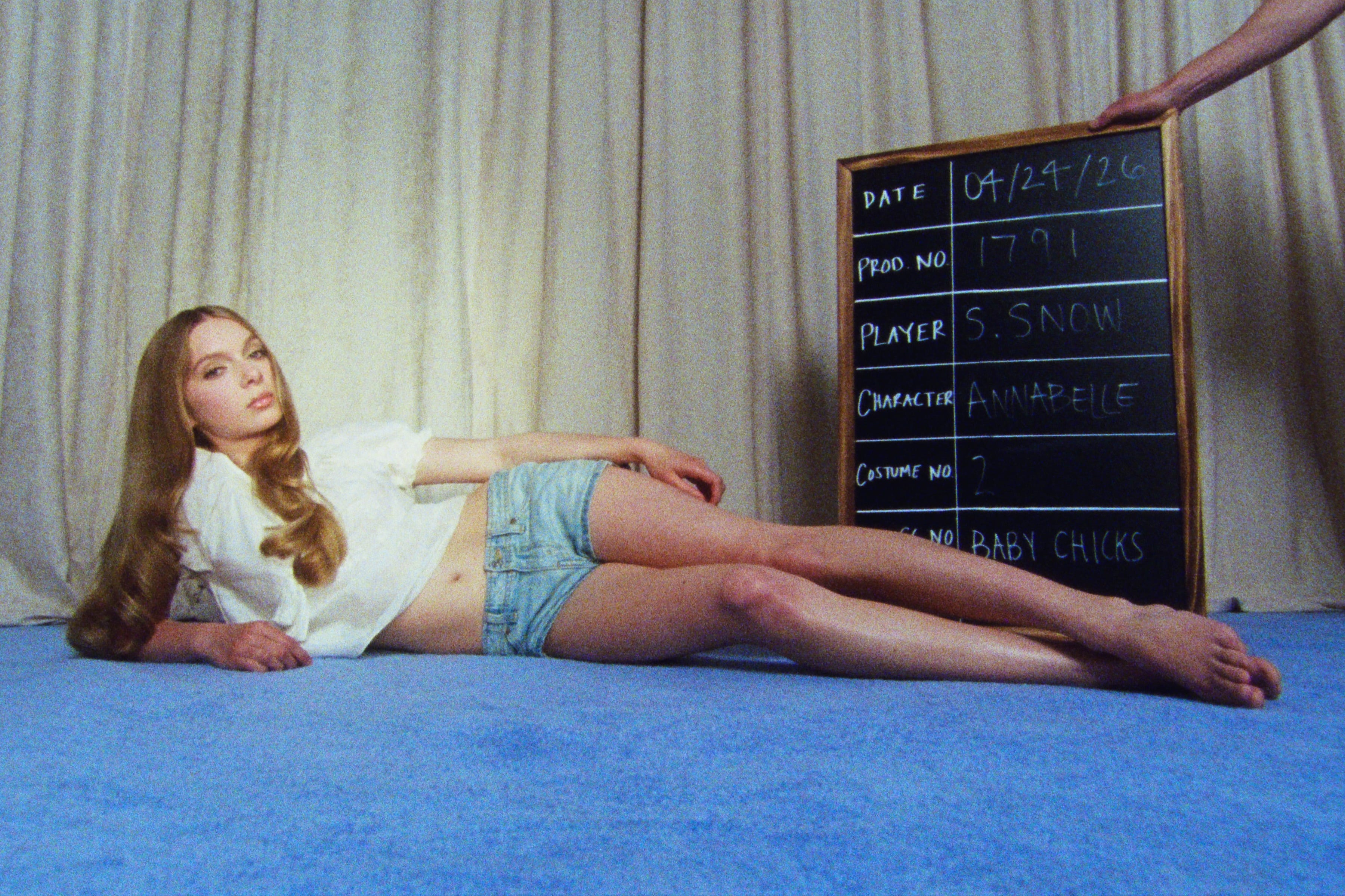
Maybe she’s a director…
I want to be. That’s a dream. The in-between elements of girlhood… You don’t have to decide who you are. I think in terms of the sexiness of it all, too, my work, to me, is sexy, but it’s not overtly promiscuous or exploitative. There are definitely sexy moments, but to me, it doesn’t even really feel provocative. Maybe that’s just my relationship with sex and women, but I love the female figure. I love my friends. I love celebrating women.
Something I love about your work, and this goes back to the Barbra of it all, is that she never doesn’t look like herself. She’s always Barbra. I feel that way about your work, too.
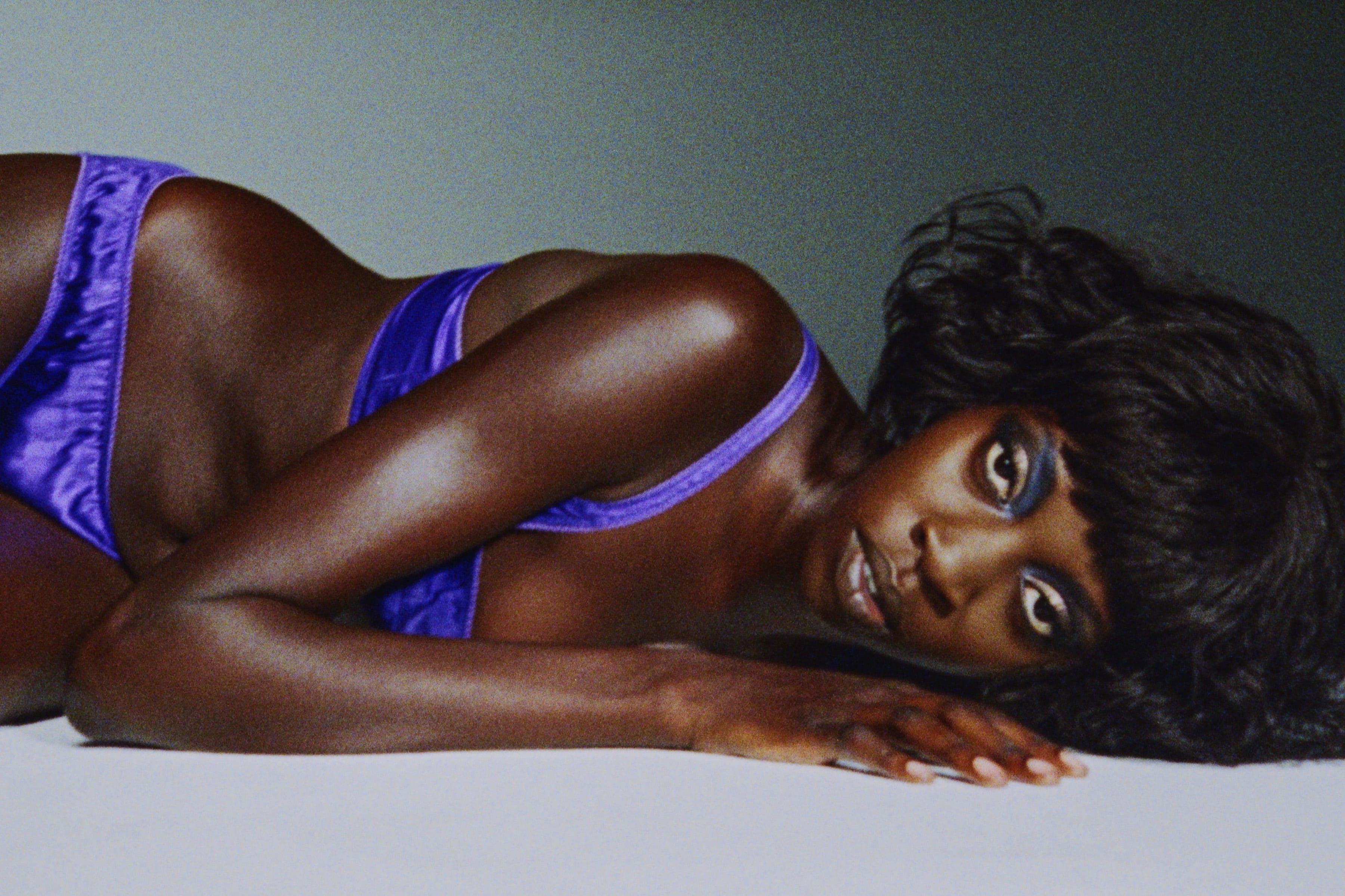
That was really important to me. Even when they were in hair and makeup, I didn’t want to mask who they were. This is a dressed-up version of her. She’s still herself, and it’s more like a test. Who is this persona for today?
What was your relationship to Hollywood growing up?
I had zero relationships. So I think I’m also approaching this so doe-eyed, where I’m just so infatuated by the entire thing. I was allowed to watch Nickelodeon and Disney movies. I seriously didn’t have a relationship with Hollywood until living there for a year. Or until I found out about AMC Stubs. My mom had me read 75 books a year from the time I was in sixth grade until high school. She was like, “Okay, 75-book challenge.” I had to write a brief synopsis on each book. I literally didn’t find out about a lot of these things until like two years ago.
How was this process different from your first book?
I feel like the first book revealed itself to me. I found that I had been doing a pattern of certain types of imagery. This, I really set out to do. I feel like the process was incredibly healing with my relationship with men because I worked with this huge group of men, and all they wanted to do was support me, which was a completely foreign feeling for me. I wanted Julian [Stoller] and Matthew [Sosnowski] to do the hair and makeup. Elena Gorham did the set design. It was a complete learning process, and I really set out to be like, “I want to do this. I want to do it by the end of the year. These are the people that I’d like to be a part of it.” Because I would love to be a filmmaker.
Can you tell me more about the video and DVD element of the project?
[She shows me a film clip of Alana Champion on her phone.]
Each girl has something like that. They range from 30 seconds to a minute. I think I’m gonna do them more as a gift because selling them doesn’t sit right with me. I really want to make them like those bootleg DVDs, write on them in Sharpie, and give them to girls that are part of it. You can put them on your TV. There’s no narrative structure. This was such a special part of it, being able to find moments where they’re daydreaming and not totally aware of the camera.
I want to go back to the title. What does it mean to be wanted?
I was definitely indulging in a fantasy world. Who would these dream girls be if it were up to me? What would people be walking around looking like? Coming out of a not-great relationship, I was really destabilized in what I felt like when I felt beautiful or when I felt heard. I wanted to make a world where these women were heroines, protagonists. It’s also practice for what I would want a movie to look like when I do make one. Everybody loved her, everybody wanted her. But you also don’t know who this girl was before. I really wanted to freeze all of these women and these ideas that I had in time. In the future, I’d love to do a prequel and a sequel to the project, or make it its own movie.
And it would be the same girls?
They’re all kind of the same girl. It’s a self-portrait in a way. Part of my first book was about creating work in a space that’s inherently exploitative and reclaiming that as a safe space. So I think you could even say this is taking Hollywood or these big sets, where men are often exploitative, and making it quite feminine and womanly, and celebrating that.
The women you selected are all part of the extended Morgan universe, but they’re also adept at their own image-making. Was that something you were thinking about when selecting your muses?
There were only a few girls I hadn’t previously met, so everyone else I basically worked with before or is a friend in real life. Rachel [Sennott] and I met at an SNL after-party when Billie Eilish was hosting years ago. Since then, she and I have literally climbed trees to take photos. We’ve been in so many precarious situations, and we’ve also been on these huge soundstages for commercial jobs. We’ve really grown up together. Emily [Ratajowski] and I met through Instagram DM, and then two days later, I was like, “What if I covered you with glitter?” We took photos on my roof, and she was like, “Totally.” But in selecting the subjects, there were no real outliers.
I’m so excited for the book to come out!
I wanted to see where the work can go in a physical space outside of the internet. I love having a book.