


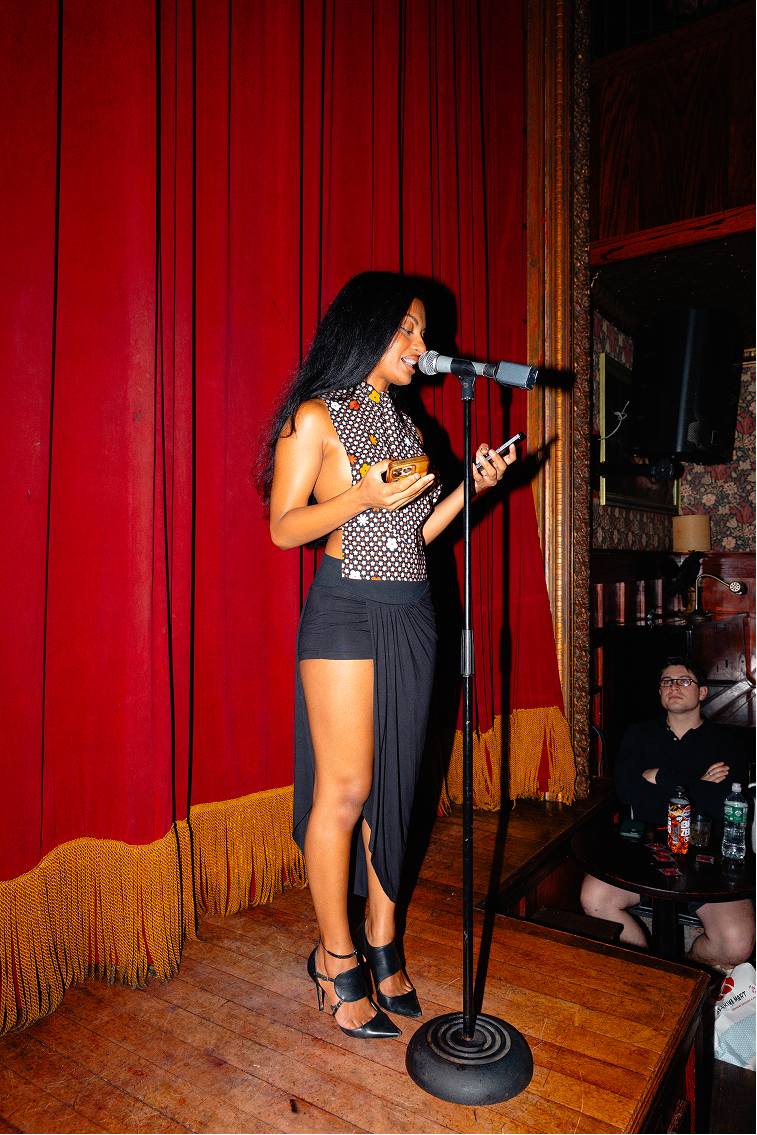
It was unusually quiet at the Slipper Room. At 10 p.m. last Thursday night, OnlyFans star and entrepreneur Stella Barey (better known as @ana1princ3ss) perched on a stool, reading from a day-glo book entitled Defending Pornography: Free Speech, Sex, and the Right for Women’s Rights by Nadine Strossen. The crowd, which wrapped the block, was made up of a well-heeled crew of fellow working girls, allies, and downtown club kids, all utterly absorbed and silent as reprimanded schoolkids under the red lights of the burlesque club. It was the launch of the third issue of Doxy Magazine.

I first heard about Doxy through writer and amici Camile Sojit Pejcha. Created by Celina Reboyras, the magazine is for sex workers by sex workers. This issue’s cover star Ari Kytsa, an e-girl and online sex worker, co-hosted the launch party, which featured a reader line-up of downtown personalities: writer Sophia June, who read a piece from her forthcoming novel; performance artist Mani Mekala; writer Nico Lou; Mackenzie Thomas; and Ivy Wolk (the latter two unfortunately had to bow out because they were sick, and I, your humble writer, ended up filling in a surprise guest set that involved a Vaquera panty skirt that haunts my closet). The two story venue was packed, elbow to rib. Thankfully, it was an audience unafraid to be close. And don’t worry… by the time burlesque act The G Strings arrived on stage, things got loud.
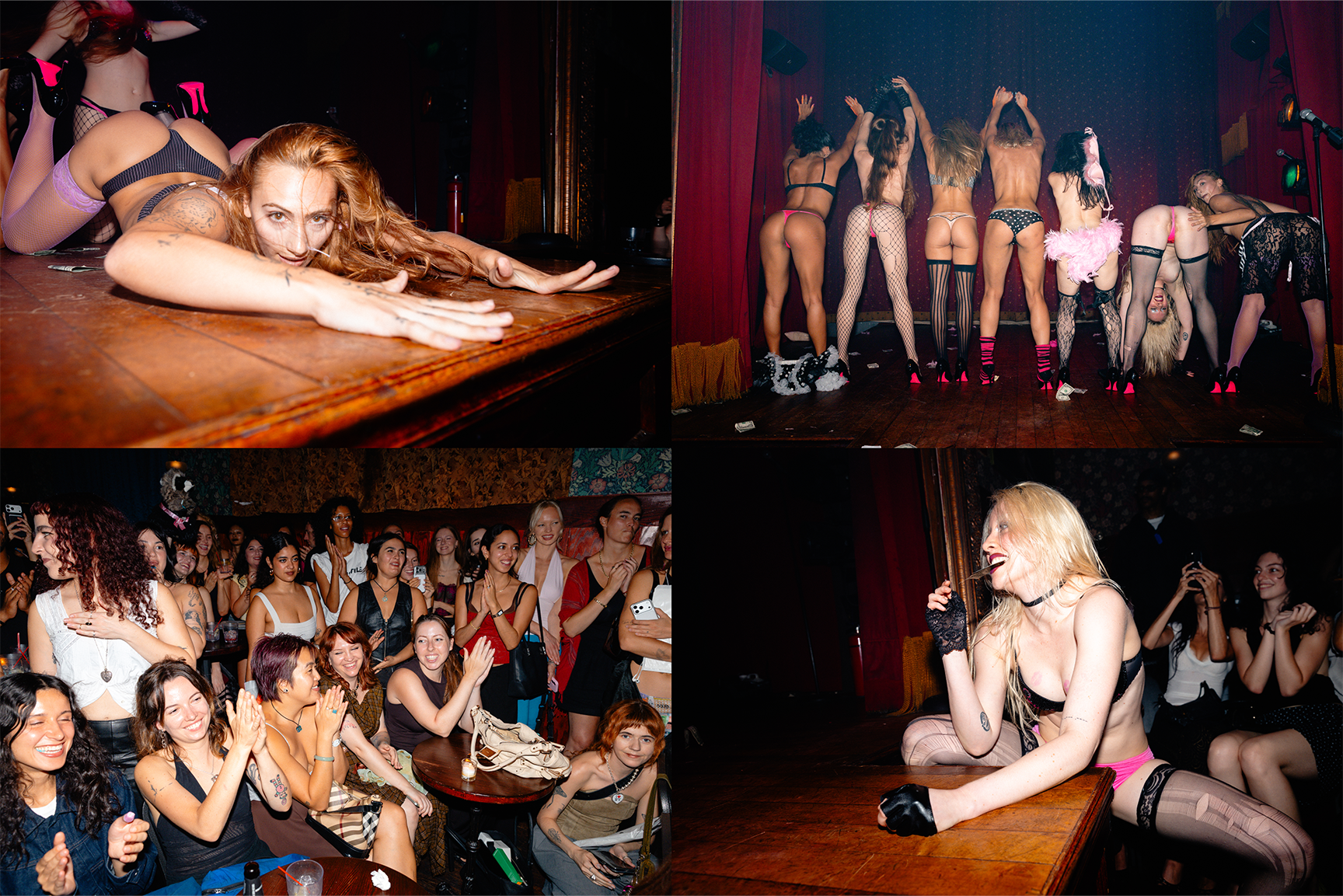
Doxy provides balm for a sore need: For too long, sex workers have been written about, their aesthetics bastardized, co-opted, and capitalized on, and their voices ignored. Even the title hints to the magazine’s intentions, a double entendre meant to demystify the taboo: “Doxy” is slang for a mistress or prostitute, but also for doxycycline, an STI drug. In the hazy aftermath of throwing a really great party, Reboyras stopped by to talk about all things doxy.

NICOLAIA RIPS: Tell me what inspired you to make Doxy mag.
CELINA REBOYRAS: I’d say my biggest inspiration behind Doxy stems from the desire to help build and unite the community that I so desperately sought out in my early twenties. Before moving to NYC, I grew up in South Florida, where I worked as a stripper in Miami for about 6 years. During that time, I always found myself feeling quite lonely, largely due to the lack of community and friendship within my line of work. I had many close friends, but none of them sex workers. I soon realized how essential community is, especially when working a job that is so heavily stigmatized. As for the decision to make it a print magazine, I’ve just always been a fan of tangible media (especially now, as online censorship is a huge issue sex workers are facing). I spent my teenage years going to hardcore and punk shows, where DIY zine culture is prevalent. I have a lot of Riot Grrrl zines from the late ’90s that I’m obsessed with. Honestly, the first issue of Doxy very much feels like a zine, partially because I had no idea what I was doing.
How’d you get started in the industry?
In 2016, I was working as a receptionist, where I think I was making like $11 an hour. It was horrible. I had never been more bored. I knew I wanted to quit my job and start college, but there was the cost issue of tuition and books, and I had been thinking about starting sex work. One day it just hit me. It was a random Tuesday when I clocked out of work and googled, “Where can I buy stripper heels?” Then I drove to the closest sex shop, where I purchased the cheapest pair of 6-inch Pleasers, stole a bathing suit bikini from my sister’s bedroom, threw all of that in an Adidas gym bag, and went to this hole in the wall, no-name strip club that was down the street from my home. I figured if I tried out stripping and hated it, then at least I didn’t waste a ton of gas driving to a club far away. I got hired to work that night and made $450, which was more than what I made in a week at the time. I put in my two weeks’ notice the very next day. Eventually, I got hired at a much larger strip club and finished my bachelors degree. It was one of the best decisions I ever made.

What does “Doxy” mean to you?
When I started Doxy, all I wanted was to create a publication that could unite a community for sex workers, to give them a platform for their voice to be heard, all while educating others outside of the sex work community in the process. It’s hard to put into words what Doxy means to me because it means so much. What means the most to me, though, is what it means to other sex workers. Several people that I didn’t know came up to me during the release party last week to tell me that they’re so grateful for Doxy and for what it’s doing for the sex work community. That was incredible to hear.
Doxy is pretty restrained when it comes to nudity. Can you tell me about that editorial choice?
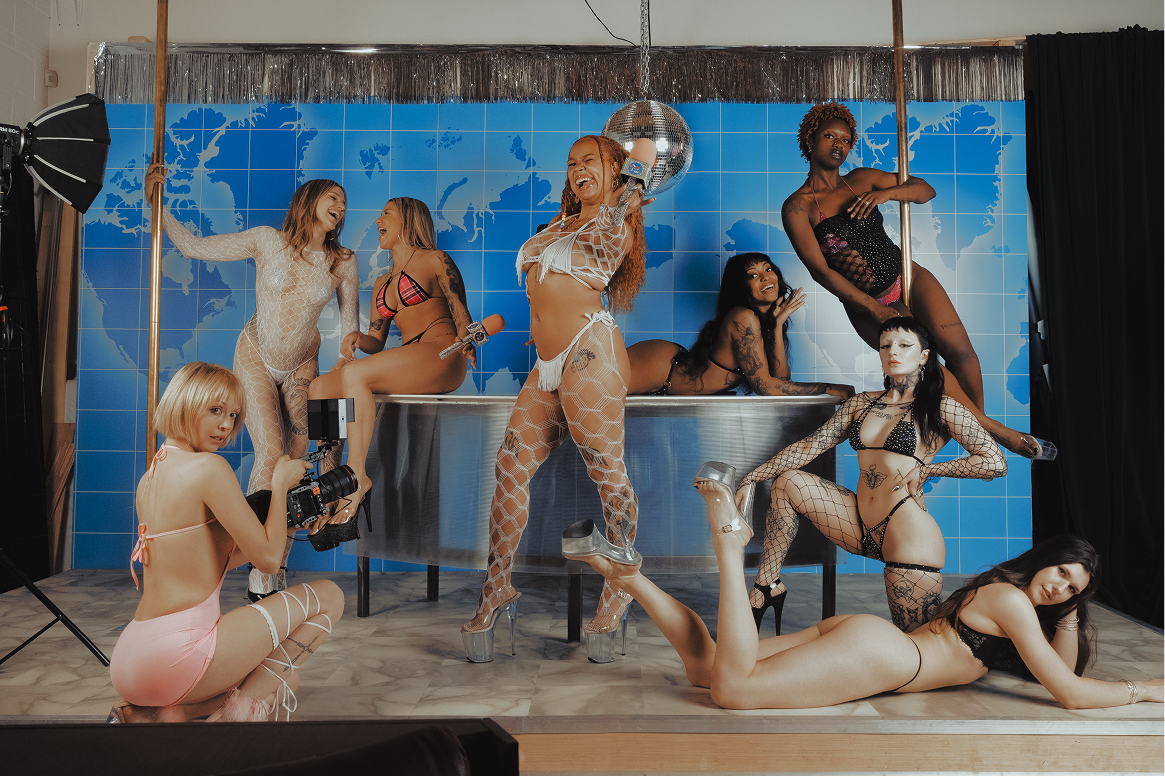
I’ve always wanted the photography in Doxy to showcase these women in a softer, more intimate way that I felt aligned with the interviews and essays paired with it. Sex workers are such talented, layered individuals, and I don’t think that nudity is required to convey that just because of their profession. Which brings us to full circle to the fact that most sex workers make their money from being nude, from selling sex, and it just doesn’t sit right with me, morally, to be profiting off a publication that features another individual’s nude body. Also, I never wanted Doxy to be a publication catered to male readers. If every photoshoot consisted of nude content, then I’m not really doing anything different from what Hugh Hefner or Larry Flynt did.
In your words, why is it so important right now to uplift sex workers’ voices?
I feel like sex work is having a bit of a pop culture moment right now, which we’re seeing a lot of in film and television—Anora, Euphoria, Margo’s Got Money Troubles. There’s a lot of interest and fascination in the world of sex work right now, and I think that’s awesome, but we need to make sure that the representation that’s being fed to the world is coming from us, the sex workers. It’s important that sex workers tell their own stories.
What’s your favorite story in the current issue?
I have two. The first is the essay titled Race and the Club, which is written by my friend Sigourney. I think racial dynamics play such a huge role in the strip club, as well as every sector of sex work, and it was great to feature such a beautifully written essay on the topic. My other favorite story is the interview I did with our cover girl Ari Kytsya. I think Ari’s ability to be so transparent about her job as an online sex worker, while having the online platform and influence that she does, is really beneficial in challenging the stigma and misconceptions people have about sex workers.
One of my favorite’s was the “What’s in Your Bag” section. What’s in your bag/what are your essentials?
I love this question. My go-to purse right now is my Fendi Spy bag. It’s low-key become the junk drawer of my purses. I have so many things in there: loose pieces of gum and tylenol, the vape I bought a month ago and forgot all about, some mysterious purse dirt. My absolute essentials, though, are my Arrae anti-bloating pills, my favorite nude brown NYX lip liner, and a travel size deodorant because the heat in a New York City summer is not something to mess around with.
What do you think people get wrong about being a sex worker?
A lot of people have this misconception that every sex worker is either a victim or a whore. I never understood why sex workers had to be shoved into one of those two little boxes, and what do they believe separates the two? What makes one sex worker a whore and another a victim? When it comes to sex workers, it seems nearly impossible for people to separate one’s job from their identity, and I’d like them to try.
Last week was your third issue launch. What do you see for the future of Doxy?
I envision Doxy to keep growing on a larger scale. I envision a bigger team of editors and writers. I envision our readership multiplying, our issues continuing to grow in page count. I also envision a larger non-sex worker audience. A lot of people who aren’t sex workers are really interested in Doxy, and I’m watching that audience grow with every issue. I believe Doxy will do what I set out for it to do, which is establish community and help reduce the stigma around sex work.

This is fabulous
Great article and interview! Good editorial decision, not to cater and titillate, in what should be a magazine for the community.