


The sun is exceedingly bright. Los Angeles bright. A couple compatriots and I occupy a table atop the Griffith Observatory, hunkered down under one of the only sufficient patio umbrellas. A large cohort of editors and other influential individuals are here at a lunch designed for us to snap Instagrams and kill a bit of time until the start of Jonathan Anderson’s first Cruise show for Dior.

The panoramic cityscape around us is encased in a blur of smog, giving it the soft edges of an Impressionist painting. The waitress arrives, offering sauvignon blanc. We ask for three Diet Cokes with ice. “We don’t have those up here, but you can get them downstairs at the bar.” Challenge accepted. I saunter down to the abandoned cocktail area and order a half dozen Diet Cokes from the bar. I endeavor to carry them, but am told it would be a mark against the catering staff if I were seen schlepping fridge cigarettes up the stairs. One waiter then follows me with a tray of Diet Cokes, while another trails behind with a tray of rocks glasses. Upstairs, I am greeted like Napoleon returning to Paris. Pictures are snapped, others cheer. Even those not lucky enough to sip one salute the liberation of the Diet Cokes.
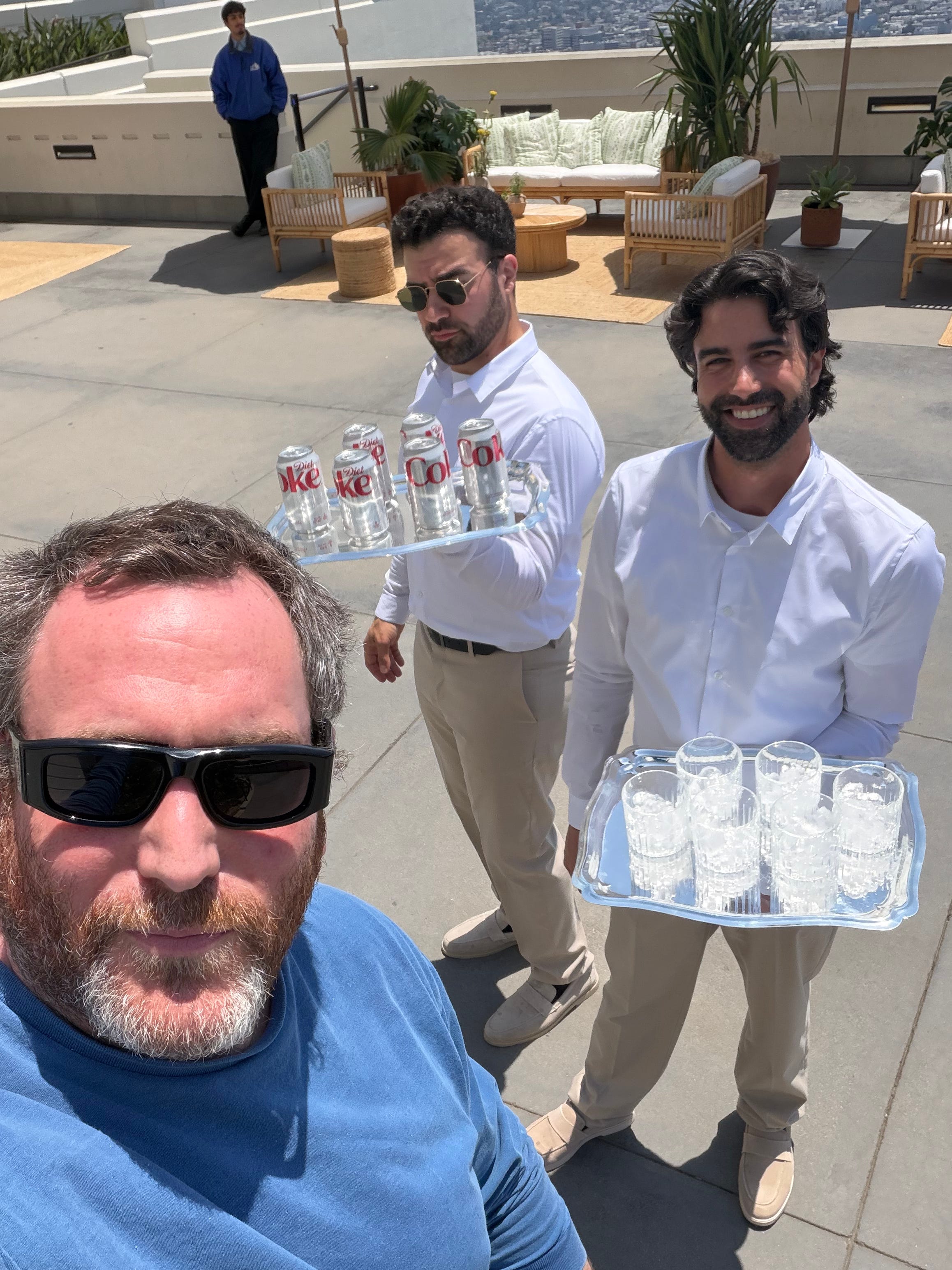
No one ever tells you this, but as a magazine editor one of the most important career decisions you make is deciding on your Press Trip Identity. How else can you withstand the social gauntlet of a luxurious school trip environment, crammed into Sprinter vans with friends, opps, and publicists alike? The i-D team has a myriad of PTIs: Alex Kessler transforms into a hedonist fit for the court of Henry VIII, Steff Yotka is the honor roll student who arrives everywhere on time and always reads the show notes, and Robby Kelly goes full Anthony Bourdain mode, brewski in hand, quietly becoming best friends with the most famous dude at the function. Another common type of PTI is to put on horse blinders and assume a distant disposition designed to give off an “I’m just here to write my review” energy. Some put on their bossy pants and performatively work on their phone in lieu of interacting. Many like to peacock, trotting to the breakfast buffet in their archive Whatever by Whoever from That Season. But the lion share of editors on a press trip take on a very similar PTI, which is basically a less funny version of Larry David, kvetching endlessly about every car ride, every group activity, and every function without sufficient dining options. Word to aspiring editors: Don’t be this person. For my part, I’ve cultivated a PTI that I guess we can call Whimsical Aloofness. I’m most likely going to miss most of the activities. I might even wear AirPods while everyone is chatting in the car. I have no idea who the famous people at the show are. But every once in a while, I’ll part the Red Sea with a tray of Diet Coke. This allows me to largely wander around and live in my own head, while still bridging the charm deficit that comes with being antisocial.
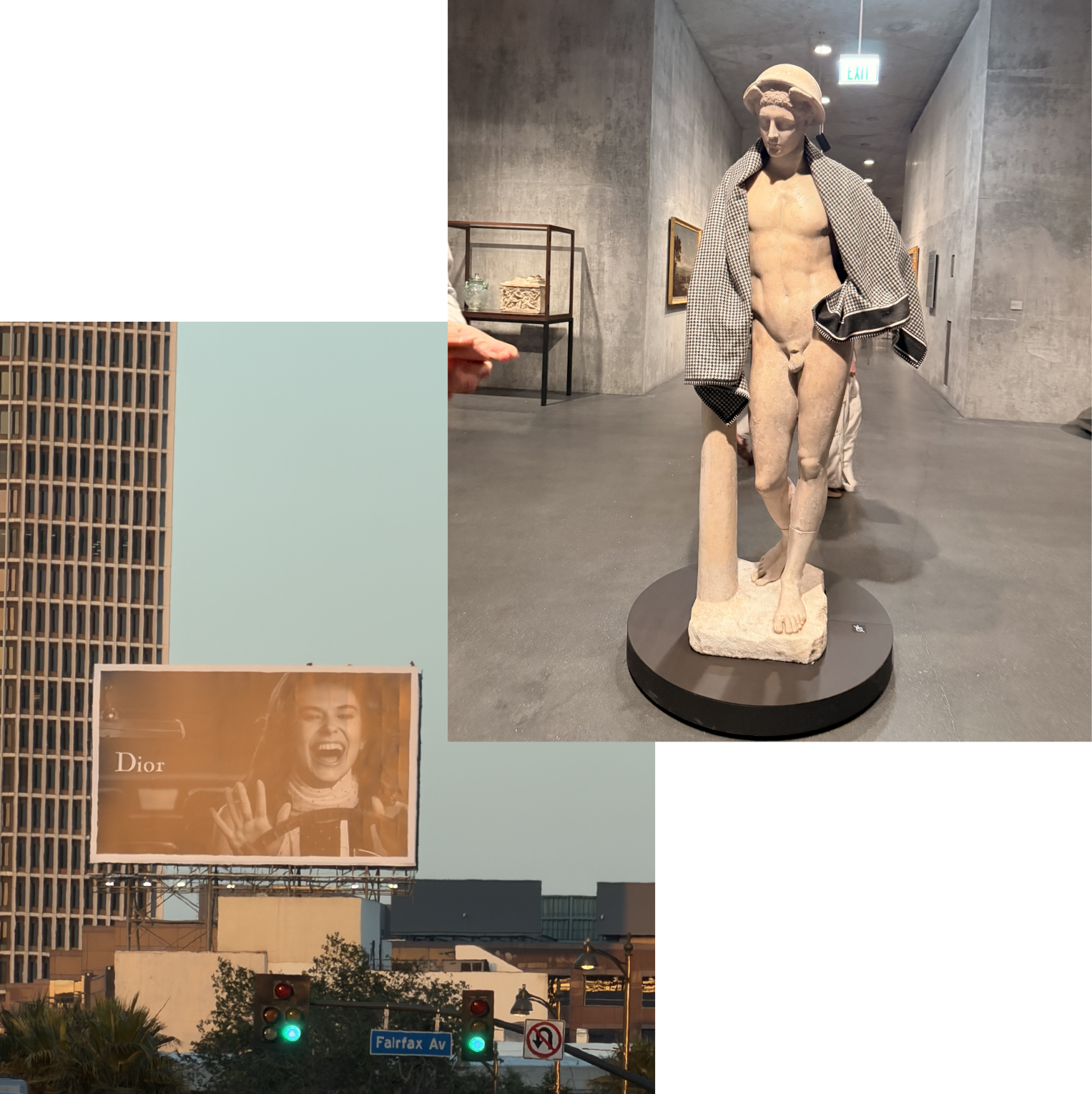
As the pavlovas arrive at the end of lunch, I begin daydreaming about the opening scene of Terminator, which was filmed at the Griffith Observatory: a young Schwarzenegger spawns out of thin air, completely naked, muscles lubed. He approaches a group of punk rockers and proceeds to kill them for their clothing. And just like that, one of the most iconic Los Angeles looks was born.
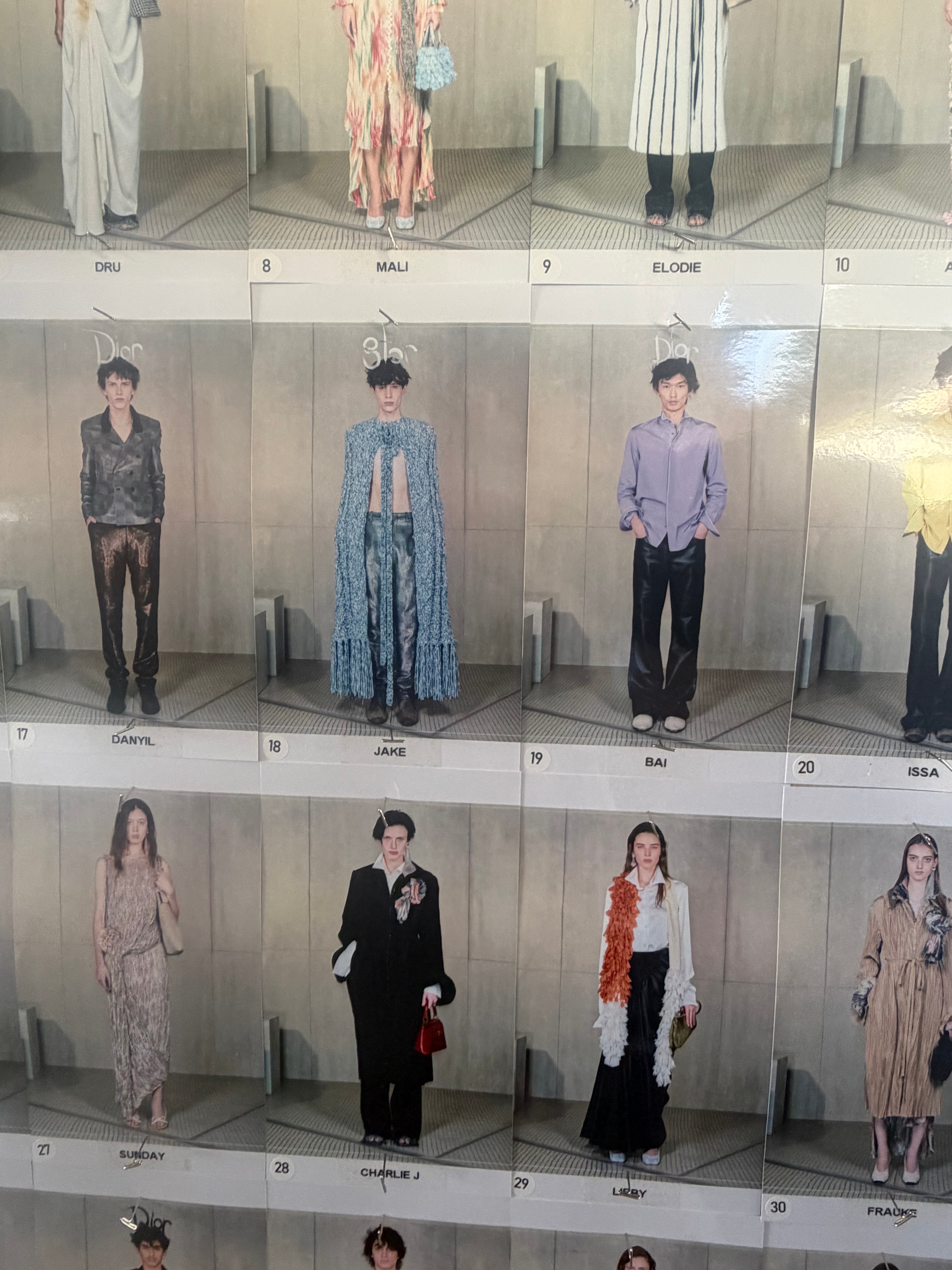
We finish up and some of us are whisked down the Hollywood Hills to LACMA, the Peter Zumthor-designed museum in which Jonathan Anderson will provide us with an intimate preview of his new collection. The designer arrives a bit frazzled—that’s usually his vibe—in his signature normcore jeans and hiking boots, sporting a rainbow of microchipped wristbands. He barely hesitates before launching into a monologue that careens across Christian Dior’s biography, Hollywood lore, handbags, and the memoir he recently read about a gas station gigolo. He is without a doubt one of the freest minds operating in culture today, one who can weave together a vast network of references from across mediums and eras, and create something intelligible, cutting, and, perhaps most importantly, expensive. Anderson is giddy about a Christian Dior jacket he found designed for Marlene Dietrich’s character in the Alfred Hitchcock film Stage Fright, which had long been buried inside the personal archive of Azzedine Alaïa. He is also tickled by a set of men’s shirts made in collaboration with Ed Ruscha, an artist who has long eluded both him and his boss, Dior CEO Delphine Arnaud. Anderson then describes how Edward Hopper and Ed Ruscha serve as art historical bookends in defining the 20th-Century American landscape, to the knowing nods of us fashion folk.
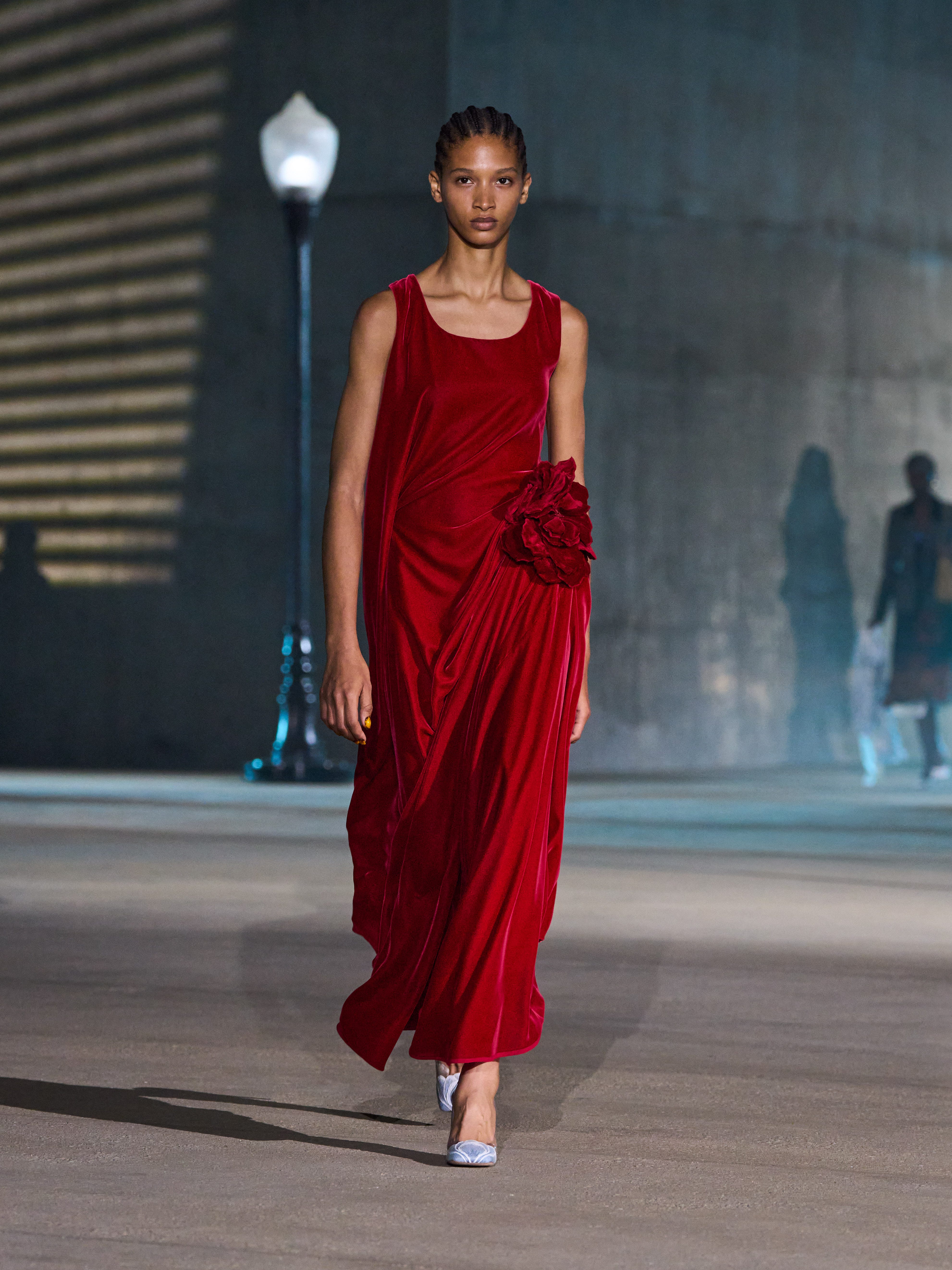
Walking out of LACMA, I start thinking about MacGuffins. A MacGuffin is a term popularized by Alfred Hitchcock to describe a plot device that drives a movie’s action forward but ultimately has no meaning. In Casablanca, the all-important “letters of transit” that you never actually see are the MacGuffin. Citizen Kane’s Rosebud is a MacGuffin. The briefcase that doesn’t get opened in Pulp Fiction is one as well. The magic of the MacGuffin is that it doesn’t matter to anybody that it’s never explained. Rather, it works on us through the images that wash over us, penetrating the ether like headlights through fog. One MacGuffin Anderson borrowed from Christian Dior was his gesture of putting a red dress down the runway toward the latter half of the show in order to “wake the audience up.” About four hours later, at the actual fashion show, I find myself woken up by this very dress, like a whiff of smelling salts. It forces me to ask myself: Was I even sleeping? And, if so, whose dream was I in?
The thing that designers and filmmakers have in common is their ability to create a planned reality that others can reside in. The ritual of the Cruise show, which is essentially a luxury group tour for editors, celebrities, and clients, is the most extreme expression of this ability. One does not go to a Cruise show by waltzing right through the door and right back out into the normal world. Rather, one stays at the Cruise Hotel, applies the complimentary Cruise SPF to their skin, eats at the Cruise Restaurants, takes a Cruise Selfie at the preordained locations, and thinks Cruise Thoughts on their way to more Cruise Activities. Here more than ever, the clothes are the MacGuffin. The plot is the lifestyle.
After the Cruise Show, we saw some Cruise Art at the Cruise Museum, piled into the Cruise Escalade to the Cruise Party at Chateau Marmont, where we had Cruise Conversations. Toward the end of the night, in a swirl of partygoers and vape smoke, I saw what seemed like a mirage: a man in an In-N-Out Burger uniform, paper hat and all, parting the crowd with a silver tray of hamburgers, much like the Diet Cokes of yore. He nodded at me knowingly, and I took a bite of my Cruise Burger.
A totally cliche (yet delicious) list of things to eat in Los Angeles:
The soft-shell tacos at Leo’s.
The hard-shell tacos at Tito’s.
Sushi Park is fine, but I like Matsuhisa and deep cut Hide better.
The Gochujang Smoked Tofu at Erewhon (they keep it in the yogurt aisle).
Gjusta’s perfect boho version of schmear.
Any Caesar or Asian Chicken Salad on any menu.
fridge cigarettes - so good
I was the honor roll type, while a hedonist on one press trip I was on skipped the scheduled activity to go to a strip club in Florida and came back and told us all about it. Smugly