


Fashion wants change, but preferably in a way that doesn’t require anyone or anything to actually change. As it turns out, the saving grace was a 7:30 a.m. flight to Brussels, which brought me to the first edition of the Antwerp Fashion Festival, a city-wide celebration of exhibitions, student work, runway shows, and showcasing independent designers.

My immediate concern was that Antwerp already has a main character. Actually, it has six. How do you build something new in a city whose fashion identity is still connected to a group of designers who left school forty years ago? In Antwerp, every conversation about the future of fashion somehow inevitably circles back to a person wearing black in 1987.
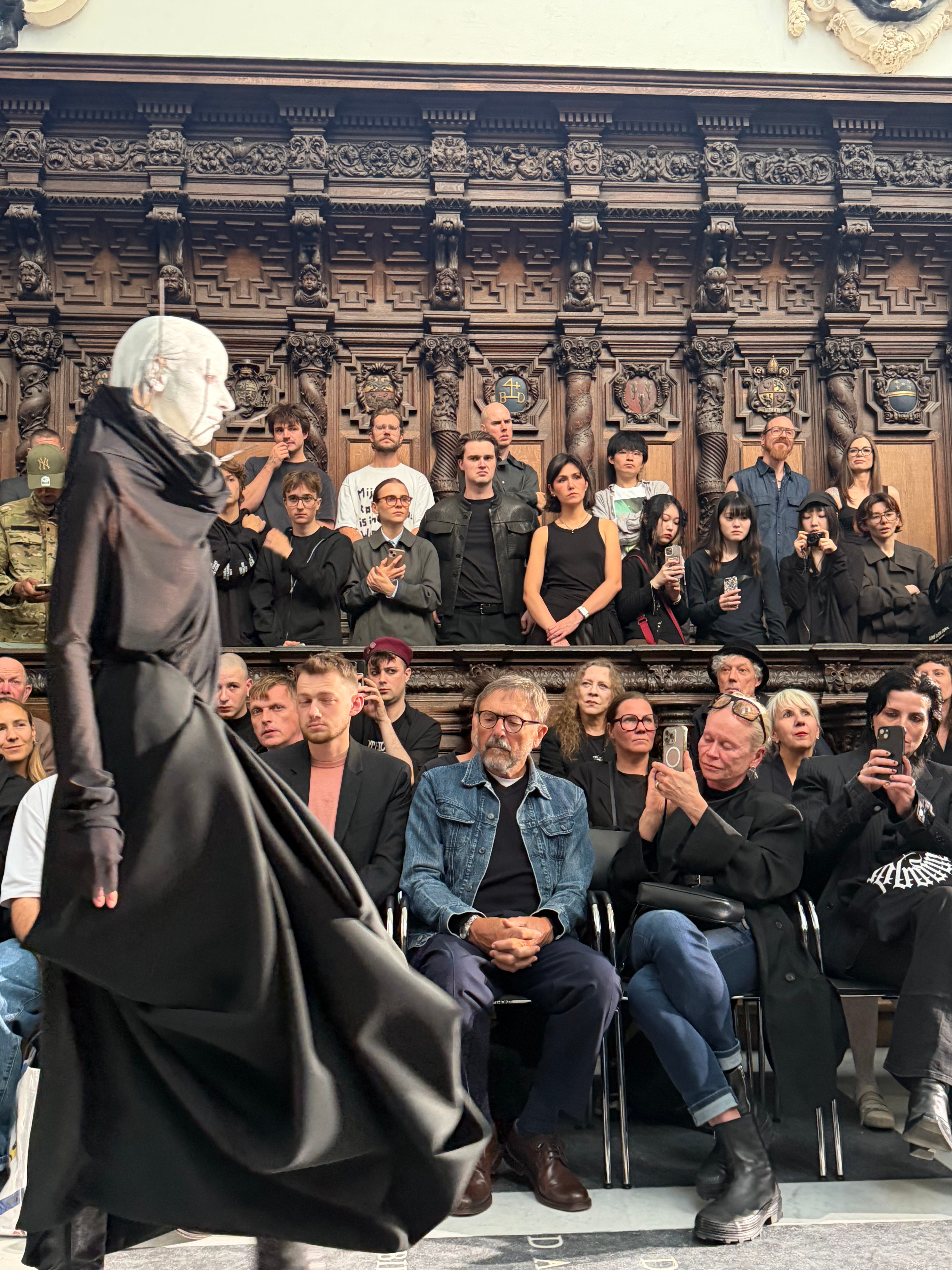
For a medieval mercantile city, the ghosts that haunt Antwerp aren’t merchants but these six designers. And I do believe in ghosts. Already on the first day, I was seeing visions. Why does the one fashion editor on this trip have a beard suspiciously similar to Walter Van Beirendonck’s? Do I even know what Walter Van Beirendonck looks like these days? Maybe he would wear a Delvaux. Maybe everyone in Antwerp slowly morphs into a member of the Antwerp Six after prolonged exposure. Is that actually Ann Demeulemeester in the third row of Marcel Sommer’s gothic presentation? And of course it was.
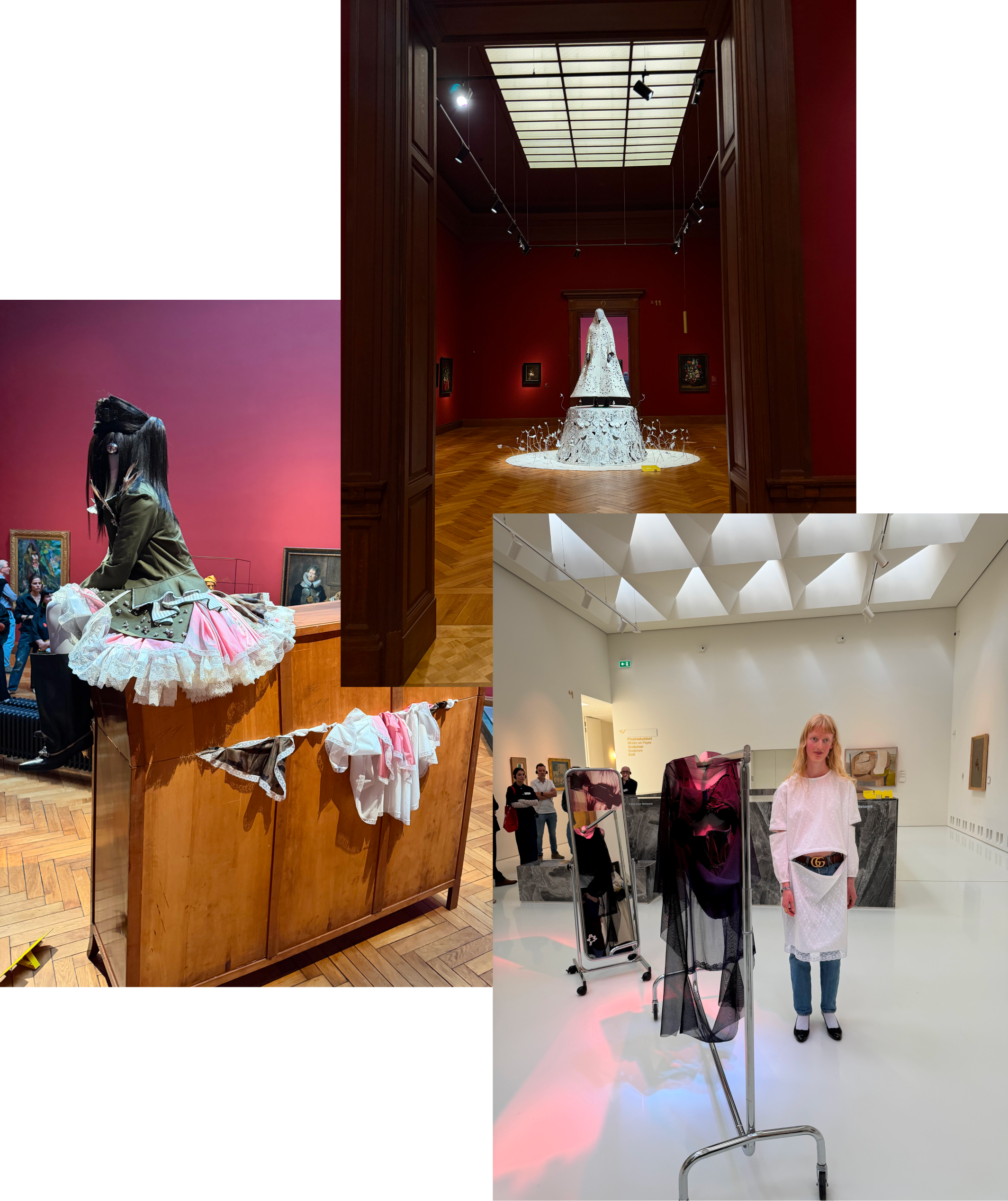
Coinciding with the festival was the landmark Antwerp Six exhibition at MoMu—and sue me for sounding like a fashion victim—but it really is as good as everyone says. Room after room unfolded like a fashion cemetery, with mannequins in archival looks standing in for headstones. Dirk Van Saene’s rotating catwalk installation and Marina Yee’s reconstructed studio turned the museum into a perfect shrine for fashion’s favorite myth. It quickly became clear that even the Antwerp Six can’t escape the Antwerp Six. Fortunately, neither can the rest of us.
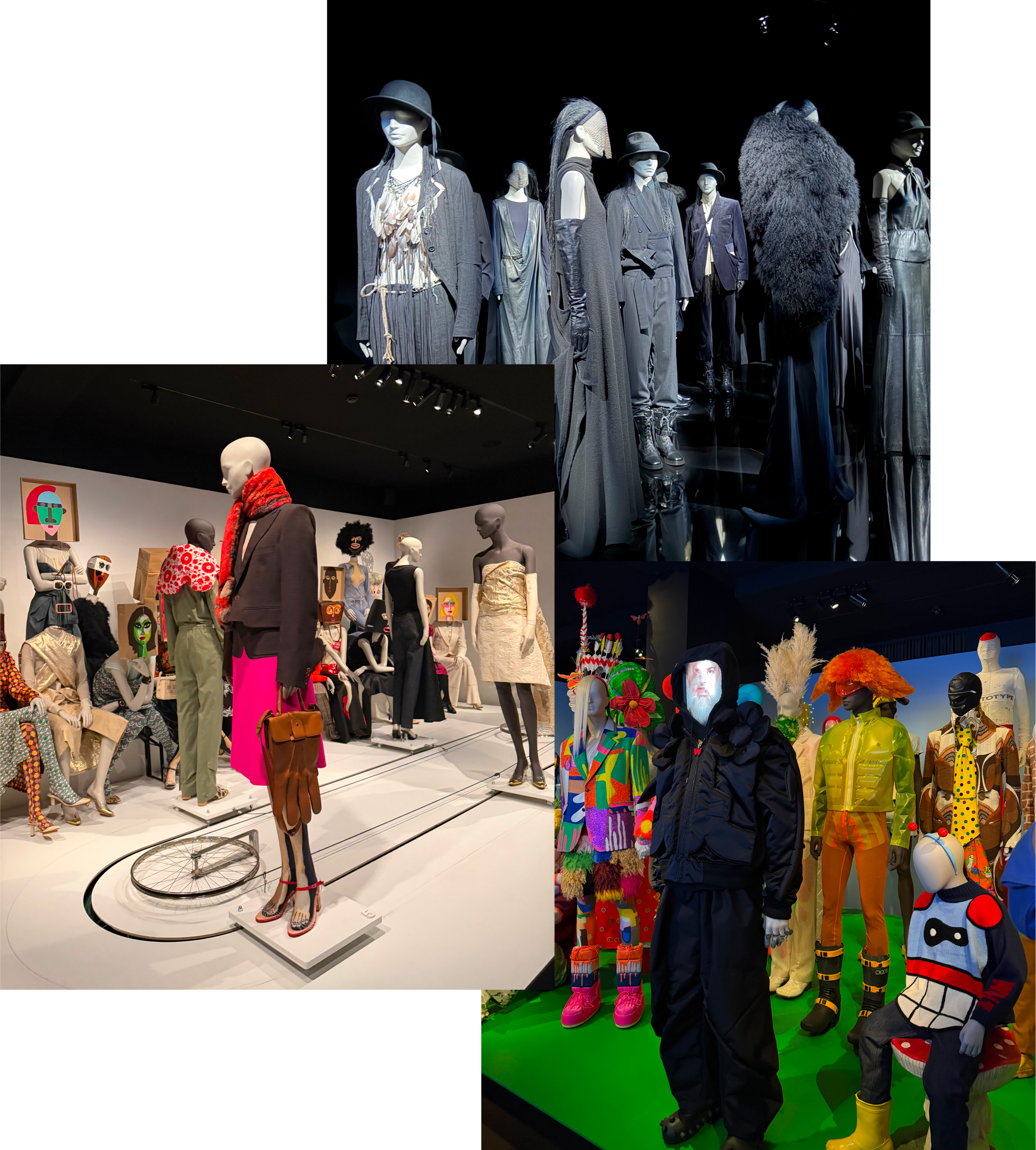
The theme continued at Walter Van Beirendonck’s 40th anniversary presentation, where the gnomes of fashion past, present, and future all showed up in a brutalist construction-site high-rise. The W< founder returned in all his glory, mixing archival pieces with a new collection. Puk Puk (the brand’s trademark robot character—because when you’ve had a brand for as long as four decades, you do have a trademark character) was sent down the runway with numbered t-shirts signaling the brand’s past. Looks I’d just seen at the MoMu–-butterfly headpieces, gigantic gloves, and knitted flower balaclavas—had risen from the dead! Of course, the point isn’t to preserve ideas under glass, but to keep things moving.
After a few days in the city, it was easier to separate who came first, Antwerp or the six. Unlike most fashion weeks, Antwerp Fashion Festival actually lets you experience Antwerp. There were no generic venues that may as well have been in Milan, Paris, or a converted warehouse somewhere in East London. Instead, you move throughout the city—to see Jan-Jan Van Essche’s collection in a church, or Nadav Perlman’s performance in a chapel. Here, historic buildings are part of the programming, while carved faces stare down at you from ceilings and façades, watching the present unfold.
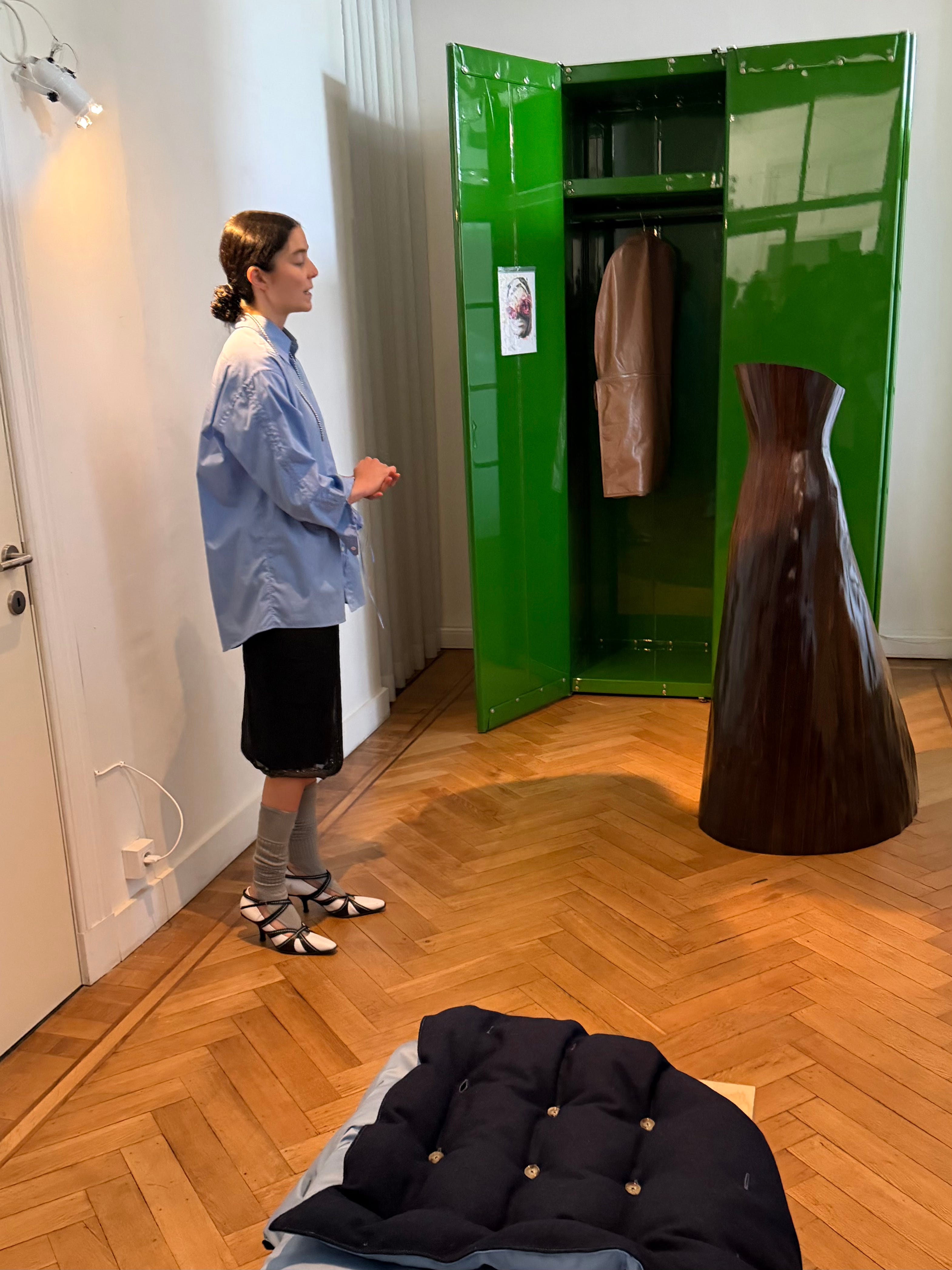
At Julie Kegels’ installation After Work at COUR gallery, the past melded into the present with her own pieces shown alongside works by artists she admires. Sleeping Beauty, a bed with makeup-stained sheets, reads as an afterimage of the night before. Elsewhere, Bernadette Antwerp offered a more literal version of what comes next. Founded by mother and daughter duo, Bernadette and Charlotte de Geyter, the brand embodies the sharing of ideas between generations. Because, of course, a love for bedazzled kitten heels is generational!
Over at KMSKA, second-year fashion students from the Royal Academy of Fine Arts Antwerp created designs in response to works from the museum’s collection. Laura Meier Hagested reinterpreted Jules Pascin’s Seated Girl, while Pommie Dierick flirted with nip-slips by referencing Jean Fouquet’s Madonna. On our way into the exhibition, conservators happened to be restoring a painting, so the symbolism verged on the ridiculous: the old and the new unite!
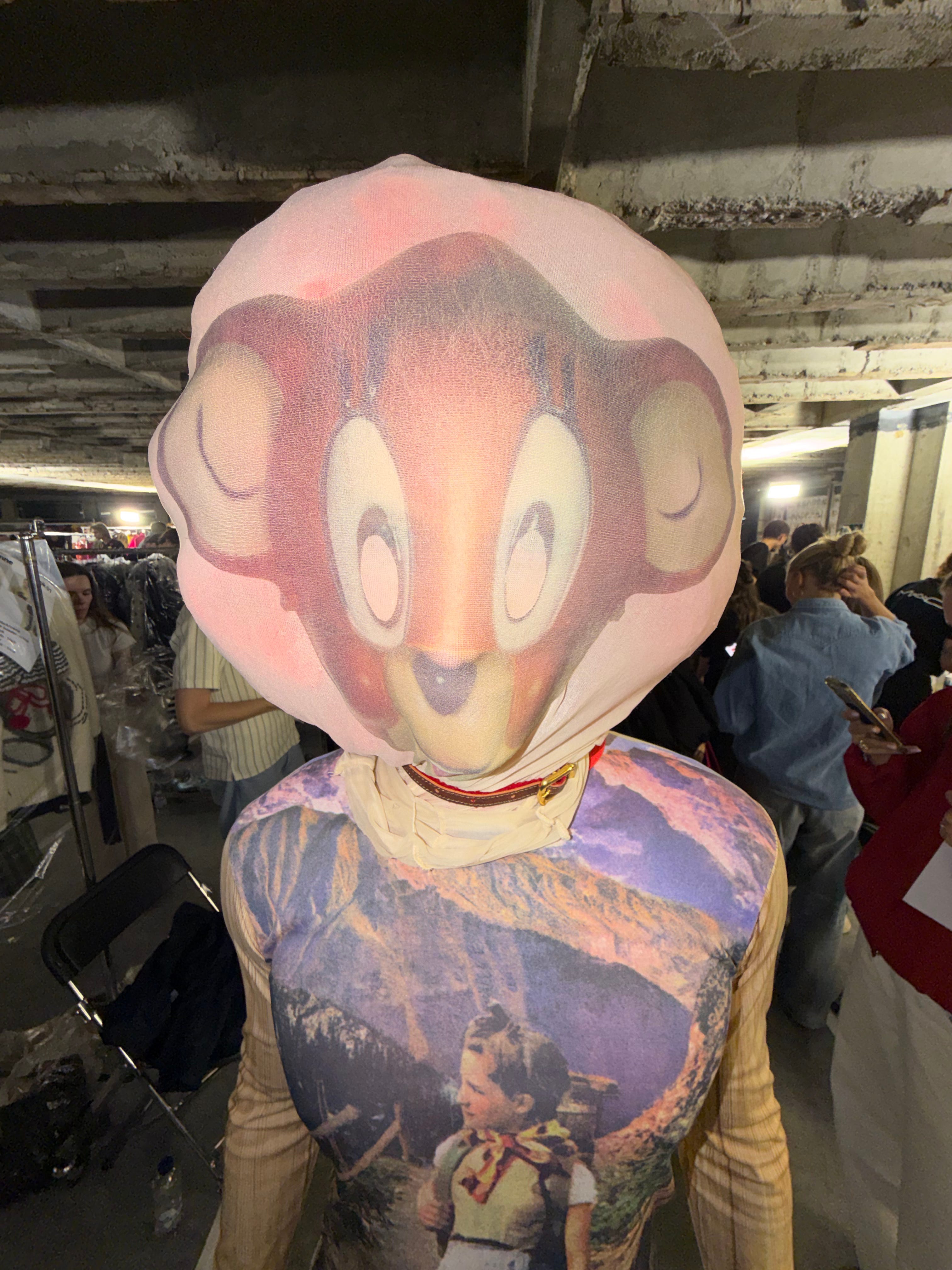
Then came the point every fashion school library all-nighter leads up to: the student show. From the outside, studying fashion in Antwerp seems comparable to the doomed experience of being in middle school and trying to live up to the rumor of an older, more popular sibling. Yet the masters students didn’t seem particularly intimidated. Carla Lázaro Bonet showed blown-out proportions covered in latex flowers; Yvonne Schictel sent out a wheat-straw dress, and Yichun Liu presented us some up-side down heels. Clearly, the students in Antwerp are here to make something new.
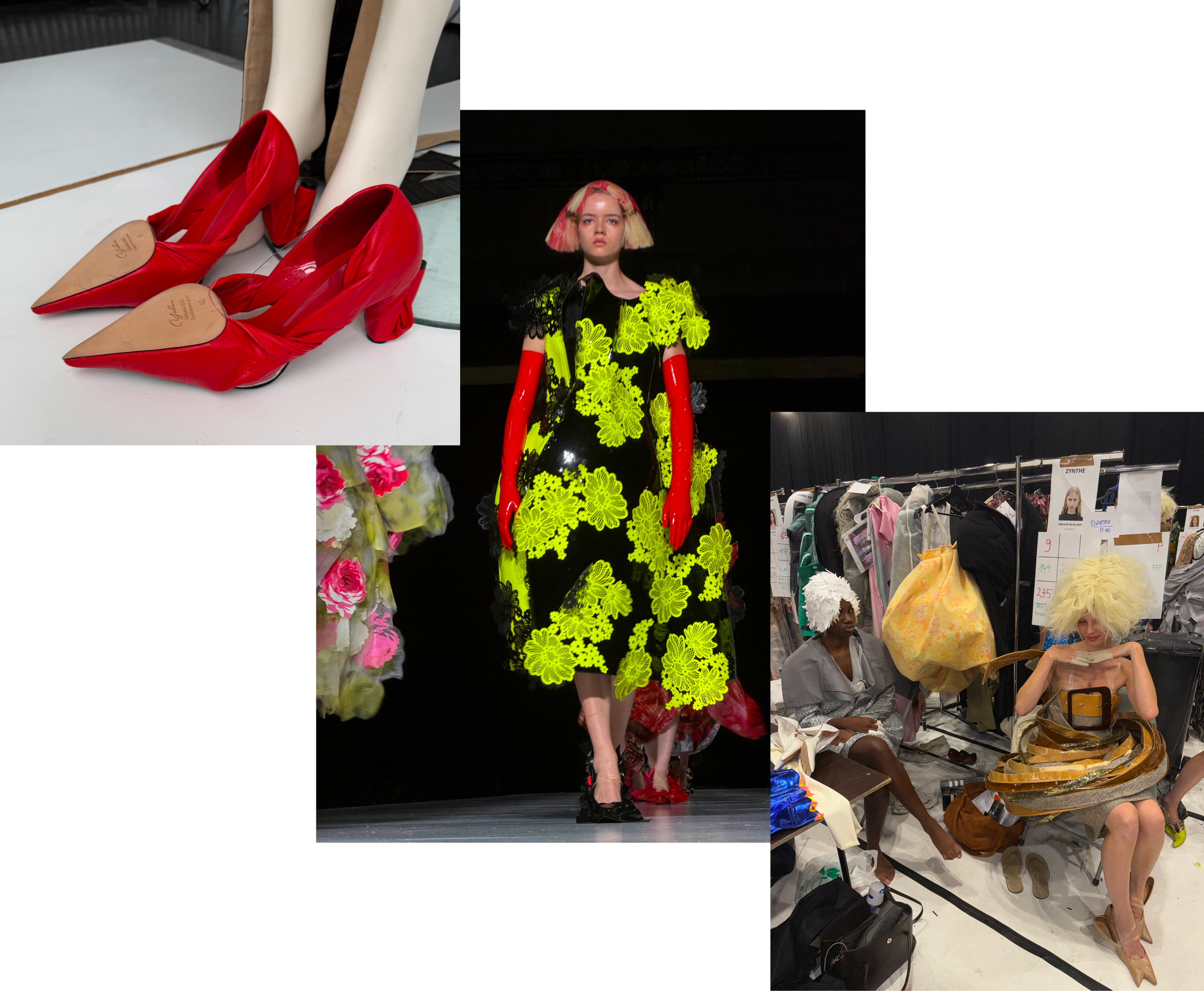
Side note: People say dogs look like their owners, but the Antwerp’s graduating students look like their clothes. It’s probably why the question “who do you design for?” was followed by most of the students answering “someone… like me.”
After all the students at the school had presented, the celebration ended with posters highlighting the Belgian government’s rising tuition fees, reminding me of the precarious reality of building an independent fashion practice at a time that’s very different from when the Antwerp Six rose to fame. At one point during the festival, an employee at the MoMu transparently admitted they weren’t sure if there even is a future for independent designers. Not quite the sort of quote you embroider onto a tote bag, but that’s exactly why the Antwerp Fashion Festival matters.
Calling this a fashion festival rather than a fashion week feels right. Rather than competing with Paris, Milan, or London, Antwerp is leaning into what makes it Antwerp. As with most things in life (and also the plot of Shrek?), the ace up your sleeve is being a little quirked up.

It's no coincidence everyone who recommends Antwerp to me tends to be suspiciously cool. This piece makes the appeal make sense - it’s not trying to out-Paris Paris or out-Milan Milan. It has its own weird little fashion weather system which I'm here for.
Did a double take at the student shoes