


The writer of Cleansed, Sarah Kane, killed herself in 1999 at the age of 28. She wrote four plays that were staged in her lifetime, and one that reached audiences posthumously. A decade after its last iteration in London, her 1998 play Cleansed is currently being revived at the Almeida Theatre, under the direction of the British auteur Rebecca Frecknall. It’s set in a barbaric institution in which a man named Tinker targets and tortures “undesirables”: gay people, drug addicts, women, sex workers… each one of them reaching out for a love that they’re never permitted to fully experience.

Over 100 unrelenting minutes, these characters are subject to some of the most brutal violence I’ve ever seen on stage, evidenced by the trigger warnings: “prolonged nudity, torture, mutilation, murder, sex, incest, violence including sexual violence, forced eating, suicide including hanging, drug abuse and drugging, gender reassignment surgery as well as homophobic and misogynistic language, needles and blood.”
Frecknall’s take on the play premiered last week, and divided Britain’s uptight right-wing press: the Daily Mail refused to give it a rating, calling it “unrelenting and random”, while the Daily Telegraph, in a five star review, claimed that “it grips completely”. The common point being made about Kane’s work today, one you can feel within the theater as you watch it, is similar to the one that plagued it when she was still alive: Is there value in the violence?
SARAH KANE’S OTHER WORK
Blasted (1995), her debut play about a hotel encounter between an older male journalist and a naive young woman that descends into violent madness.
Skin (1995), a short film that subverts the power dynamic between a skinhead and Black woman in London.
Phaedra’s Love (1996), a sex-filled “comedy” take on the Roman classic Phaedra.
Crave (1998), a poetic, non-linear play that departs from Kane’s other work, presented under a pseudonym and inspiring the Bjork song, “An Echo, A Stain.”
4.48 Psychosis (2000), a plotless and largely character-less play about clinical depression, staged for the first time after Kane died.
As you sit watching a man get his hands, tongue, and feet chopped off, or another being force fed until he pisses himself, or another having drugs injected into his eyes, you might question whether the creator of such scenarios has the ability to feel hope, or experience love. During the performance I saw, several people groaned or laughed out of discomfort at the persistent pain on stage. One man fainted.
Watching it I couldn’t help but think that its maker must have known empathy, and what it felt like to be in love in order to appreciate its rarity and value. In fact, Kane was apparently in love when she wrote it. As she said in one of her rare interviews, on this occasion with the academic Aleks Sierz: “I don’t find my plays depressing or lacking in hope… To create something beautiful about despair is for me the most life-affirming thing a person can do.”
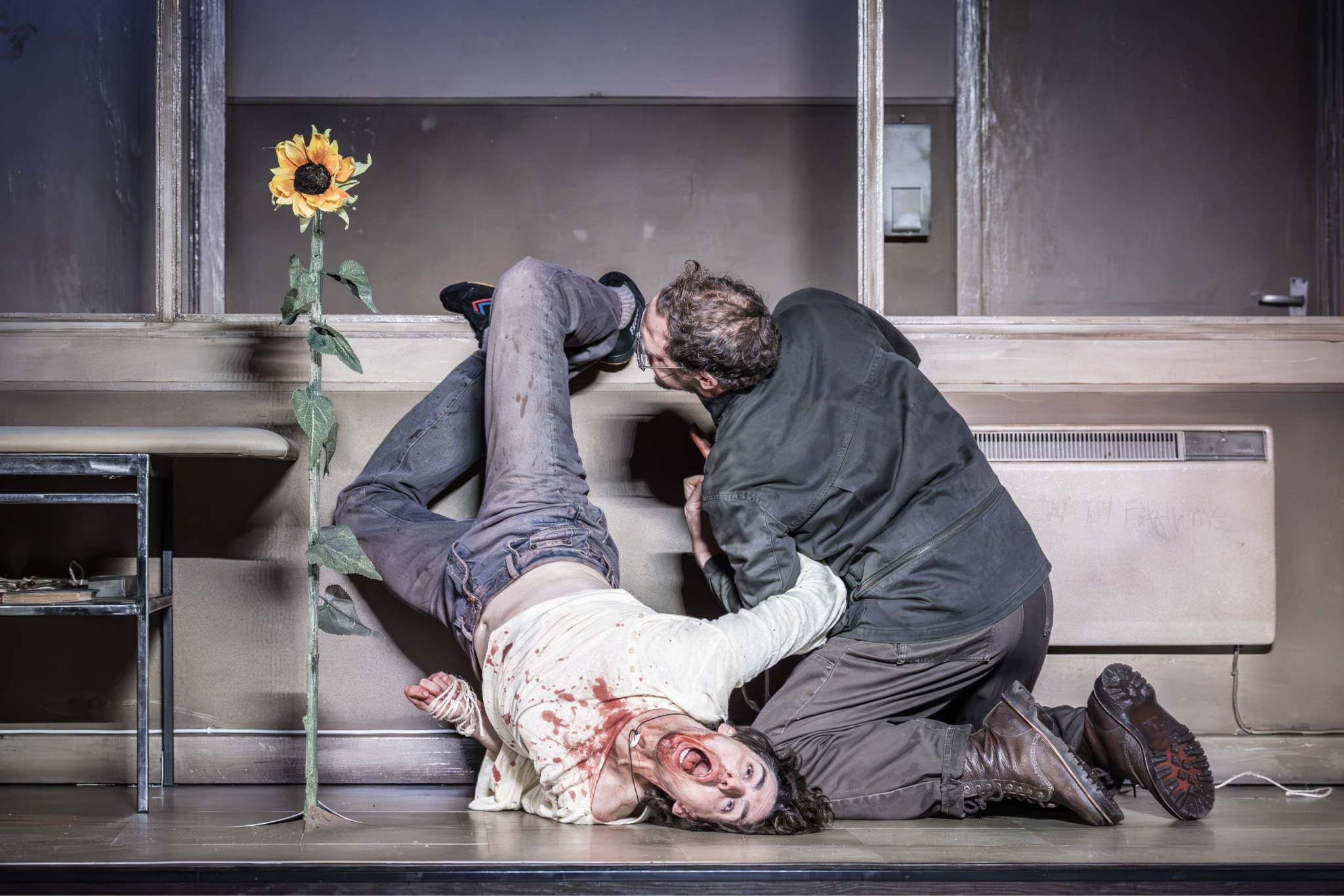
There’s very little to read about Kane beyond how people reacted to her work, and the scant interviews she did. What she made was dubbed “in-yer-face” theater in the ’90s, because of its confrontational and often staunchly political nature. Blasted and Cleansed made up two parts of an incomplete War trilogy. The violence on stage in her work might present itself in a heightened if familiar domestic setting—her stage directions are either non-existent or dauntingly specific—but it spoke about the atrocities committed at the time in places such as Bosnia. If you view her work through the prism of empathy for the victims, rather than reveling in the violence you’re watching, it transforms it entirely.
You get the sense of that sadness she had when you see her work in the flesh, if the director knows what to do with it. Rebecca Frecknall does—she’s the reigning auteur of London theatre, known for transforming classic texts like Cabaret and A Streetcar Named Desire into something kinetic, absorbing, and contemporary. Her skills attract stars—those aforementioned productions featured Jessie Buckley and Paul Mescal respectively.
But the largely un-famous cast of her Cleansed make the important task of audience projection much more straightforward. Rather than being a spectator, her version of it—dankly lit, scored with distorted sound, cast falling through window frames and through a field of daffodils in the stage’s foreground—finds a way to make the obscene violence feel like something we’ve experienced too. Not literally, of course, but there are cataclysmic pangs of emotional pain.
I’ve met Frecknall a few times before—I spent nearly a year profiling her for the New York Times—and found her pragmatic as an artist but really emotionally literate. Her love for Pina Bausch is present in the way she stages sex scenes and these characters’ screams of agony, each one perfectly choreographed. Carl, the main subject of Tinker’s mutilations, is played by a trained ballet dancer, Luke Cinque-White. It’s a fitting collision of two artist’s worlds: Frecknall using her position as one of her industry’s most appreciated auteurs to perfectly articulate someone famously misunderstood.
The difference between when Cleansed first premiered and today is our access and exposure to violence, which has affected how we react to it. I realized that people were responding to the suggestion of chewed up flesh the same way they would a Saw movie. The same algorithm that feeds us memes also presents us with videos of beheadings, knife violence, bombings, and people falling from buildings. The trauma that shaped the extremity of Sarah Kane’s plays is now around us, easy to see. Cleansed, as opposed to the quick-swipe apathy of a seconds-long clip, firmly puts us in the position of those living through it. The barbarism isn’t ridiculous, it’s real.

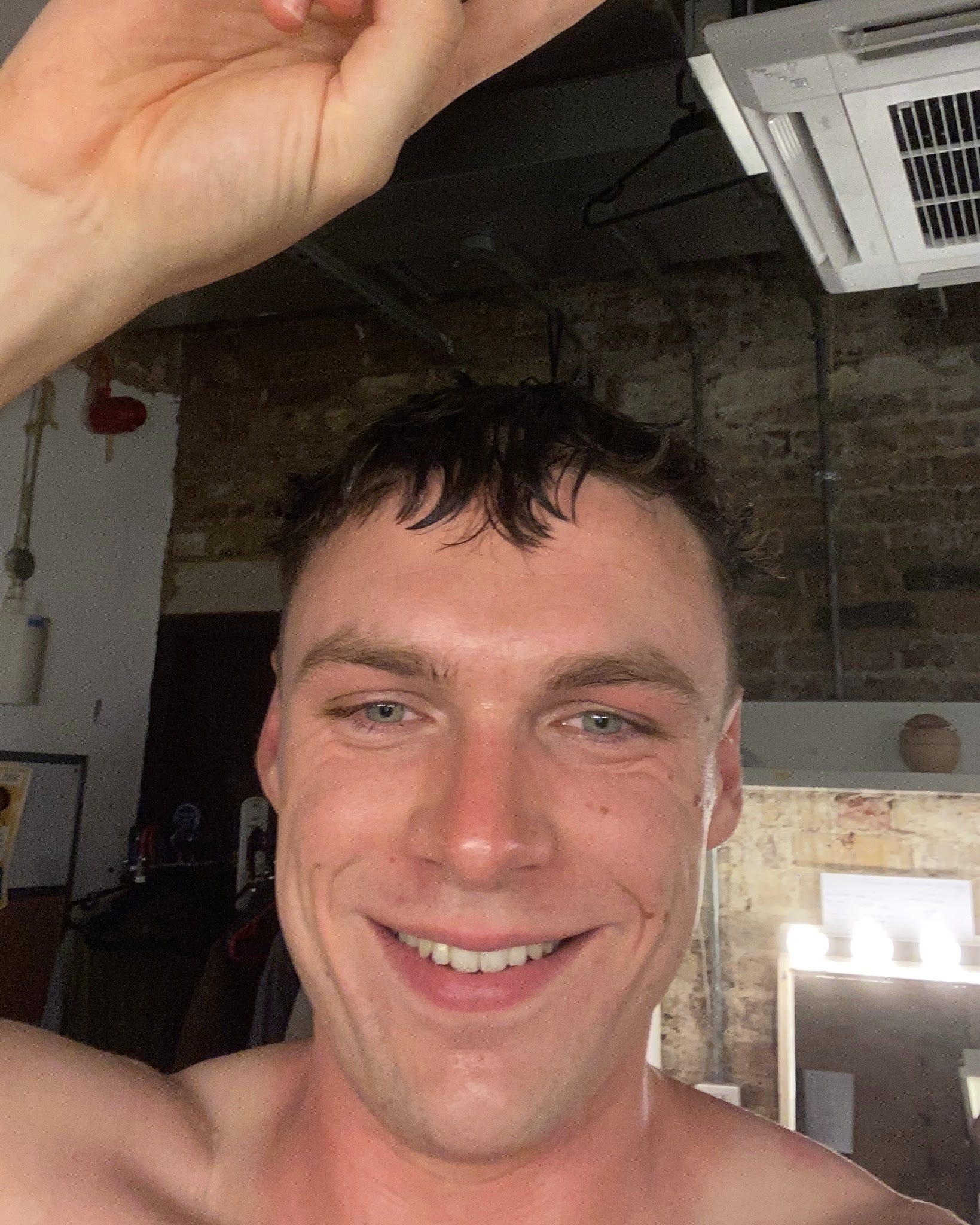
Stuart Thompson is one of those British actors who I’ve seen on stage a bunch of times. I’d argue he’s also one of the best. He sort of reminds me of Ben Whishaw. In Cleansed, he plays Robin, a largely illiterate, suicidal person who, after being introduced to us completely naked, spends the rest of the play wearing a dress and tights. He kills it, obviously.
I asked him: “What’s the last thing you did to look after yourself?”
He says:
“I went to the community sauna for a hot sit and a cold plunge with my best mate. She let me wear her chic little sauna hat and we gossiped ravenously while everyone pretended to not listen in.”

Jane Schoenbrun’s Teenage Sex and Death at Camp Miasma is out this weekend, and is a beautiful paean to finding yourself through sex and slasher movies. I love it. My review from Cannes is here, and my interview with them will be live next week.
The next play at the Almeida? Golden Boy, the American classic about a violinist-turned-boxer starring Josh O’Connor. It’s sold out, obv, but more tickets are apparently coming in September
I’ll be in Edinburgh for the festival(s) next week, both film and the Fringe. There’s a rare chance to see Ivo van Hove’s take on Angels in America, which I loved. Personally, I’ll be sitting through a queer riff on Shakespeare’s A Midsummer Night’s Dream, purely because it stars Suri Noelle (aka Tom Cruise and Katie Holmes’ kid). Anything else I should see? Tell me!

Thank you I now want to read all Kane's litterature :)
If you get a chance you should see “trans people are awful” at the fringe by Ros Watt