
With Valentine’s Day upon us, we’re dialing into Love Buzz—Substack’s favorite advice column for love, sex, and everything in between. It’s helmed by writer and anthropologist Esra Soraya Padgett, who brings a decade of research on sex and the porn industry to the table. In other words, if you’ve got love troubles, ask Dr. Padgett (who does in fact hold a PhD in Linguistic Anthropology).
For those of you new to Love Buzz, Padgett invites a rotating cast of guests—ranging from porn stars to musicians—to jointly tackle reader-submitted questions and dilemmas. Sometimes they’re experts. Sometimes they’re just gloriously opinionated. So far her repertoire of co-hosts has included the likes of Asa Akira, Martine Syms, and Jae Matthews, who light up the conversation with their own stories and hot tips.
From the vulnerable to the smutty, people write in about it all: from fears of losing themselves in motherhood, to how to have phone sex. Padgett calls it “advice 2.0,” which is less about dispensing commandments from a mountaintop and more about circling the questions together. There’s no single script for sex or relationships, and pretending there is has already gotten us into enough trouble.
Maybe not all great stories are love stories, but all the stories on Love Buzz are great. We caught up with the Q&A master to hear what the buzz is all about.
Marley Wendt: What first drew you into that world?
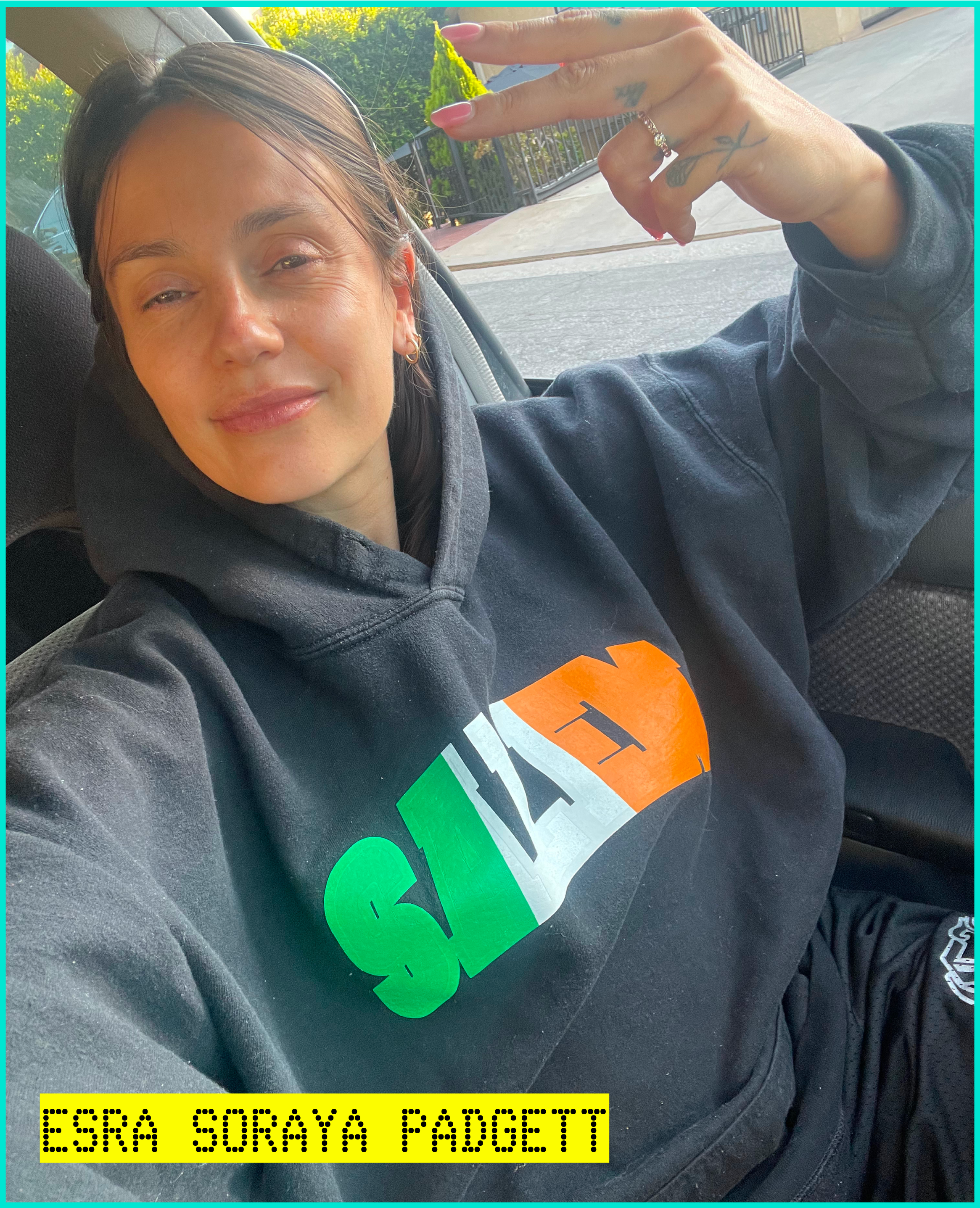
Esra Soraya Padgett: I’m a millennial, so I grew up with porn being this huge inescapable piece of pop culture, yet no one was allowed to talk about it. Especially girls, which I think has changed a lot now. There was this attitude that it was only something boys participated in and that pornography was grotesque media for men only. I’m drawn to what’s taboo, so the idea that there was something I wasn’t supposed to be looking at or talking about really bothered me. Inside the industry, things couldn’t be more different—there’s an openness about sexuality that is really freeing and intoxicating to be around. I didn’t expect to be still talking about it ten years later. I’m constantly telling myself that I’m ready to stop writing about pornography and then something new draws me back to it. I’m like Liam Neeson in Taken.
How did Love Buzz begin?
I have a bad habit of giving unsolicited advice and was looking for a harm-reductive solution, haha. But seriously, it felt like a natural growth from a lot of different strains in my life—including the community that I cherish. I had been the editor of Richardson Magazine for several years, and had just finished my PhD, so I was ready to make something that was mine, and also something that was far away from academia. My two best friends, Chloé Maratta and Flannery Silva (formerly of Odwalla1221) were with me from the beginning—they make the graphics for Love Buzz, which is a huge part of the vibe.
You describe Love Buzz as “advice 2.0.” How does that differ from the way advice columns have been delivered traditionally?
Advice 2.0 means advice from the collective rather than the individual. The structure of Love Buzz is what makes it different from traditional advice columns, you get the opinions of more than one person via an unfolding conversation. It’s not monolithic advice, but multi-directional with many perspectives. The other thing is that we hardly ever give any real advice at all. It could almost be called anti-advice instead of advice 2.0 because nearly every question is unpacked to the point of us asking: Is there really a problem here at all? It’s become a joke that Love Buzz is just me gaslighting people into thinking their problems are just in their head. But really, isn’t that true of most of our issues? It’s existentialist advice.
You invite both experts and “non-experts” as co-hosts. What does this inclusive approach make possible?
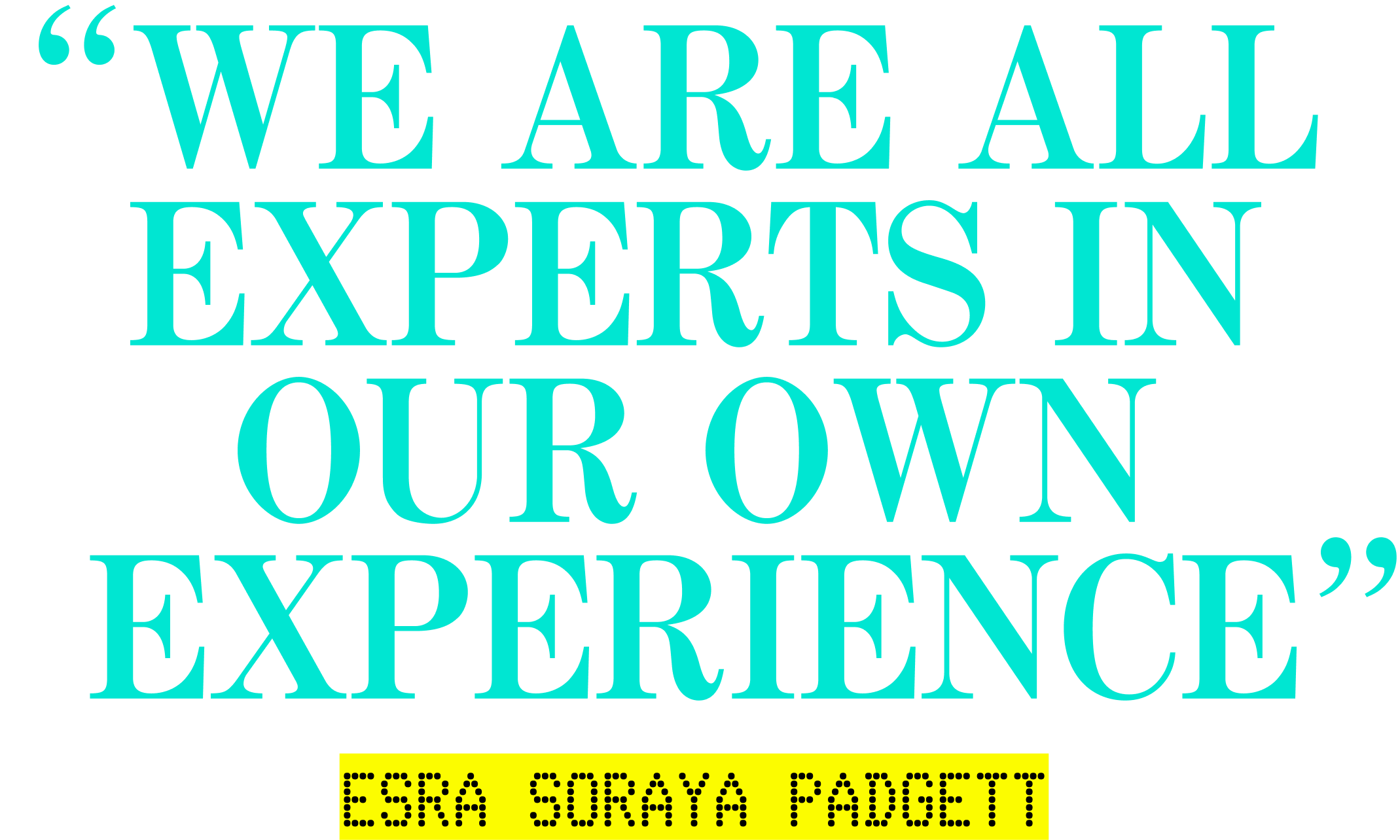
We are all experts in our own experience, especially when it comes to love and sex and relationships. Anyone who comes on speaks from that place, but of course some have more expertise in certain arenas than others. Also, after working adjacent to the porn industry for so many years, I find it kind of insane that porn stars are never included in conversations about sex—of course these people are experts in sex, it’s their job!
How do you think the internet has changed the way we talk about love, sex, and desire?
In a lot of ways it’s made us more open—if you’re not being shadowbanned, or censored. We have access to so much more information now, which makes an advice column really novel—what would you ask Love Buzz that you can’t Google or ask ChatGPT? At the same time, people crave connection the more our lives are dominated by being online.
Although you’re trained as a scholar, Love Buzz can be very fun and anecdotal. How do you balance the two?
My belief is that if you are not communicating in a way that is accessible to the most amount of people, then you’re not communicating smartly. That’s how I think about pretty much anything I write, whether it’s an academic paper, or a Love Buzz intro, but it comes easily when you’re dealing with such fun subject matter. I’m also interested in what comes out of conversation, when two people come together on a subject in unrehearsed and unplanned ways.
What determines what you protect versus what you reveal when you’re writing about something as personal as love and sex?
I think it’s important that I hold the same standards for myself as my guests—which is an openness about our own experiences. So I share a lot about myself and my past, whenever it’s relevant to a reader’s question. After working in the porn industry, there is so much I no longer consider taboo, so talking about most sex topics comes really easily. But I think there’s a power we give to what we don’t speak about and sometimes you want to preserve that.
What’s the most unexpected perspective a co-host has brought to a Love Buzz conversation?
Margaret Cho said “cringe is life,” which is maybe expected coming from a comedian, but she explained that “cringe is just a challenge to who we think we are.” It’s about being willing to be vulnerable. Hearing porn stars talk about motherhood is also pretty wild because you start to see how our culture has a lot of stigma around both. What are two things you wouldn’t want to mention on a first date? Being a mom and being a sex worker. And then of course, Girthmasterr’s list of downsides to having a huge dick.
What patterns have you noticed in terms of how people ask questions and talk about sex and love?
Everyone wants to be told that they are ok, that who they are is enough. This is what I mean about unpacking the questions to the point of dissolving the issue completely—most questions broken down are asking the exact same things, with different context and circumstances: Am I normal? Am I lovable? Am I ok?
Since starting Love Buzz, what have you learned?
Anxiety is a disease that we are all sick with. Love Buzz is so overwhelmingly upbeat and positive, but almost every question begins and ends with anxiety and fear.
Any advice for readers who may be dreading Valentine’s Day?
Valentine’s Day kind of sucks whether you are single or in a relationship. Restaurants are booked and you can’t go to your usual favorite spots. Chocolate and flowers are a poor substitute for real love. The expectation never meets the reality. When I was growing up, we celebrated Valentine’s Day as a family because it’s also my mom’s birthday, and everyone got little gifts. It was really cozy, and that’s the Valentine’s Day stuff I love. Celebrate with your friends or family, stay in, stay warm.